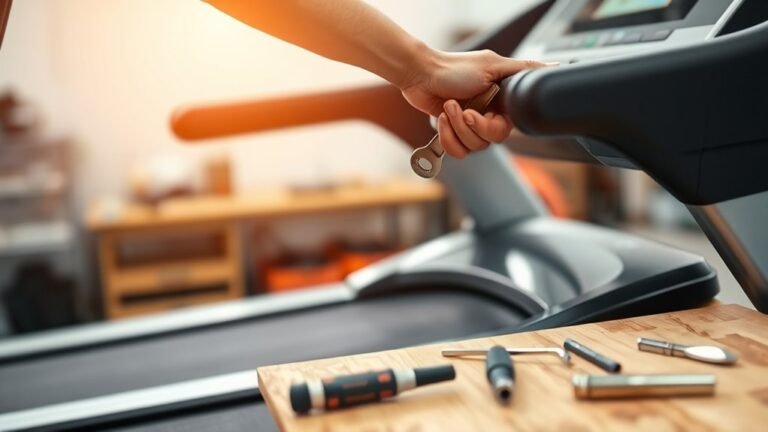
How to Lube a Treadmill
To lube a treadmill properly, start by unplugging it and cleaning the belt and deck to remove any debris. This ensures the lubricant can work effectively without obstruction. Always choose a silicone-based lubricant for lasting protection and smooth operation.
Next, lift the belt slightly and apply a thin, even bead of lubricant along both edges of the deck. Be careful not to over-apply, as too much lubricant can cause slipping or damage.
Manually rotate the belt to help spread the lubricant evenly across the surface. Then, plug the treadmill back in and run it slowly for a few minutes to allow the lubricant to settle.
For best results, lubricate your treadmill approximately every three months or after every 150 miles. Regular lubrication helps maintain efficiency, reduces wear, and extends the treadmill’s lifespan.
Keep following these steps to ensure peak performance and a longer-lasting treadmill.
Key Takeaways
- Unplug the treadmill and clean the belt and deck area to remove dust before lubrication.
- Lift the belt and apply a thin, even bead of silicone-based lubricant along both deck edges.
- Manually rotate the belt to evenly spread the lubricant beneath it.
- Run the treadmill at a slow speed for a few minutes to distribute the lubricant thoroughly.
- Lubricate every 150 miles or every three months, adjusting frequency based on treadmill usage.
Preparing Your Treadmill for Lubrication
Before you begin lubricating your treadmill, you need to properly prepare the machine to verify effective application and avoid damage.
Start by unplugging the treadmill to prevent any accidental activation. This is a critical lubrication safety precaution.
Next, clean the belt and deck area thoroughly, removing any dust or debris that could interfere with lubricant absorption.
Thoroughly clean the belt and deck to ensure proper lubricant absorption and optimal treadmill performance.
Consult your treadmill maintenance basics guide for specific manufacturer instructions.
Position the belt at its center by manually rotating it; this grants you access to both sides for lubrication.
Inspect the belt for wear or damage and address these issues before proceeding.
Finally, confirm the treadmill is on a level surface to maintain even lubricant distribution during operation.
Following these steps will optimize your lubrication process and extend your treadmill’s lifespan.
How to Choose the Best Treadmill Lubricant
Once your treadmill is properly prepared and cleaned, selecting the right lubricant becomes your next priority to guarantee peak performance and protection. Understanding the types of lubricants and the importance of lubrication helps you make an informed choice.
Silicone-based lubricants provide smooth operation and long-lasting protection. Teflon-based lubricants reduce friction effectively but may require more frequent application. Avoid petroleum-based products, as they can damage the belt.
| Lubricant Type | Benefits | Application Frequency |
|---|---|---|
| Silicone-Based | Long-lasting, non-sticky | Every 6 months |
| Teflon-Based | Low friction, smooth motion | Every 3-4 months |
| Petroleum-Based | Not recommended | N/A |
Choosing the correct lubricant maintains your treadmill’s efficiency and extends its lifespan by minimizing wear from friction.
How to Apply Treadmill Lubricant
Applying treadmill lubricant properly involves a few critical steps to secure even distribution and ideal belt performance.
First, unplug the treadmill and lift the belt slightly to access the deck underneath.
Use recommended lubrication techniques, such as applying a thin, consistent bead of lubricant along both edges of the deck. Avoid excess lubricant, which can cause slippage or buildup.
Next, slowly lower the belt and manually rotate it to spread the lubricant evenly across the surface. Alternatively, use application methods like a syringe or applicator bottle with a narrow tip for precise placement.
Finally, plug the treadmill back in and run it at a slow speed for a few minutes to guarantee thorough distribution. Following these steps prevents uneven wear and maintains smooth operation.
How Often to Lubricate Your Treadmill Belt
Regularly lubricating your treadmill belt is essential to maintain peak performance and extend its lifespan. Your treadmill maintenance schedule should specify lubrication frequency based on usage hours and manufacturer guidelines.
Typically, you’ll want to lubricate the belt every 150 miles or every three months for moderate use. For heavy use, increase lubrication frequency to every 30 to 45 days. Light use may allow longer intervals, but avoid exceeding six months.
Tracking your treadmill’s running hours helps you determine exact lubrication timing. Adhering to the proper lubrication frequency reduces friction, prevents motor strain, and minimizes belt wear.
Always consult your treadmill’s manual for model-specific recommendations. Staying consistent with your treadmill maintenance schedule guarantees peak function and prevents costly repairs due to neglected lubrication.
Tips to Extend Your Treadmill’s Life With Lubrication
Although proper lubrication frequency is crucial, knowing how to apply lubricant correctly can greatly extend your treadmill’s life.
Start by unplugging the treadmill and lifting the belt carefully to access the deck. Apply a thin, even layer of silicone-based lubricant beneath the belt, avoiding excess that can attract dust.
Rotate the belt manually to distribute the lubricant evenly. Regular treadmill maintenance includes checking belt tension and alignment after lubrication, as improper tension can cause premature wear despite lubrication benefits.
Use manufacturer-recommended lubricants to guarantee compatibility and avoid damage.
Additionally, maintain a clean environment around your treadmill to reduce dirt buildup, which can compromise lubrication effectiveness.
Following these precise steps maximizes lubrication benefits, reducing friction and heat, thereby prolonging your treadmill’s operational lifespan efficiently.
Fixing Common Treadmill Lubrication Problems
Even with careful lubrication, you might encounter issues that affect your treadmill’s performance. If you hear unusual treadmill noises, first check the belt tension and alignment. An improperly lubricated belt often causes squeaking or grinding sounds.
Inspect the belt wear carefully. Excessive friction from inadequate lubrication accelerates deterioration. To fix these problems, clean the underside of the belt and deck thoroughly before applying a silicone-based lubricant evenly.
Avoid over-lubrication, as excess lubricant can attract dust and cause slippage. After lubricating, run the treadmill at a low speed for a few minutes to distribute the lubricant uniformly.
Regularly monitor treadmill noises and belt wear to catch issues early and maintain smooth operation. Consistent maintenance prevents costly repairs and extends your treadmill’s lifespan efficiently.
Frequently Asked Questions
Can I Use Household Oils Instead of Treadmill Lubricant?
You shouldn’t use household oil alternatives; 85% of treadmill damage stems from improper lubrication.
Stick to manufacturer-recommended lubricants for best performance. Follow treadmill maintenance tips precisely to avoid motor strain and guarantee smooth, long-lasting operation.
Is It Safe to Lubricate a Treadmill While It’s Plugged In?
No, you shouldn’t lubricate a treadmill while it’s plugged in to guarantee treadmill safety. Always unplug it first.
This prevents electrical hazards and guarantees proper lubrication techniques without risking injury or damage.
How Do I Know if My Treadmill Belt Needs Lubrication?
You’ll notice your treadmill belt squeaking or slipping, clear signs it needs lubrication. Regular treadmill maintenance involves checking these symptoms and selecting the proper lubricant types, typically silicone-based, to guarantee smooth, efficient belt operation and durability.
Can Lubrication Improve Treadmill Speed or Performance?
Yes, proper treadmill maintenance, including lubrication, reduces friction and wear, which enhances performance. You’ll notice smoother belt movement and consistent speed, directly improving your treadmill’s efficiency and lifespan through performance enhancement.
What Are Signs of a Damaged Treadmill Belt Beyond Lubrication Issues?
Oh, if your treadmill belt starts resembling a worn-out shoe sole or dances off-center, you’ve got belt wear and alignment issues.
Check for fraying edges, slipping, or uneven tracking. These technical signs scream for immediate maintenance.
Conclusion
Just like a car needs oil to run smoothly, your treadmill relies on proper lubrication to keep its belt gliding effortlessly. Neglecting this can cause friction that wears down parts prematurely—studies show well-lubricated belts last up to 50% longer.
By following these steps consistently, you’ll maintain peak performance and extend your treadmill’s life. Remember, a little lube goes a long way in preventing costly repairs and ensuring your workouts stay uninterrupted.
Proper lubrication is key. Regularly applying the right product will keep your treadmill running efficiently and is essential when you learn how to lube a treadmill.