How to Move a Treadmill
To move your treadmill safely, first unplug it and clean the belt and frame. Securing any loose parts and folding or locking it if possible will help prevent damage during the move.
Gather helpers and use lifting straps or a dolly to avoid strain. Protect floors and walls with mats and padding during the move to keep everything intact.
Once set up, check the belt alignment and safety features. Taking these steps guarantees a smooth move with minimal risk to both you and the equipment.
You can explore further tips for long-distance moves and proper reassembly to ensure your treadmill stays in great condition.
Key Takeaways
- Disconnect and clean the treadmill, secure the belt, and remove accessories before moving.
- Use moving straps, a furniture dolly, and have at least one helper for safe lifting.
- Disassemble removable parts, organize screws, and wrap the treadmill with padding for protection.
- Secure the treadmill in the transport vehicle using straps and drive carefully to avoid damage.
- Set up the treadmill upright, level it, check belt alignment, and protect surrounding floors and walls.
How to Prepare Your Treadmill for Moving
Before moving your treadmill, you need to disconnect it from the power source and clean the entire machine to prevent dust and debris from causing damage during transit.
Start by unplugging the treadmill to eliminate any electrical hazards, adhering strictly to safety precautions.
Begin by disconnecting the treadmill from power to ensure complete electrical safety before moving.
Use a soft cloth and mild detergent to wipe down the belt, deck, and frame, removing sweat and dust that can degrade components.
Inspect the treadmill for loose bolts or worn parts as part of routine treadmill maintenance; tighten or replace anything necessary to avoid damage while moving.
Secure the treadmill belt to prevent slipping or misalignment.
Finally, fold or lock the treadmill in its transport position if applicable, ensuring stability.
These steps optimize safety and preserve your equipment’s functionality during relocation.
Tools and Helpers Needed to Move a Treadmill
Moving a treadmill demands specific tools and at least one helper to guarantee safety and efficiency.
You’ll need appropriate moving supplies and reliable lifting equipment to handle the treadmill’s weight and bulk without injury or damage.
Confirm you have a plan for securing the treadmill during transport and enough hands to stabilize it while lifting and maneuvering.
Essential tools and helpers include:
- Moving straps or lifting harnesses for secure grips
- A furniture dolly or hand truck to ease rolling
- Protective blankets or padding to prevent scratches
- At least one physically capable helper for balanced lifting
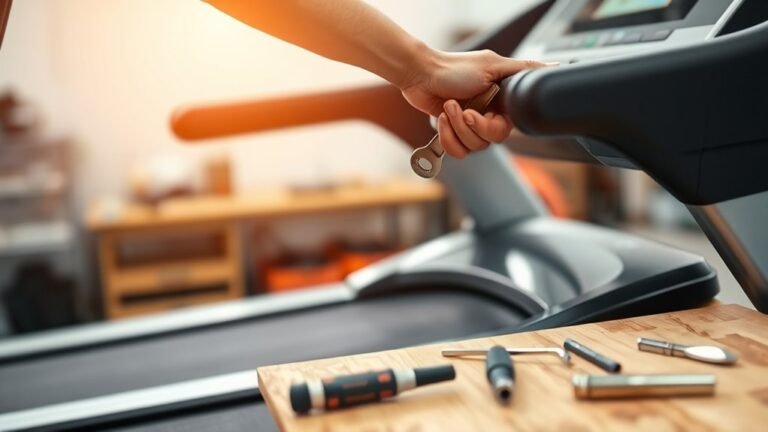
- Tools like screwdrivers or wrenches for disassembly if required
Gather these tools and helpers beforehand to streamline the moving process and maintain safety throughout.
Key Differences in Moving Foldable and Non-Foldable Treadmills
Although both foldable and non-foldable treadmills require careful handling, their structural differences markedly affect how you approach moving them.
Foldable advantages include reduced size and weight when collapsed, making them easier to maneuver through tight spaces and transport. You can leverage the folding mechanism to minimize the treadmill’s footprint, simplifying navigation around corners and doorways.
In contrast, non-foldable challenges stem from their fixed frame and bulkier design, demanding more physical effort and careful planning to avoid damage. You’ll need extra manpower or equipment to lift and carry these models safely.
Additionally, non-foldable treadmills are less forgiving in confined areas, requiring precise clearance measurements before moving. Understanding these distinctions helps you prepare effectively and prevents mishandling during relocation.
Step-by-Step Guide to Moving Your Treadmill Safely
Before moving your treadmill, make certain to disconnect it from the power source and secure any loose parts to prevent damage.
Use proper lifting techniques by bending your knees and keeping your back straight to avoid injury.
Following these steps guarantees a safe and efficient relocation of your equipment.
Prepare Treadmill For Moving
Start by unplugging your treadmill and securing any loose parts to prevent damage during transit. This step is critical in your moving checklist to guarantee safety and preserve treadmill maintenance.
Next, follow these practical steps:
- Clean the running belt and deck to remove debris.
- Detach any accessories like tablet holders or water bottle racks.
- Secure the power cord by coiling it neatly and fastening it with a tie.
- Lock or fold the treadmill frame if the model allows.
- Inspect the treadmill for any pre-existing damage and document it.
Completing these tasks reduces the risk of damage and makes the treadmill easier to handle.
Proper preparation helps maintain your treadmill’s functionality during the move and guarantees a smooth shift to its new location.
Use Proper Lifting Techniques
Lift your treadmill carefully by bending at the knees and keeping your back straight to prevent injury.
Maintaining proper posture is essential when lifting heavy equipment like a treadmill.
Position your feet shoulder-width apart for stability, and engage your core muscles to support your spine.
Use your leg muscles, not your back, to lift the treadmill.
Avoid twisting your torso; instead, pivot your entire body if you need to turn.
Apply proper lifting techniques by gripping the treadmill firmly with both hands, distributing the weight evenly.
If the treadmill is too heavy, enlist help to reduce strain.
Moving slowly and deliberately minimizes the risk of dropping or damaging the equipment.
Following these steps guarantees safe handling and protects your body from injury.
Protect Floors and Walls When Moving a Treadmill
Although moving a treadmill can be challenging, taking steps to protect your floors and walls prevents costly damage. Before you begin, focus on proper floor protection and wall padding to avoid scratches, dents, and scuffs.
Here’s how you can safeguard your space effectively:
Place durable floor mats or moving blankets under the treadmill’s base for floor protection.
Use corner guards or foam padding on walls near tight spaces to prevent impact damage.
Remove any obstacles along the path to minimize accidental bumps.
Lift rather than drag the treadmill whenever possible to reduce floor abrasion.
Employ protective tape or cardboard on door frames and wall edges in narrow passages.
How to Move a Treadmill Over Long Distances
When moving a treadmill over long distances, you need to carefully plan your route to avoid obstacles and tight spaces.
Use proper equipment like furniture dollies and straps to handle the machine safely.
Make sure the treadmill is securely fastened to prevent shifting during transport.
Planning The Route
Mapping out at least three possible routes before moving your treadmill guarantees you choose the safest and most efficient path.
Start by measuring the treadmill dimensions to verify it fits through doorways and hallways without damage.
Assess each route for moving obstacles such as furniture, door thresholds, and narrow turns that could hinder progress or cause injury.
Consider these factors when planning:
- Ceiling height clearance along the route
- Floor surface type and potential slippery areas
- Locations of stairs or elevators needed
- Traffic patterns to avoid crowded spots
- Distance and time required for each route
Using Proper Equipment
Specialized equipment greatly eases moving a treadmill over long distances by reducing physical strain and preventing damage.
Begin by securing a treadmill dolly designed to support the machine’s weight and balance. The dolly’s sturdy wheels allow smooth movement across different surfaces, minimizing the risk of tipping or dropping.
Next, use moving straps to stabilize the treadmill on the dolly, preventing shifts during transport. These straps also let you maintain control while maneuvering through tight spaces.
Make sure the straps are tightened evenly to distribute pressure and avoid harming any treadmill components.
Avoid lifting the treadmill manually as much as possible; rely on the dolly and straps to handle the weight efficiently.
Proper equipment not only safeguards your treadmill but also protects you from injury during the move.
Securing The Treadmill
Before moving your treadmill over long distances, you’ll need to fasten it firmly to prevent any shifting or damage during transport.
Prioritize treadmill safety by immobilizing all moving parts and using durable securing straps. Follow these essential steps:
Fold or lock the treadmill deck if your model allows, minimizing movement.
Use securing straps to tightly bind the treadmill frame and base.
Protect sensitive components, like the console and motor, with padding.
Confirm the treadmill is positioned upright and balanced in the transport vehicle.
Double-check all straps and padding before transit to avoid loosening.
How to Set Up and Check Your Treadmill After Moving
Once you’ve positioned your treadmill in its new location, you’ll want to carefully set it up and perform a thorough check to guarantee it functions properly.
Begin by leveling the treadmill using the adjustable feet to confirm stability.
Next, reconnect the power cord securely and inspect the belt alignment and tension, both critical for smooth operation.
Perform a treadmill functionality check by powering it on and running it at low speed; listen for unusual noises and watch for belt slipping or misalignment.
If you detect any issues, make necessary post move adjustments, such as tightening the belt or recalibrating the console.
Finally, verify that all safety features, including the emergency stop, operate correctly before regular use.
This systematic approach guarantees your treadmill performs efficiently after relocation.
Frequently Asked Questions
Can Moving a Treadmill Affect Its Warranty?
Yes, moving a treadmill can affect your warranty. You’ll need to check warranty restrictions carefully, as improper treadmill relocation might void coverage.
Always follow manufacturer guidelines to guarantee your warranty remains valid during any move.
How Often Should I Lubricate My Treadmill Belt?
Though it’s easy to overlook, maintaining treadmill lubrication frequency at every 3-6 months greatly extends belt life and motor efficiency. Regular lubrication reduces friction, preventing wear and costly repairs, ensuring your machine runs smoothly and quietly.
What Are Common Treadmill Maintenance Tips?
You should regularly perform treadmill cleaning to remove dust and debris, conduct treadmill inspection to check belt alignment and motor function, lubricate the belt as needed, and tighten loose bolts to guarantee peak performance and safety.
Can I Move a Treadmill by Myself Safely?
You can move a treadmill by yourself safely, but only if you master proper moving techniques like folding and using wheels. Prioritize treadmill safety to avoid injury or damage.
Plan each step carefully before lifting or rolling it.
How Do I Dispose of an Old Treadmill?
You can dispose of an old treadmill by researching treadmill recycling programs or contacting local gyms for donation options.
Ascertain proper disassembly and follow your municipality’s e-waste guidelines for safe, environmentally responsible disposal.
Conclusion
Moving your treadmill is like orchestrating a well-tuned machine—each step precise and deliberate. By preparing thoroughly, enlisting the right help, and protecting your space, you guarantee a smooth shift without a hitch.
Whether folding or fixed, treat your treadmill with care during transport, and reassemble it methodically.
With these practical moves, your treadmill will be ready to hit the ground running in its new home, performing flawlessly from the very first step. Remember, careful planning and handling are key to successfully moving your treadmill.