How to Fix Treadmill Belt Slipping to One Side
If your treadmill belt is slipping to one side, start by unplugging the machine for safety. This common issue can cause uneven wear and affect your workout quality. Check the belt and deck for signs of wear or damage.
Next, use the rear roller adjustment bolts to tighten and realign the belt. Turn the bolts clockwise in small increments to ensure even tension. Be careful not to overtighten, as this can strain the motor.
Apply a silicone-based lubricant under the belt if it feels dry. This helps the belt move smoothly over the deck. If the slipping continues despite these steps, the belt may need replacement.
You can explore detailed steps and preventive maintenance next to keep your treadmill running smoothly.
Key Takeaways
- Unplug the treadmill and locate the rear roller adjustment bolts to begin realigning the belt.
- Turn the adjustment bolt on the slipping side clockwise in small increments to tighten and center the belt.
- Run the treadmill at low speed after each adjustment to check if the belt tracks properly without drifting.
- Inspect the belt and deck for wear or damage that may cause uneven belt movement and replace if necessary.
- Apply silicone-based lubricant under the belt to reduce friction and help maintain smooth, centered belt operation.
Why Is My Treadmill Belt Slipping to One Side?
Why does your treadmill belt slip to one side? The primary causes are improper belt tension and alignment issues.
When the belt’s tension is too loose, it won’t grip the rollers firmly, causing slippage. Conversely, excessive tension can strain components, leading to misalignment and uneven movement.
Alignment issues arise when the belt shifts laterally due to worn or improperly adjusted rollers or deck. These problems make the belt track off-center, slipping to one side during use.
To address this, you need to adjust the belt tension within manufacturer specifications and verify the rollers are correctly aligned.
Proper tension and precise alignment keep the belt centered and running smoothly, preventing slippage. Regular maintenance checks help catch these issues before they worsen.
How to Inspect Your Treadmill Belt and Deck for Damage
Start by visually inspecting the treadmill belt for signs of wear, fraying, or uneven stretching.
Next, examine the deck surface for scratches, grooves, or areas where the finish has worn away, as these can cause slipping.
Addressing any damage in these components promptly will help restore proper belt function.
Visual Belt Inspection
A thorough visual inspection of your treadmill belt and deck is essential for identifying signs of wear or damage that may cause slipping.
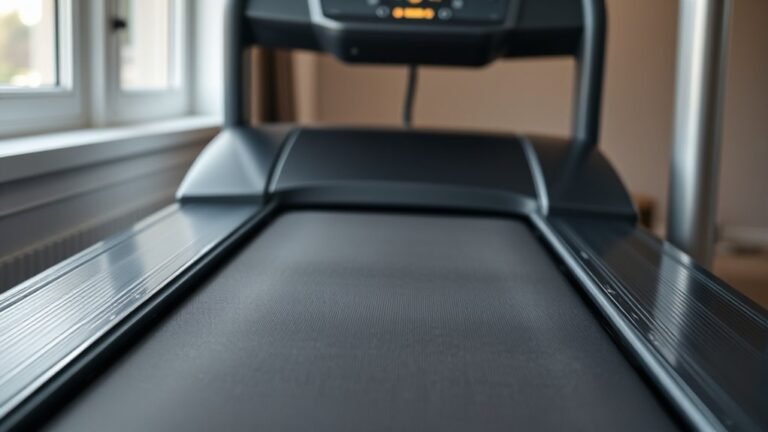
Start by examining the belt surface for uneven wear patterns, fraying edges, or thinning areas, which indicate excessive belt wear and compromise proper traction.
Next, check the belt’s alignment by observing if it tracks centered on the deck during operation. Misalignment often presents as the belt drifting toward one side, signaling potential tension or roller adjustment needs.
Inspect the belt edges for any curling or lifting, which can exacerbate alignment issues and lead to uneven movement.
Addressing these visual indicators early prevents further damage and guarantees smooth, safe treadmill function.
If you detect significant wear or persistent alignment problems, consider professional servicing or belt replacement.
Deck Surface Condition
Although the belt condition is essential, inspecting the deck surface beneath it’s equally important to prevent slipping issues.
The deck material plays a vital role in supporting the belt and ensuring smooth operation. Excessive deck wear can cause uneven friction, leading to belt misalignment or slipping.
To inspect your deck surface effectively:
- Examine the deck material for scratches, grooves, or worn spots that reduce grip.
- Check for any warping, cracks, or damage that could alter belt tension.
- Feel the surface texture; it should be smooth but maintain enough friction to hold the belt firmly.
If you detect significant deck wear, consider resurfacing or replacing the deck to restore proper belt tracking and prevent further slippage.
How to Adjust a Slipping Treadmill Belt
First, check if the treadmill belt is misaligned by observing its position relative to the deck.
Then, use the adjustment bolts at the rear of the machine to realign and tighten the belt evenly.
Finally, test the treadmill at a low speed and fine-tune the bolts until the slipping stops and the belt runs smoothly.
Identify Belt Misalignment
When your treadmill belt slips, misalignment is often the culprit you need to check before making any adjustments. Proper belt alignment is critical to guarantee smooth operation and prevent uneven wear.
To identify misalignment, follow these steps:
- Power off the treadmill and visually inspect the belt edges to see if it’s tracking off-center.
- Conduct a treadmill calibration by manually turning the belt and observing if it shifts toward one side.
- Check for uneven tension or worn rollers that may affect belt alignment.
Addressing belt misalignment early helps maintain ideal treadmill calibration and prevents further slipping issues.
Once you confirm misalignment, you’re ready to proceed with precise adjustments to restore proper belt tracking.
Use Adjustment Bolts
Turn your attention to the treadmill’s adjustment bolts to correct a slipping belt. These bolts, typically located at the rear roller, control the belt tension and alignment.
Using a hex key or Allen wrench, carefully turn the adjustment bolt on the side the belt is slipping toward. Tightening the bolt by small increments, usually a quarter turn, shifts the belt away from that side, restoring proper alignment.
Verify you maintain even belt tension to prevent over-tightening, which can cause premature wear or motor strain.
Regular treadmill maintenance includes checking and adjusting these bolts to keep the belt tracking correctly.
Avoid abrupt or excessive adjustments; instead, make precise, gradual changes and monitor the belt’s position closely after each tweak. This approach verifies effective correction without compromising belt or roller integrity.
Test and Fine-Tune
After adjusting the bolts to correct belt tension and alignment, you need to test the treadmill to confirm the belt no longer slips.
Begin by performing belt calibration through a controlled run at low speed. Then, carry out alignment checks, observing if the belt drifts to one side.
Finally, fine-tune the adjustment bolts incrementally, based on your observations, to optimize belt positioning.
Follow these steps:
- Run the treadmill at 2-3 mph and watch for any side movement.
- If slipping persists, tighten or loosen the rear adjustment bolts slightly.
- Repeat testing and alignment checks until the belt runs centered and stable.
Consistent belt calibration and alignment checks confirm the treadmill functions safely and efficiently without drift or slippage.
How to Tighten Your Treadmill Belt to Stop Slipping
Although treadmill belts can slip for various reasons, tightening the belt is often the most effective immediate solution.
To adjust belt tension correctly, first unplug your treadmill for safety.
Locate the adjustment bolts at the rear roller; these control belt tension. Using an Allen wrench, turn each bolt clockwise in small increments, typically a quarter turn at a time, to increase tension.
After each adjustment, check belt alignment and tension by running the treadmill at low speed. The belt should feel snug, without excessive resistance or slipping.
Proper belt tension guarantees smooth operation and prevents side slipping. Incorporate this step into your regular maintenance tips to extend belt life and avoid premature wear.
Avoid overtightening, as it can strain the motor and rollers.
When and How to Lubricate Your Treadmill Belt and Deck
Maintaining proper belt tension is only part of preventing slipping; regular lubrication of the treadmill belt and deck also plays an essential role in reducing friction and wear.
Proper belt tension and regular lubrication are key to preventing treadmill slipping and reducing wear.
To lubricate effectively, follow these steps:
- Determine lubrication frequency based on usage. Typically every 3-6 months for moderate use, or sooner if you notice increased belt resistance.
- Use the proper lubricant, usually a silicone-based or specifically recommended treadmill lubricant. Avoid oils or sprays that can damage the deck.
- Lift the belt gently and apply a thin, even layer of lubricant underneath the belt on the deck surface. Run the treadmill at a slow speed for a few minutes to distribute the lubricant evenly.
Consistent lubrication minimizes belt drag and prevents slipping to one side, preserving treadmill performance.
How to Replace a Worn or Damaged Treadmill Belt
If you notice persistent slipping, fraying, or visible wear on your treadmill belt, replacing it promptly guarantees safe and efficient operation.
Start by identifying the correct belt type for your model, as variations in width, length, and thickness affect performance.
Next, unplug the treadmill and remove the motor cover to access the belt and deck.
Loosen the rear roller bolts to release tension, then carefully slide off the old belt.
Position the new belt evenly over the deck and rollers, ensuring proper alignment.
Tighten the rear roller bolts incrementally, checking for smooth movement without side slipping.
Finally, reattach the motor cover and test the treadmill at low speed to confirm the installation process was successful and the belt runs true.
How to Maintain Your Treadmill to Prevent Belt Slipping
Regularly inspecting and lubricating your treadmill can greatly reduce belt slipping and extend the machine’s lifespan.
Consistent inspection and lubrication significantly prevent belt slipping and help your treadmill last longer.
To maintain peak performance, focus on these essential steps:
- Routine Inspections: Check belt alignment and tension weekly. Look for signs of wear or damage on the belt and deck surface. Early detection prevents slipping issues.
- Treadmill Cleaning: Remove dust and debris under and around the belt. Clean the belt surface with a damp cloth to avoid friction caused by dirt buildup.
- Lubrication: Apply a silicone-based lubricant beneath the belt every three months or as recommended. Proper lubrication minimizes friction between belt and deck, reducing slipping.
Frequently Asked Questions
Can Treadmill Belt Slipping Cause Motor Damage?
Yes, treadmill belt slipping can cause motor wear due to uneven stress. You should regularly check and adjust the belt tension to guarantee smooth operation and prevent excessive strain on the motor, extending its lifespan.
Are Certain Treadmill Brands More Prone to Belt Slipping?
Yes, some treadmill brands have varying reliability due to design and materials impacting belt slipping. You should focus on consistent treadmill maintenance to prevent issues, regardless of brand, ensuring longevity and smooth operation.
How Does Room Humidity Affect Treadmill Belt Performance?
You’ll find that high humidity levels can cause the treadmill belt to slip or stick by affecting lubrication and belt tension.
Regular treadmill maintenance, including adjusting tension and cleaning, helps counteract moisture’s impact and guarantees smooth performance.
Can Exercise Intensity Impact Belt Alignment?
You’d think exercise intensity could launch your belt to the moon, but it mainly stresses treadmill maintenance and exercise techniques. High intensity demands precise belt tension and alignment checks to prevent slipping and guarantee smooth, safe workouts.
Is Professional Servicing Necessary for Belt Slipping Issues?
You don’t always need professional servicing; you can adjust belt tension yourself with proper treadmill maintenance. However, if the belt keeps slipping despite your efforts, seeking expert help guarantees precise alignment and prevents further damage.
Conclusion
To fix your treadmill belt slipping to one side, start by inspecting the belt for any visible damage. Check the alignment carefully and make necessary adjustments. Tighten the belt if it feels loose, and ensure the deck is properly lubricated to reduce friction.
Replace any worn or damaged parts promptly to prevent further issues. Maintain a regular cleaning schedule to keep the treadmill in good condition. Consistently monitor the belt tension to avoid slipping problems.
By diagnosing the issue accurately and applying precise adjustments, you can ensure smooth operation. Committing to routine maintenance will prolong your treadmill’s lifespan. Taking these steps will effectively fix treadmill belt slipping to one side and keep your workouts safe and efficient.