What Is a Manual Treadmill
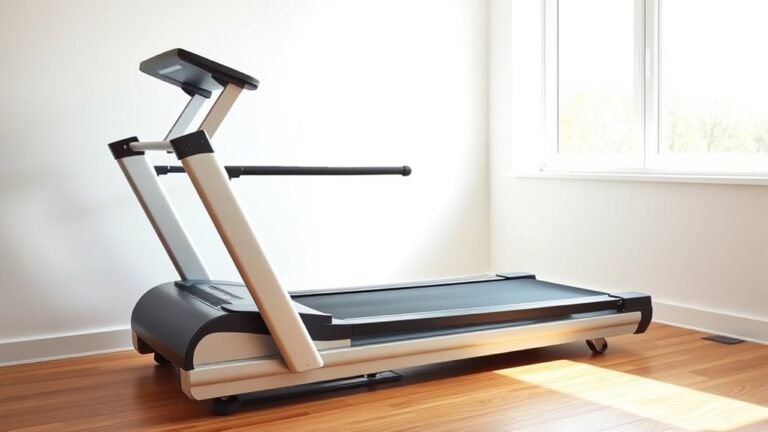
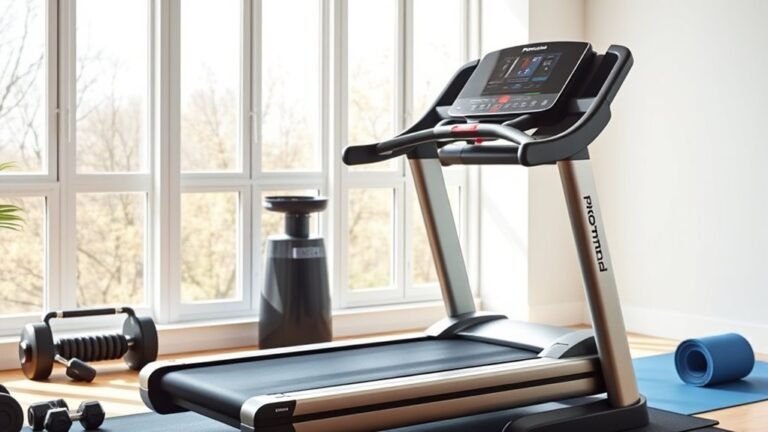
A manual treadmill is a non-motorized exercise machine where you control the belt speed entirely by walking or running. This type of treadmill uses your foot power to turn rollers, often combined with friction or magnetic resistance to adjust workout intensity.
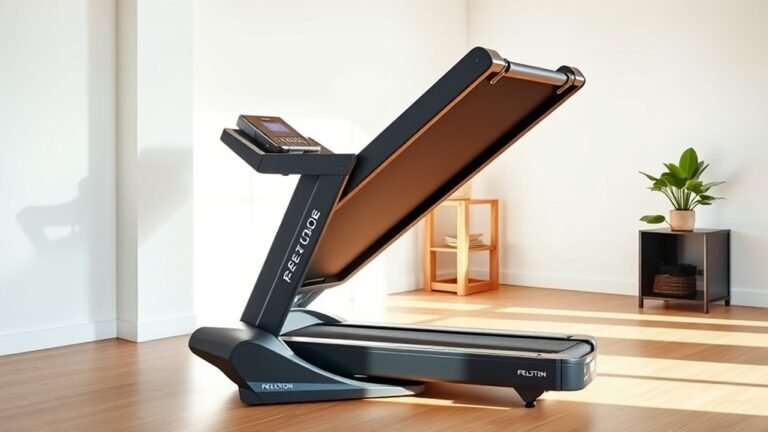
These treadmills feature a compact, durable design with adjustable inclines, providing natural pace control. They are energy-efficient and engage more muscles than motorized versions.
If you want to understand how manual treadmills compare to motorized ones and choose the right model, keep exploring the details ahead.
Key Takeaways
- A manual treadmill is a non-motorized exercise machine powered solely by the user’s foot movement.
- It features a belt mounted on rollers that move based on the user’s pace and force.
- Speed and intensity are controlled naturally by the user’s walking or running effort.
- Manual treadmills are compact, energy-efficient, and require less maintenance than motorized models.
- They offer adjustable inclines and promote a more natural gait and workout control.
How Does a Manual Treadmill Work Without Power?
Although a manual treadmill lacks an electric motor, it operates through the direct interaction between your movement and the belt’s mechanics.
In manual operation, the treadmill belt moves exclusively by user propulsion. Your feet push the belt backward as you walk or run.
This motion engages a friction or magnetic resistance system, providing workout intensity without electrical input. The belt is mounted on rollers that spin freely when you apply force, translating your energy into continuous belt movement.
Because the treadmill responds directly to your pace, you control speed naturally, enhancing workout efficiency and safety.
The treadmill adapts instantly to your pace, letting you control speed for a safer, more efficient workout.
This design eliminates power dependency, making manual treadmills portable and energy-efficient while requiring active user engagement for belt propulsion and exercise rhythm.
What Features Make Manual Treadmills Unique?
When you use a manual treadmill, you benefit from unique features that differentiate it from motorized models. Its compact design allows for easy placement in limited spaces, making it ideal if you don’t have a dedicated workout area.
You’ll also notice the adjustable incline, which lets you modify the slope manually to increase exercise intensity and target different muscle groups.
Unlike motorized treadmills, the belt moves solely by your own force, providing a more natural gait and enhanced control over your pace.
Additionally, many manual treadmills feature durable, low-maintenance components due to the absence of a motor, reducing wear and tear.
These design elements make manual treadmills efficient, space-saving, and customizable workout machines tailored to your specific fitness needs.
What Are the Benefits of Using a Manual Treadmill at Home?
Because manual treadmills rely on your own movement to operate, they offer significant energy efficiency and cost savings compared to motorized models.
When you use one at home, you engage more muscle groups to propel the belt, enhancing calorie burning. This increased muscular involvement also supports a low impact workout, reducing joint stress commonly associated with running on harder surfaces.
Additionally, manual treadmills provide precise control over your speed and intensity since the belt moves only when you push it, allowing you to tailor workouts to your fitness level.
Their compact design makes them ideal for limited spaces, and the lack of electrical components reduces maintenance needs.
Manual vs. Motorized Treadmills: Which Should You Choose?
How do you decide between a manual and a motorized treadmill for your fitness routine?
Consider the manual treadmill advantages first: they offer greater control over your pace since the belt moves only when you do, promoting natural biomechanics and engaging more muscles.
They’re typically lighter, more compact, and require no electricity, making them cost-effective and eco-friendly.
In contrast, motorized treadmill limitations include dependency on power, higher maintenance, and less emphasis on user-driven effort.
However, motorized models provide consistent speed settings and incline options, ideal for structured workouts.
Ultimately, your choice hinges on whether you prioritize hands-on control and simplicity or automated features and preset programs for your training goals.
Understanding these distinctions helps you select the treadmill that best aligns with your fitness needs.
How to Pick the Right Manual Treadmill for You
Choosing the right manual treadmill involves evaluating specific features that align with your workout style and physical needs. Prioritize treadmill features such as belt size, frame durability, and incline adjustability based on your user preferences. Consider your fitness goals, whether walking, jogging, or interval training, to select a treadmill that supports your intensity level and stride length.
| Feature | Importance for Walking | Importance for Running |
|---|---|---|
| Belt Size (Length x Width) | Moderate | High |
| Frame Material | Standard Steel | Reinforced Steel |
| Incline Adjustability | Basic | Advanced |
| Weight Capacity | Up to 250 lbs | Above 250 lbs |
| Portability | Preferred | Optional |
Analyze these treadmill features carefully to guarantee your chosen model matches your user preferences and workout demands efficiently.
Frequently Asked Questions
Are Manual Treadmills Noisy During Use?
Manual treadmills usually have lower noise levels since they lack motors, enhancing your user experience with quieter operation. However, noise can increase based on your pace and belt material, so consider these factors for ideal quiet workouts.
Can Manual Treadmills Support Heavy Users?
You’ve heard, “Don’t judge a book by its cover.” Manual treadmills often support heavy users with high weight capacity, ensuring user comfort through sturdy frames and reinforced belts. These are designed to handle intense, sustained workouts safely and effectively.
Do Manual Treadmills Require Regular Maintenance?
Yes, manual treadmill care demands regular maintenance. You should clean the belt, lubricate as needed, and check tension every 1-3 months depending on usage.
Proper maintenance frequency guarantees peak performance and extends your treadmill’s lifespan.
Are Manual Treadmills Suitable for Rehabilitation Exercises?
You’ll find manual treadmills suitable for rehabilitation exercises, offering controlled pace, low impact, and exercise variety. Their rehabilitation benefits include improved joint mobility, muscle strength, and balance. This helps you progress safely through tailored, technical recovery protocols.
How Long Do Manual Treadmills Typically Last?
You can expect a manual treadmill’s lifespan to range between 5 to 10 years, depending on durability factors like build quality, frequency of use, maintenance, and user weight. Proper care greatly extends treadmill lifespan.
Conclusion
Choosing a manual treadmill puts you in the driver’s seat, literally powering your workout with every step.
Without relying on electricity, you gain precise control over speed and intensity, making your exercise both efficient and eco-friendly.
When selecting one, consider factors like build quality, incline options, and belt size to match your fitness goals.
Embrace this simple yet powerful machine—it’s a mechanical companion that turns your effort into progress, step by step.
A manual treadmill offers a unique workout experience by combining control, effectiveness, and sustainability.