How to Change Treadmill Belt
To change your treadmill belt, first unplug the machine to ensure safety. Remove any debris from the deck to prevent damage to the new belt.
Next, loosen the rear roller bolts to release the tension on the belt. Slide the old belt off the rollers and deck carefully.
Position the new belt centered on the deck for proper alignment. Reinstall the rollers loosely to allow for adjustments.
Adjust the tension by tightening the bolts incrementally. Check the belt alignment by rotating it manually to ensure it tracks correctly.
Finally, power on the treadmill to fine-tune the tension and tracking. Following these key steps will guarantee your treadmill runs smoothly and lasts longer.
Key Takeaways
- Unplug the treadmill and loosen the rear roller bolts to release belt tension before removing the old belt.
- Slide the worn belt off the front roller and remove it from the deck and side rails carefully.
- Position the new belt centered over the deck and rollers, ensuring proper direction of the belt texture.
- Reinstall rollers, tighten bolts incrementally to adjust belt tension, and align the belt to prevent drifting.
- Power on the treadmill to test belt operation, checking for smooth movement, proper tension, and no unusual noises.
Tools and Materials You’ll Need to Change a Treadmill Belt
To change a treadmill belt, you’ll need a specific set of tools and materials to guarantee the process goes smoothly.
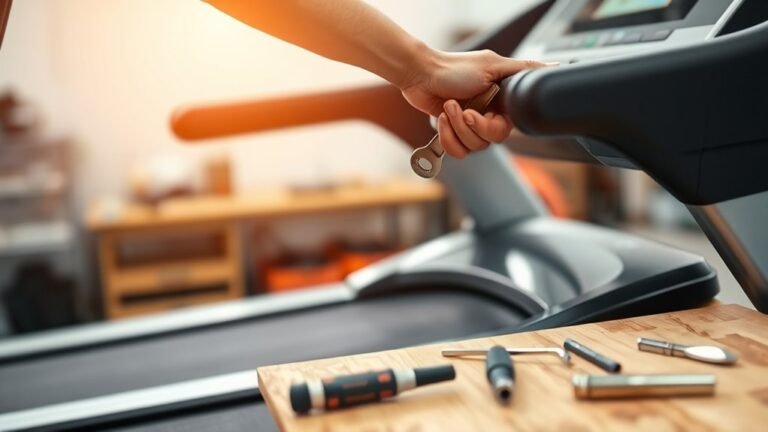
First, gather a hex wrench set and a screwdriver, essential for loosening and tightening bolts.
Start by collecting a hex wrench set and screwdriver to easily loosen and tighten bolts.
You’ll also need a replacement belt compatible with your treadmill’s model and belt type. Verify whether it’s a standard or heavy-duty belt to confirm proper fit and longevity.
Include a lubricant designed for treadmill maintenance to reduce friction during the belt installation. A clean cloth helps remove dust and debris from the deck surface before fitting the new belt.
Optionally, a belt alignment tool can assist in precise adjustment.
Having these tools and materials ready will streamline the replacement process and maintain your treadmill’s peak performance.
Preparing Your Treadmill: Safety and Setup Before Replacement
Before you begin replacing the treadmill belt, make sure the machine is unplugged to eliminate any risk of electric shock.
Next, engage all relevant safety precautions, including wearing protective gloves and guaranteeing a clean, well-lit workspace.
Remove any loose debris or dust from the treadmill deck to facilitate accurate inspection and belt alignment.
Verify the treadmill is on a stable, level surface to prevent movement during maintenance.
Consult the manufacturer’s manual for model-specific instructions and torque specifications.
Prepare a flat, clear area nearby to organize tools and hardware.
Confirm that the treadmill’s safety key is removed to avoid accidental startup.
Performing these preparatory steps guarantees a secure environment and ideal treadmill maintenance, reducing the risk of injury and equipment damage during the belt replacement process.
How to Remove the Old Treadmill Belt
Start by loosening the rear roller bolts using the appropriate wrench to release tension on the treadmill belt. Proper belt maintenance requires you to carefully detach the belt without damaging the deck or rollers.
Follow these steps to remove the old belt efficiently:
Disconnect the treadmill from power to prevent accidental activation. Slide the belt forward off the front roller after loosening rear bolts. Carefully lift and pull the belt away from the deck and side rails.
Inspect the rollers and deck for wear or damage during removal. Note any unusual wear patterns to aid troubleshooting issues later.
Removing the old belt with precision guarantees a smooth replacement process and helps identify underlying problems affecting treadmill performance.
Installing and Aligning the New Treadmill Belt
With the old belt removed and the rollers inspected, you can now position the new treadmill belt onto the deck.
Begin by centering the belt over the deck and rollers, making certain the belt’s texture faces the correct direction. Slide the belt evenly, avoiding any twists.
Next, reinstall the front and rear rollers, securing them firmly but not fully tightening the bolts.
Proceed to adjust the belt tension by tightening the rear roller bolts incrementally; this prevents slippage while allowing smooth rotation.
Perform alignment checks by manually rotating the belt, observing its tracking on the deck edges.
Adjust the rear roller bolts as needed to center the belt precisely.
Repeat these alignment checks until the belt consistently tracks straight without drifting to either side.
This guarantees peak performance before final tightening.
Testing and Adjusting Your New Treadmill Belt
Once you’ve secured the belt and completed initial alignment, you’ll need to power on the treadmill to test its performance under operation.
Carefully observe how the belt behaves at various speeds to guarantee peak function. Focus on these key checks:
- Verify consistent belt tension; it should neither slip nor feel overly tight.
- Inspect for any lateral drift indicating misalignment.
- Listen for unusual noises that may signal improper installation.
- Monitor belt wear patterns to detect uneven abrasion early.
- Confirm smooth acceleration and deceleration without jerking.
If you notice issues, adjust the rear roller bolts incrementally to fine-tune belt tension and alignment.
Re-test after each adjustment until the belt runs centered and taut. Proper belt tension prevents premature belt wear and extends treadmill lifespan.
Frequently Asked Questions
How Often Should I Replace My Treadmill Belt?
You should replace your treadmill belt every 3 to 5 years, depending on usage. Monitor belt lifespan by checking for wear or slipping.
Adjust replacement frequency if you use the treadmill intensely or notice performance issues.
Can a Worn Belt Damage the Treadmill Motor?
Yes, belt wear increases friction, causes misalignment, and elevates motor strain. You’ll risk overheating the motor, reducing its lifespan.
Regularly inspect and replace the belt to maintain smooth operation and protect your treadmill’s motor.
What Are Signs My Treadmill Belt Needs Replacement?
You’ll notice slipping, unusual noises, or visible cracks signaling belt wear. Regular treadmill maintenance includes inspecting for fraying edges and uneven movement.
Replace the belt promptly to prevent motor strain and guarantee smooth operation.
Are There Different Types of Treadmill Belts?
You’ll find various treadmill belts, each tailored with specific types, materials, and belt sizes to match your machine’s needs. Choosing the right one guarantees smooth operation and longevity, so verify compatibility before replacing it.
Can I Upgrade to a Better Belt for Smoother Running?
You can upgrade your treadmill belt by selecting higher-quality treadmill belt materials, which improve the running surface quality. Choose durable, low-friction fabrics for smoother running, ensuring compatibility with your treadmill model for peak performance and longevity.
Conclusion
Now that you’ve skillfully navigated replacing your treadmill belt, you’re ready to enjoy a smoother, more reliable workout experience. With careful alignment and proper tension, your machine will hum quietly and perform at its best, extending its service life.
Remember, routine attention keeps everything running like new, so don’t hesitate to revisit these steps when your treadmill shows signs of fatigue. Your enhanced setup is a small investment for lasting fitness success.
Regular maintenance after changing the treadmill belt ensures optimal performance and longevity. Embrace these habits to keep your workouts effective and enjoyable.