Does Running on a Treadmill Make You Faster
Does running on a treadmill make you faster? Yes, it can, by allowing precise control over speed and incline, which builds muscle strength and improves running form.
Incline settings simulate outdoor resistance, enhancing your running economy and posture. Interval and speed workouts on treadmills boost aerobic capacity and velocity.
However, treadmill running differs from outdoor conditions, so adapting your training carefully is key. To understand how to maximize these benefits and shift speed gains outside, keep exploring effective strategies.
Key Takeaways
- Treadmill incline training improves muscle strength and running economy, leading to enhanced speed.
- Controlled treadmill workouts refine running form and cadence, essential for faster running.
- Interval and speed drills on treadmills boost aerobic capacity and running velocity effectively.
- Using a 1% treadmill incline simulates outdoor conditions, making treadmill speed gains transferable.
- Proper posture and avoiding treadmill mistakes maximize speed benefits from treadmill running.
Can Running on a Treadmill Make You Faster?
Although running on a treadmill differs from outdoor running in environmental factors, it can still effectively improve your speed. By adjusting the treadmill incline, you simulate outdoor resistance, enhancing muscle strength and cardiovascular endurance.
Research shows that incorporating incline intervals increases your running economy, allowing you to maintain faster paces with less effort.
Incline intervals boost running economy, helping you run faster with greater ease.
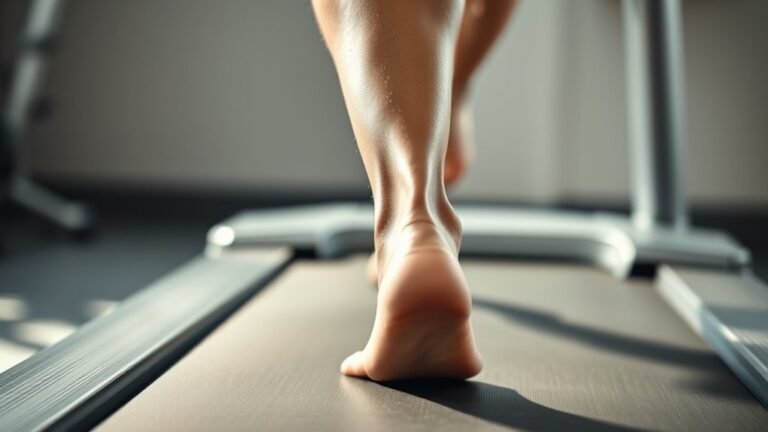
Additionally, the treadmill’s consistent surface helps you refine your running form, promoting better posture and stride mechanics.
Controlled conditions reduce variability, enabling focused improvements in cadence and foot strike.
However, maintaining proper running form is essential to prevent injury and maximize speed gains.
Treadmill vs. Outdoor Running Speed: What’s the Difference?
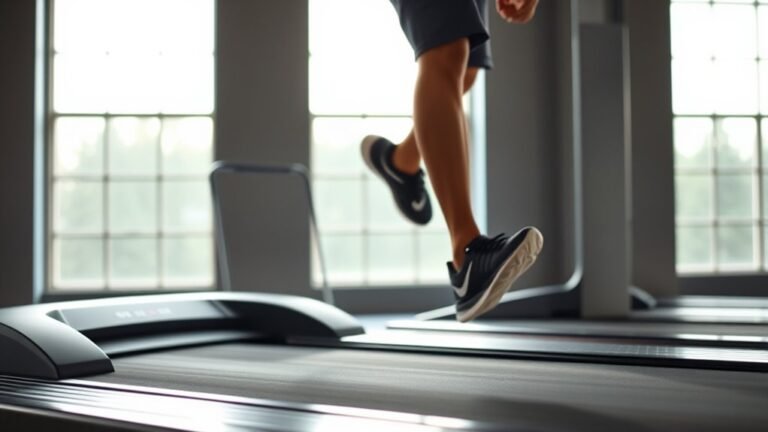
When you compare treadmill running to outdoor running, several biomechanical and environmental factors influence your speed. On a treadmill, the belt assists leg turnover, often making your pace feel easier at the same speed compared to outdoor runs.
However, treadmill incline settings help simulate outdoor terrain, increasing muscle engagement and energy expenditure to match real-world conditions.
Outdoors, uneven surfaces, wind resistance, and varying outdoor terrain demand greater neuromuscular coordination and energy output, which can naturally slow your pace.
Studies reveal that runners tend to clock faster times on treadmills at zero incline than on flat outdoor courses.
To accurately compare speeds, you should adjust the treadmill incline to about 1% to offset the absence of air resistance and replicate outdoor running effort more closely.
Best Treadmill Workouts to Boost Your Running Speed
Since improving running speed requires targeted training stimuli, incorporating specific treadmill workouts can effectively enhance your performance.
Interval training, which alternates high-intensity sprints with recovery periods, has been scientifically proven to increase both aerobic capacity and running velocity.
Interval training combining sprints and recovery boosts aerobic capacity and enhances running speed effectively.
On a treadmill, you can precisely control speed and incline, allowing you to tailor these intervals to your current fitness level and progressively overload your system.
Additionally, speed drills focusing on short bursts of maximum effort improve neuromuscular coordination and stride efficiency.
Research indicates that combining interval training with speed drills on a treadmill leads to significant improvements in running economy and speed.
Common Treadmill Running Mistakes That Slow You Down
Even the most dedicated treadmill runners can unknowingly adopt habits that hinder their speed gains. You might be making subtle errors that reduce your efficiency and slow progress.
Common treadmill mistakes include:
- Improper form: Leaning forward or overstriding disrupts biomechanics, increasing energy expenditure and injury risk.
- Pace misjudgment: Setting an unrealistic speed often leads to premature fatigue, undermining endurance and speed improvements.
- Over-reliance on handrails: Gripping rails decreases core engagement and alters natural running mechanics, limiting strength development.
Scientific studies show that maintaining proper posture and accurately gauging pace are critical for maximizing treadmill benefits.
How to Transfer Treadmill Speed Gains to Outdoor Running
Although treadmill training can significantly boost your speed, translating those gains to outdoor running requires deliberate adjustments.
Research shows treadmill running reduces wind resistance and alters gait mechanics, so you must incorporate outdoor adaptation to fully benefit.
Start by gradually increasing your outdoor running volume, allowing your musculoskeletal system to adjust to variable terrain and environmental factors.
Focus on replicating treadmill speed intervals on flat outdoor routes to maintain intensity while adapting to natural pacing.
Incorporate hill workouts and uneven surfaces to enhance proprioception missing in treadmill training.
Additionally, practice running with proper posture and foot strike outside, as treadmill belts assist leg turnover differently.
Frequently Asked Questions
How Does Treadmill Running Affect Joint Health Compared to Outdoor Running?
You’ll find treadmill running improves joint stability by offering consistent surfaces and impact reduction through cushioning. This lessens stress compared to outdoor running’s uneven terrain, potentially lowering injury risk and promoting healthier joint function over time.
Can Treadmill Running Help With Weight Loss More Effectively Than Outdoor Running?
You’ll burn calories like a furnace on a treadmill, thanks to its efficiency in controlling pace and incline. Studies show treadmill running offers comparable calorie burning to outdoor runs, making it equally effective for weight loss.
What Are the Best Shoes for Treadmill Running?
You’ll want shoes with breathable, lightweight materials and cushioned midsoles to absorb treadmill impact. Look for moderate tread patterns that provide grip without excess traction, optimizing stability and energy return during indoor running sessions.
How Does Treadmill Incline Impact Muscle Engagement?
You’ll boost muscle activation by up to 30% when increasing treadmill incline, targeting glutes and hamstrings more effectively.
Incline benefits include enhanced strength and endurance, making your workout scientifically proven to engage muscles more deeply.
Is Treadmill Running Suitable for Injury Rehabilitation?
Yes, treadmill running suits rehabilitation exercises by allowing controlled intensity and speed, promoting injury prevention. Research shows it aids muscle recovery and gait retraining, making it an effective tool when supervised appropriately during injury rehab.
Conclusion
If you want to get faster, running on a treadmill can help—but only if you use the right workouts. Studies show that treadmill training can improve your speed by up to 10%, thanks to controlled pacing and incline options.
However, to truly boost your outdoor performance, you need to adapt to variable conditions. Avoid common treadmill mistakes, and focus on transferring your gains to real-world running for measurable, lasting improvement.
In conclusion, running on a treadmill can make you faster when combined with proper training and outdoor adaptation.