How to Do Sprints on a Treadmill
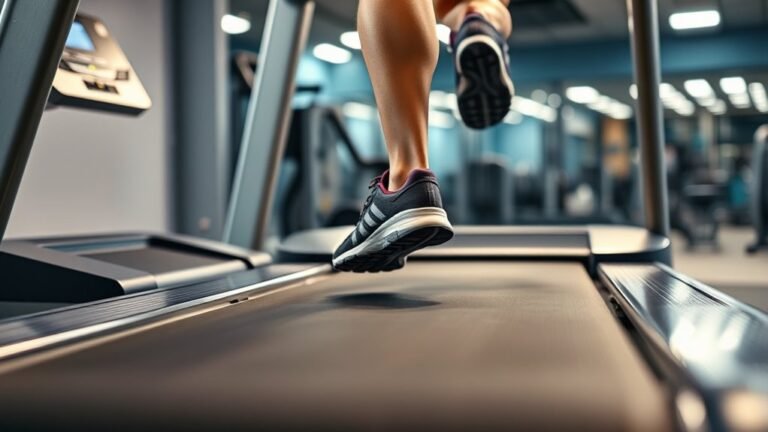
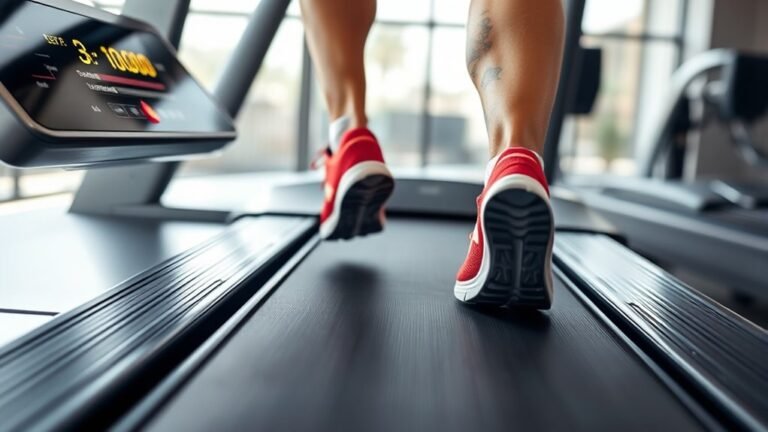
To sprint effectively on a treadmill, start with a 5-10 minute light jog to warm up and loosen muscles. Sprinting on a treadmill allows you to control speed and incline precisely, making it ideal for interval training. Choose a speed around 70-90% of your max, adding a slight incline (1-3%) for intensity.
Keep your posture upright with a slight lean, pump your arms, and use quick strides to boost power while reducing impact. Structure intervals with rest for the best results, and avoid common mistakes like starting too fast. Ready to enhance your workout setup and recovery?
Key Takeaways
- Warm up with 5-10 minutes of light jogging and dynamic stretches like leg swings before sprinting on the treadmill.
- Set treadmill speed to 70-90% of your max sprint speed and incline between 1-3% for added intensity.
- Maintain an upright posture with a slight forward lean, pump arms vigorously, and take short, quick strides.
- Use interval training with short sprint bursts followed by longer rest periods to build power and endurance.
- Avoid common mistakes like starting too fast, leaning forward excessively, and neglecting proper foot placement.
Warming Up Properly for Treadmill Sprints
Before you jump into sprinting on the treadmill, you need to warm up properly to prepare your muscles and prevent injury. Start with 5 to 10 minutes of light jogging or brisk walking to gradually raise your heart rate. This increases blood flow and loosens your muscles, setting a solid foundation for intense sprinting.
Next, incorporate dynamic stretches like leg swings, walking lunges, and high knees to actively engage your muscles and improve your range of motion. These movements help activate the specific muscle groups you’ll rely on during sprints.
Skipping a proper warm-up can lead to strains or cramps, so take this step seriously. By warming up effectively, you boost your performance, reduce injury risk, and get mentally ready to crush your treadmill sprints.
Choosing the Right Speed and Incline for Treadmill Sprints
When you select the right speed and incline for your treadmill sprints, you set yourself up for maximum gains and safety.
Start with speed selection that challenges you but doesn’t push you to lose control, typically around 70-90% of your max sprint speed. Adjust incrementally to find your sweet spot, allowing you to maintain proper form.
Incline adjustments can add intensity and mimic outdoor conditions, but keep them moderate, usually between 1% and 3%.
Too steep an incline can strain muscles and increase injury risk. Listen to your body and tweak speed and incline based on your fitness level and goals.
Treadmill Sprinting Techniques to Maximize Power and Safety
Mastering proper sprinting techniques on a treadmill boosts your power output while keeping you safe from injury. Focus on these key points to optimize your sprint form and breathing techniques:
- Maintain an upright posture with a slight forward lean to engage your core and drive power.
- Pump your arms vigorously but controlled, matching your leg cadence to improve speed and balance.
- Use short, quick strides to reduce impact and prevent overstriding, which risks injury.
- Practice rhythmic breathing. Inhale deeply through your nose and exhale forcefully through your mouth to maximize oxygen flow and endurance.
Structuring Your Treadmill Sprint Workouts for Best Results
To get the most from your treadmill sprints, you’ll want to structure your workouts with a solid warm-up and cool-down to prevent injury and aid recovery.
Focus on interval timing strategies that balance sprint bursts with active rest periods.
This approach keeps your sessions effective and helps you build speed and endurance safely.
Warm-Up And Cool-Down
Three essential components make your treadmill sprint workouts safe and effective: a solid warm-up, the main sprint session, and a proper cool-down.
Focusing on warm-up and cool-down guarantees you perform at your best and reduce injury risk.
Here’s how to nail them:
- Start with 5-10 minutes of light jogging or brisk walking to raise your heart rate gradually.
- Include dynamic stretches to loosen muscles and improve range of motion.
- After sprinting, slow down to a light jog or walk for 5-10 minutes as part of your cool down techniques.
- Finish with static stretches targeting key muscle groups to support recovery importance and reduce soreness.
Stick to these steps to maximize performance and keep your body primed for every sprint session.
Interval Timing Strategies
Effective interval timing is key to structuring your treadmill sprint workouts for maximum impact. By carefully choosing your interval duration and rest periods, you can boost endurance, speed, and recovery.
Shorter sprints with longer rest help build explosive power, while longer intervals improve stamina.
Here’s a simple guide to different timing strategies:
| Interval Duration | Rest Periods |
|---|---|
| 15 seconds | 45 seconds (3:1 ratio) |
| 30 seconds | 90 seconds (3:1 ratio) |
| 45 seconds | 90 seconds (2:1 ratio) |
| 60 seconds | 120 seconds (2:1 ratio) |
Experiment with these to find what challenges you without overexerting. Adjust rest periods to match your fitness level and keep pushing your limits!
Common Mistakes to Avoid When Sprinting on a Treadmill
Although sprinting on a treadmill offers excellent cardio benefits, many runners make avoidable mistakes that can hinder performance or increase injury risk.
To sprint effectively and safely, avoid these common errors:
- Neglecting proper treadmill setup. Verify the machine is stable and set to appropriate speeds before starting.
- Ignoring form mistakes. Keep your posture upright, engage your core, and avoid leaning forward.
- Overlooking pacing issues. Don’t start too fast; gradually increase speed to maintain control and reduce fatigue.
- Failing to focus on foot placement. Land midfoot, not on your heels or toes, to prevent injury.
Cooling Down and Recovering After Treadmill Sprints
After pushing yourself through intense sprints, it’s essential to gradually slow your pace to help your body adjust.
Taking time to stretch properly will ease muscle tension and improve flexibility.
Don’t forget to hydrate well to support recovery and keep your muscles fueled for your next workout.
Importance Of Gradual Slowdown
While sprinting on a treadmill pushes your body to its limits, slowing down gradually afterward helps your muscles recover efficiently and prevents dizziness or injury.
Embracing gradual deceleration is essential for injury prevention and guarantees your body shifts smoothly from high intensity to rest. Here’s why you should focus on it:
- It reduces the risk of blood pooling in your legs, preventing lightheadedness.
- It helps clear lactic acid buildup, minimizing muscle soreness.
- It allows your heart rate to return to a safe level steadily.
- It promotes better recovery, preparing you for your next workout session.
Stretching Techniques Post-Sprint
Since your muscles are still warm from sprinting, incorporating targeted stretching techniques immediately after your treadmill session can greatly enhance recovery and flexibility.
Start with dynamic stretches to gently ease your heart rate and maintain blood flow. Leg swings, walking lunges, or arm circles work well.
These movements prepare your body for the shift from intense activity to rest. Afterward, focus on static stretches to lengthen and relax your muscles. Hold stretches like hamstring reaches, calf stretches, and quadriceps pulls for 20-30 seconds each.
This approach reduces muscle tightness and lowers injury risk. By combining dynamic stretches and static stretches post-sprint, you’ll speed up recovery and improve your overall performance next time you hit the treadmill.
Make stretching a consistent habit—you’ll thank yourself later.
Hydration And Muscle Recovery
Even when your sprint session ends, your body still needs care to recover effectively. Proper hydration and muscle recovery are key to maximizing your progress.
Follow these essential hydration tips and recovery strategies:
- Drink water immediately after sprints to replace lost fluids and prevent dehydration.
- Include electrolytes in your hydration routine to support muscle function and balance.
- Perform light jogging or walking for 5-10 minutes to cool down and reduce muscle stiffness.
- Use foam rolling or gentle stretching to enhance blood flow and speed up muscle recovery.
Frequently Asked Questions
Can I Sprint on Any Type of Treadmill?
You can sprint on most treadmill types, but make sure it supports high speeds and has good shock absorption. Use proper sprinting techniques to avoid injury and maximize performance, adjusting settings to fit your fitness level.
How Often Should I Do Treadmill Sprint Workouts Weekly?
You should sprint on the treadmill 2-3 times a week, like lightning strikes between calm skies. Keep sprint duration short, around 20-30 seconds, and allow ample recovery time to recharge and boost your performance.
Are Treadmill Sprints Effective for Weight Loss?
Yes, treadmill sprints are effective for weight loss because they boost your metabolism and burn calories quickly. You’ll enjoy sprint benefits like improved endurance and muscle tone, making your workouts efficient and motivating. Keep pushing!
What Shoes Are Best for Treadmill Sprinting?
Running shoes with ample cushioning support are your sprinting armor, protecting your feet from impact. Choose lightweight, breathable options with firm grip soles to keep you swift and steady, powering through every treadmill sprint confidently.
Can Treadmill Sprints Help Improve Outdoor Running Speed?
Yes, treadmill sprints can boost your outdoor running speed by enhancing your sprinting technique and providing consistent treadmill benefits like controlled pace and incline.
Keep pushing yourself to maximize gains and improve overall performance.
Conclusion
Now that you know how to warm up, pick the right speed, and sprint with power and safety, imagine yourself pushing through that final, heart-pounding second on the treadmill. Feel the burn, the rush, the thrill of progress. Keep your form sharp and avoid common pitfalls—your best sprint is just ahead.
Cool down, recover, and get ready to conquer your next session stronger than ever. Your sprint journey starts now!
Remember, mastering how to do sprints on a treadmill will boost your fitness and help you achieve your goals faster.