How to Incline Treadmill
To incline your treadmill effectively, start by selecting a moderate incline between 3% and 5%. This level helps boost muscle challenge and calorie burn without overwhelming yourself.
Gradually increase the incline as your strength and endurance improve. Focus on maintaining proper posture and avoid overusing the handrails.
Combining incline with varied speeds can further maximize your workout results. Mastering these basics sets a strong foundation—there’s more to learn about optimizing incline workouts safely and effectively.
Key Takeaways
- Start with a moderate incline of 3% to 5% to challenge muscles and increase calorie burn safely.
- Use the treadmill controls to gradually adjust the incline while monitoring your pace and effort.
- Maintain proper posture and avoid excessive handrail use to maximize workout effectiveness and safety.
- Incorporate incline intervals by alternating between flat and inclined settings for engaging workouts.
- Warm up before increasing incline to prevent injury and allow muscles to adapt gradually.
When and Why to Use Your Treadmill’s Incline
Although running on a flat treadmill can boost your endurance, using the incline feature challenges your muscles more effectively and burns extra calories. You should use the treadmill’s incline when you want to maximize calorie burn without extending your workout duration.
Finding the ideal incline, usually between 3% and 5%, helps you push harder without overexerting yourself. Start with a moderate incline and gradually increase it as your strength and stamina improve.
Incorporating incline intervals into your routine can keep workouts engaging and efficient. Remember, using the incline isn’t just about making your session tougher; it’s about training smarter.
How Incline Changes Your Workout and Muscles Worked
When you increase the treadmill’s incline, you shift the focus of your workout to different muscle groups, making your exercise more effective. This adjustment boosts muscle engagement and ramps up workout intensity, pushing your body to work harder and burn more calories.
Increasing treadmill incline targets new muscles, intensifies your workout, and maximizes calorie burn.
You’ll notice a greater challenge on your lower body, especially your glutes and hamstrings.
Here’s what changes with incline training:
- Enhanced glute activation
- Increased hamstring and calf muscle engagement
- Greater quadriceps workload
- Elevated cardiovascular demand
- Higher overall calorie burn
Adjusting Your Treadmill Incline
You’ll boost your workout by adjusting the treadmill incline to target different muscles and increase intensity.
Start by setting a manageable incline level and gradually increase it as you build strength and endurance.
Always prioritize safety by maintaining proper posture and using handrails when needed.
Benefits Of Incline Walking
Because adjusting your treadmill incline challenges your muscles differently, incline walking delivers far greater fitness benefits than walking on a flat surface.
You’ll boost your cardiovascular health and increase calorie burn more efficiently by adding incline to your routine. This simple change engages more muscle groups and intensifies your workouts without increasing speed.
Here’s what incline walking does for you:
- Enhances cardiovascular endurance by raising heart rate
- Increases calorie burn, aiding weight management
- Strengthens lower body muscles, including glutes and calves
- Improves balance and stability through varied movement
- Reduces joint impact compared to running on flat surfaces
Incorporating incline walking motivates you to push harder and achieve superior fitness results.
Make incline adjustments a staple in your workouts for lasting health improvements.
How To Set Incline
Adding incline to your treadmill routine reveals greater fitness gains, but setting it correctly guarantees you maximize those benefits safely and effectively.
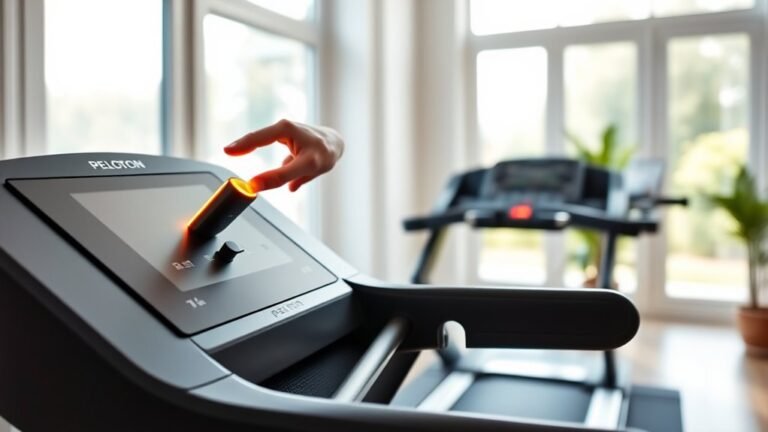
Start by familiarizing yourself with your treadmill’s incline settings, often found on the console or side rails.
Use the treadmill features to adjust the incline gradually, increasing by small increments to avoid strain. Many machines offer preset incline programs. Choose one that matches your fitness level and goals.
If your treadmill allows manual adjustment, start at a low incline and increase as you feel comfortable, monitoring your pace and effort.
Remember, consistent incline adjustments challenge your muscles differently and improve endurance.
Mastering these incline settings makes certain you tailor each workout effectively, pushing your limits while maintaining control over your treadmill experience.
Safety Tips For Incline
When adjusting your treadmill incline, always prioritize safety to prevent injury and maintain control. Proper footwear choice is essential. Wear shoes with good grip and support to handle the incline’s added strain.
Begin with a warm up routine on a flat surface before increasing the incline to prepare your muscles and joints. Increase the incline gradually; sudden changes can throw off your balance. Always hold the handrails when adjusting the incline to stay stable.
- Check the treadmill’s incline mechanism for smooth operation before use.
- Maintain a steady pace; avoid sudden speed changes.
- Stay centered on the belt to prevent slips.
- Listen to your body; stop if you feel pain or dizziness.
- Keep water nearby to stay hydrated during intense incline workouts.
Combining Treadmill Incline and Speed for Better Results
Though increasing treadmill incline alone boosts intensity, combining it with strategic speed adjustments maximizes your workout efficiency. By alternating between higher inclines at slower speeds and lower inclines at faster paces, you engage different muscle groups and enhance cardiovascular challenge simultaneously.
This approach is central to interval training, which improves endurance and burns more calories in less time. To add workout variety, design sessions that cycle through varying incline-speed combos, like 2 minutes at 5% incline and 3 mph, followed by 2 minutes at 1% incline and 5 mph. This keeps your body adapting and prevents plateaus.
Safe Ways to Increase Treadmill Incline
Because increasing treadmill incline too quickly can strain your muscles and joints, you should raise it gradually to stay safe and effective.
Adjust your treadmill settings incrementally to control workout intensity without risking injury. Here’s how to increase incline safely:
Start with a low incline and increase by no more than 1-2% every few minutes. Monitor your heart rate to guarantee your workout intensity remains manageable.
Warm up before adjusting incline to prepare your muscles and joints.
Use proper posture to reduce strain as incline rises.
Listen to your body; if you experience pain or discomfort, reduce the incline.
Treadmill Incline Mistakes You Should Avoid
Increasing your treadmill incline safely sets a strong foundation, but avoiding common incline mistakes will help you get the most from your workout and prevent setbacks.
One major error is using improper form, such as leaning forward or gripping the handrails, which reduces effectiveness and risks injury. Also, jumping to steep inclines too quickly can overwhelm your muscles and joints.
| Mistake | Why to Avoid It | Correct Approach |
|---|---|---|
| Improper Form | Causes strain and limits workout gains | Maintain upright posture, avoid handrails |
| Too Steep Too Soon | Leads to injury and fatigue | Gradually increase incline |
| Overusing Handrails | Reduces workout intensity | Use handrails only for balance |
| Ignoring Warm-Up | Increases injury risk | Warm up before incline sessions |
Stay mindful and progress wisely for safer, more effective workouts.
Frequently Asked Questions
Can Inclining a Treadmill Help With Weight Loss?
Yes, inclining your treadmill boosts your metabolic rate and helps you achieve a caloric deficit faster. You’ll burn more calories, making weight loss more effective when combined with consistent effort and a healthy diet.
Does Incline Training Improve Cardiovascular Health?
Think of incline training as a mountain climb for your heart. It boosts your aerobic capacity and heart strength.
When you challenge yourself uphill, you actively strengthen your cardiovascular system. This improves endurance and overall heart health with every step.
How Does Treadmill Incline Affect Calorie Burn?
You’ll boost calorie expenditure by increasing the treadmill incline, which intensifies your workout. Incline benefits include activating more muscles and enhancing endurance, so push yourself uphill to burn more calories and maximize your fitness results.
Are Incline Treadmill Workouts Suitable for Beginners?
You might worry incline workouts are too tough, but with beginner tips like starting slow and limiting workout duration, you’ll build strength safely.
Stick to manageable inclines and durations to progress confidently and avoid burnout.
Can Incline Treadmill Exercises Reduce Joint Impact?
Yes, incline treadmill exercises enhance joint safety by promoting impact reduction. You’ll engage muscles more efficiently, lessening stress on your joints.
Keep your posture aligned, and you’ll protect your joints while maximizing workout benefits.
Conclusion
Using your treadmill’s incline challenges your body, boosts your endurance, and torches more calories. You’ll build strength, improve balance, and increase stamina—all by simply adjusting the incline. Remember to start slow, listen to your body, and avoid common mistakes.
Keep pushing, keep progressing, and keep climbing. When you master the incline, you transform your workout from ordinary to extraordinary—so set that slope, step up, and own every stride.
Inclining your treadmill correctly is key to maximizing your fitness gains and making each session more effective.