How to Jog on Treadmill
To jog on a treadmill effectively, start by setting it up on a stable surface and adjusting the speed to a comfortable pace. Jogging on a treadmill allows you to control your environment and pace easily.
Maintain good posture—keep your head up, shoulders relaxed, and land softly on your mid-foot. Warm up with dynamic stretches and use a safety clip for emergencies.
Gradually increase speed or incline to challenge yourself and cool down afterward with stretching. Mastering these basics will help you jog safely and efficiently. There’s more to optimize your treadmill workout ahead.
Key Takeaways
- Start with a proper treadmill setup on a flat, stable surface and attach the safety clip to your clothing.
- Maintain an upright posture with relaxed shoulders, eyes forward, and land softly on the middle of your foot.
- Warm up with dynamic stretches and gradually increase treadmill speed before jogging.
- Adjust speed and incline gradually to challenge yourself while keeping a comfortable pace.
- Cool down by slowing to a brisk walk for 3-5 minutes, then stretch key muscle groups for 5-10 minutes.
Set Up Your Treadmill for Jogging
Before you start jogging, make certain you set up your treadmill properly to guarantee safety and effectiveness.
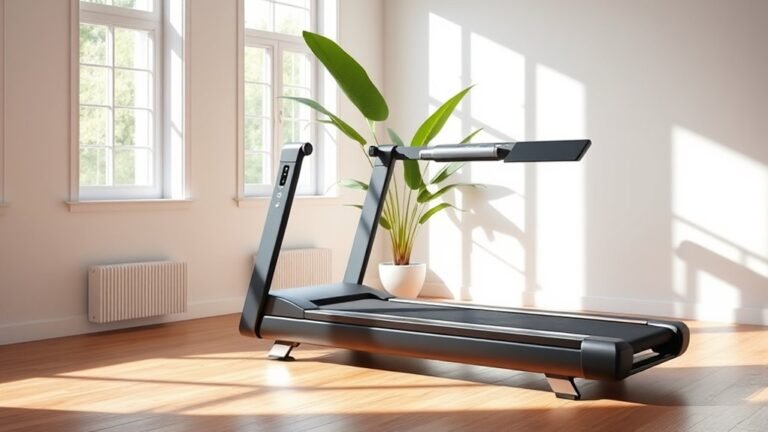
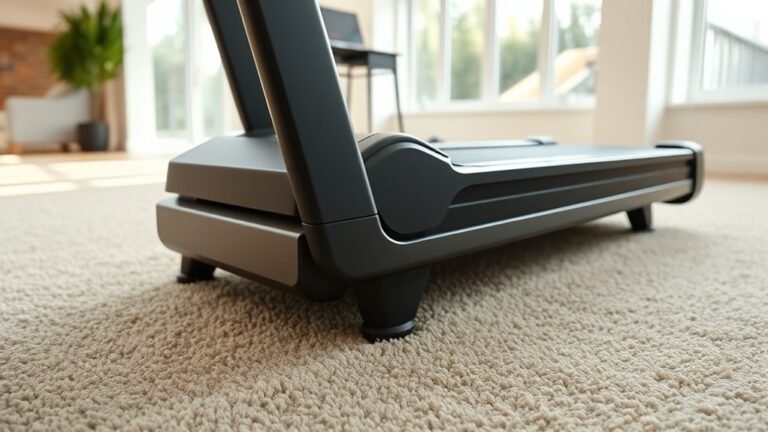
Begin with treadmill setup by placing the machine on a flat, stable surface to prevent wobbling. Check for adequate space around the treadmill to allow free movement.
Confirm the treadmill belt is centered and tight to maintain proper alignment, which helps avoid injury and uneven wear.
Adjust the handrails and console to a comfortable height, so you maintain balance without slouching.
Set the speed and incline to a beginner-friendly level to warm up safely.
Finally, familiarize yourself with emergency stop features before you start jogging.
Taking these steps confirms your treadmill is ready for a smooth, efficient workout that supports your fitness goals.
Find Your Best Jogging Form on the Treadmill
Finding your best jogging form on the treadmill boosts both your efficiency and comfort during workouts. Start by focusing on your jogging posture: keep your head up, shoulders relaxed, and chest open. Avoid leaning forward or backward, as this can strain your back and reduce endurance.
Next, pay attention to foot placement. Land softly on the middle of your foot rather than the heel to absorb impact efficiently and prevent injury. Maintain a quick, light cadence to keep momentum steady without overexerting.
Keep your arms bent at about 90 degrees, swinging naturally at your sides to help balance and rhythm.
Warm Up Properly Before Jogging on a Treadmill
Before you start jogging, warm up properly with dynamic stretching to prepare your muscles and improve flexibility.
Gradually increase your treadmill speed to ease your body into the workout without shock.
Incorporate joint mobility exercises to boost circulation and reduce injury risk.
Importance Of Dynamic Stretching
Although it might be tempting to jump straight onto the treadmill, warming up with dynamic stretching prepares your muscles and joints for the workout ahead.
Dynamic stretching enhances your dynamic flexibility, allowing smoother, more efficient movements while jogging.
It’s also essential for injury prevention, as it reduces muscle stiffness and improves blood flow.
Here are three reasons you should include dynamic stretching in your warm-up:
- Activates muscles – Prepares key muscle groups for jogging, boosting performance.
- Increases range of motion – Helps your joints move freely, reducing strain.
- Improves coordination – Enhances neuromuscular control, so you stay balanced and stable.
Gradual Speed Increase
Since your muscles are warmed up and ready, you should increase the treadmill speed gradually to ease into your jogging session.
Start by adjusting the treadmill settings to a comfortable pace, allowing your body to adapt without strain.
Focus on a steady speed progression, raising the speed in small increments every minute or two. This approach helps prevent injury and builds endurance effectively.
Pay attention to how your body responds. If you feel any discomfort, slow down and maintain your current pace until you’re comfortable.
By controlling your speed progression, you’ll enhance your stamina and enjoy a smoother workout experience.
Joint Mobility Exercises
As you gradually increase your speed, your joints need to be ready to handle the movement smoothly and safely.
Incorporating joint flexibility exercises into your mobility routine is essential for preventing injury and enhancing performance.
Start your warm-up with these key movements:
- Ankle Circles: Rotate each ankle 10 times clockwise and counterclockwise to boost ankle joint flexibility.
- Hip Openers: Perform leg swings forward and sideways, 15 reps each leg, to loosen hip joints and improve range of motion.
- Arm Circles: Do 20 small to large circles with your arms to activate shoulder joints and upper body.
Commit to this mobility routine before jogging on the treadmill, and you’ll feel more agile, stable, and ready to tackle your workout effectively.
Choose the Right Speed and Incline for Your Jog
Start by finding a jogging speed that feels comfortable yet energizing for you.
Then, increase the incline gradually to add a challenge without overexerting yourself.
Balancing speed and incline guarantees an effective workout that builds endurance safely.
Determine Comfortable Jogging Speed
Finding the right jogging speed and incline on your treadmill can make all the difference in maintaining a comfortable yet effective workout.
To determine your comfortable jogging speed, focus on these key steps:
- Start Slow: Begin at a light pace to warm up and gauge your current fitness level, allowing you to find a suitable pace that feels manageable.
- Listen to Your Body: Adjust speed according to your personal preference. If you feel strained, slow down; if it feels too easy, slightly increase the pace.
- Test and Adjust: Experiment with different speeds during short intervals to identify the speed where you can jog steadily without gasping or losing rhythm.
Adjust Incline for Challenge
Two key factors, speed and incline, work together to shape the intensity of your treadmill jog. Adjusting the incline lets you increase challenge levels without pushing your speed too high.
Even a slight incline simulates outdoor terrain, engaging more muscles and boosting calorie burn.
You’ll experience incline benefits like improved cardiovascular fitness and stronger lower body strength. Start by adding a 1-2% incline to mimic natural running conditions and prevent boredom.
Gradually raise the incline as your endurance grows, but listen to your body to avoid overexertion.
By fine-tuning the incline, you keep your workouts fresh and effective, ensuring consistent progress.
Balance Speed and Incline
Although adjusting either speed or incline can intensify your treadmill jog, balancing both guarantees you get the most effective workout without risking injury.
To optimize your treadmill settings and control workout intensity, keep these tips in mind:
- Start with a moderate speed and incline, then gradually increase one while keeping the other steady to avoid overexertion.
- Use a slight incline (1-2%) to mimic outdoor running and reduce joint stress, adjusting speed to maintain a comfortable pace.
- Listen to your body. If your breathing or form suffers, dial back speed or incline to prevent injury and ascertain consistent progress.
Track Your Heart Rate and Breathing While Jogging
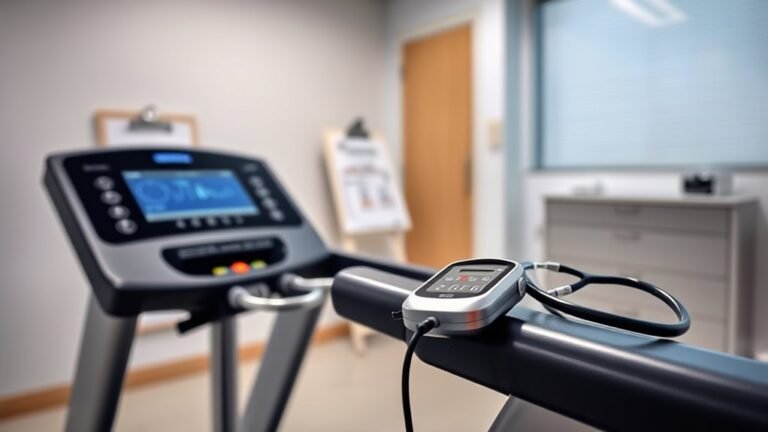
While jogging on a treadmill, monitoring your heart rate and breathing helps you maintain the right intensity and avoid overexertion. Use a heart rate monitor or the treadmill’s built-in sensor to keep track. Aim to stay within your target heart rate zone for effective cardiovascular benefits without pushing too hard.
Pay close attention to your breathing techniques; practice steady, rhythmic breaths to maximize oxygen flow and endurance. Inhale deeply through your nose and exhale fully through your mouth, matching your breath to your stride.
If you notice your heart rate spiking or your breathing becoming erratic, slow your pace to recover. Tracking these signals keeps your workout safe, efficient, and enjoyable, helping you build stamina steadily on the treadmill.
Follow Safety Tips to Prevent Injury While Jogging on a Treadmill
To prevent injury while jogging on a treadmill, you need to follow essential safety tips that protect your body and enhance your workout experience.
Prioritizing treadmill safety guarantees you jog confidently and reduce the risk of injury.
- Start Slow: Always begin with a warm-up at a low speed to prepare your muscles and joints. Avoid sudden speed increases to prevent strain.
- Maintain Proper Form: Keep your posture upright, with shoulders relaxed and eyes forward. This minimizes stress on your back and knees.
- Use Safety Features: Attach the safety clip to your clothing and familiarize yourself with the emergency stop button to quickly halt the treadmill if needed.
Use Interval Training to Boost Your Treadmill Jog
After mastering safety tips to protect your body, you can elevate your treadmill jog by incorporating interval training. This technique alternates between high-intensity bursts and recovery periods, maximizing your workout’s effectiveness.
Interval benefits include improved cardiovascular fitness, increased calorie burn, and enhanced endurance. Plus, switching speeds and intensities adds workout variety, keeping your sessions engaging and preventing plateaus.
To start, try jogging at a moderate pace for two minutes, then increase your speed to a challenging sprint for 30 seconds. Repeat this cycle several times based on your fitness level.
Using interval training not only boosts your treadmill jog but also helps you stay motivated and see faster progress. Embrace intervals, and you’ll transform your treadmill routine into a dynamic, efficient workout.
How Long Should You Jog on a Treadmill for Best Results
Determining how long you should jog on a treadmill depends on your fitness goals and current stamina. To maximize your results, consider these factors when deciding your treadmill duration and jogging frequency:
- Beginner Level: Start with 15-20 minutes per session, jogging 3 times a week. This builds endurance without overwhelming your body.
- Intermediate Level: Aim for 30-40 minutes, 4-5 times weekly. This duration enhances cardiovascular health and burns more calories.
- Advanced Level: Jog for 45-60 minutes at least 5 times a week to improve stamina and support weight management.
Listen to your body, gradually increasing treadmill duration as your fitness improves.
Consistency in jogging frequency is key to seeing lasting benefits and avoiding injury.
Cool Down and Stretch After Your Treadmill Jog
While it might be tempting to stop immediately once you finish jogging, you should always cool down and stretch to help your body recover.
Gradually slow your pace to a brisk walk for 3 to 5 minutes, allowing your heart rate to return to normal. This step is essential for effective post jog recovery, preventing dizziness and muscle stiffness.
Slow down to a brisk walk for 3-5 minutes to normalize your heart rate and ease muscle tension.
After cooling down, spend 5 to 10 minutes stretching key muscle groups like your calves, hamstrings, quads, and hips.
Focus on gentle, sustained stretches to promote muscle relaxation and flexibility. Incorporating these steps consistently will reduce soreness and enhance your overall treadmill jog experience.
Frequently Asked Questions
What Are the Best Shoes for Jogging on a Treadmill?
You want shoes with good cushioning, breathability, and support tailored for treadmill running surfaces.
Look for lightweight, flexible soles with shock absorption to protect your joints and enhance comfort during your jogs.
Can Jogging on a Treadmill Help With Weight Loss?
Jogging on a treadmill torches calories like a furnace and revs up your metabolism boost. You’ll melt fat faster than ice in summer. Just stay consistent, and watch your weight loss goals become reality!
How Does Treadmill Jogging Compare to Outdoor Jogging?
You’ll find treadmill advantages like controlled pace and weather protection, while outdoor jogging offers varied terrain and fresh air.
Embrace treadmill ease to build consistency, then tackle outdoor challenges to boost endurance and mental toughness.
Is It Normal to Feel Dizzy After Treadmill Jogging?
Yes, feeling dizzy after treadmill jogging can happen due to dizziness causes like dehydration or low blood sugar.
Focus on proper post-exercise recovery: hydrate, cool down, and rest to prevent dizziness and keep your workouts safe and effective.
Can Treadmill Jogging Improve Cardiovascular Health?
Yes, treadmill jogging boosts cardiovascular benefits by strengthening your heart health. It improves circulation, lowers blood pressure, and enhances endurance.
Stick with it consistently, and you’ll notice significant improvements in your overall heart fitness.
Conclusion
Jogging on a treadmill is like steering your own ship—you control the speed, direction, and intensity. By setting up your treadmill right, maintaining good form, and listening to your body, you’ll navigate your workouts safely and effectively.
Remember to warm up, monitor your heart rate, and cool down to keep your journey smooth. Stay consistent, mix in intervals, and you’ll see progress that keeps you motivated and strong every step of the way.
With these tips in mind, your experience of how to jog on a treadmill will be both safe and rewarding. Keep at it, and enjoy the benefits that come with regular treadmill jogging.