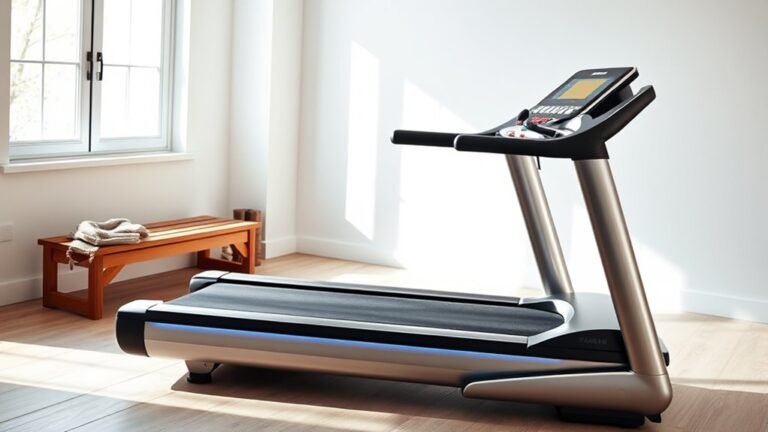
How to Make a Dog Treadmill
To make a dog treadmill, start by measuring your dog to choose the right size frame and belt that fit comfortably. Using durable, non-toxic materials like wood or metal ensures stability and safety for your pet. Add a slip-resistant treadmill belt to prevent any accidents during use.
Install an adjustable-speed motor to control the pace, making it safe and customizable for your dog’s exercise needs. Test the treadmill at low speeds first to ensure everything works smoothly.
Introduce your dog gradually to the treadmill using treats and positive reinforcement to make the experience enjoyable. Regular maintenance is essential to guarantee smooth operation and prolong the treadmill’s lifespan.
With these steps, you’ll create a safe, effective exercise tool tailored to your pet’s needs. Explore further to optimize workouts and training tips for the best results.
Key Takeaways
- Measure your dog accurately to design a stable treadmill frame that fits their size and stride comfortably.
- Use durable, non-toxic materials like hardwood or metal for the frame and a slip-resistant belt for safety.
- Construct the frame with wide, anti-slip legs and securely fasten all joints for stability and durability.
- Test the treadmill at low speeds, ensuring smooth belt movement, secure edges, and a functioning emergency stop.
- Gradually train your dog with short, slow sessions using positive reinforcement to build confidence and comfort.
What Is a Dog Treadmill and Why Build One?
A dog treadmill is a specialized exercise machine designed to help your pet stay active indoors, especially when outdoor conditions aren’t ideal.
If you want to maintain your dog’s fitness regardless of weather or busy schedules, building a dog treadmill can be a practical solution.
It guarantees your dog gets consistent indoor exercise, which is essential for their health, weight management, and mental stimulation.
By creating your own treadmill, you can customize it to fit your dog’s needs and save money compared to commercial options.
Building your own dog treadmill lets you tailor it perfectly and cut costs versus buying one.
Plus, it offers you control over your pet’s workout intensity and duration.
Investing time in building this device supports your dog’s overall well-being, making it easier to keep them fit and happy without relying solely on outdoor walks.
Choose the Right Size and Design for Your Dog Treadmill
Start by measuring your dog accurately to guarantee the treadmill fits comfortably.
Pay close attention to the belt size, as it needs to accommodate your dog’s stride without being too large or tight.
Finally, pick a frame design that provides stability and safety for your dog’s specific needs.
Measure Your Dog Accurately
Before building your dog treadmill, you’ll need to measure your dog carefully to guarantee the treadmill fits comfortably and supports safe movement. Accurate dog measurements, including length, height, and stride, are essential, especially when considering breed specifics that affect size and gait.
Here’s a quick reference for measuring:
| Measurement | How to Measure | Breed Example |
|---|---|---|
| Length | From neck base to base of tail | Dachshund: 16–20″ |
| Height | Ground to shoulder | Labrador: 21.5–24″ |
| Stride Length | Distance between paw placements | Greyhound: 30–36″ |
Use these measurements to tailor your treadmill design, ensuring your dog exercises safely and comfortably.
Consider Treadmill Belt Size
When selecting the treadmill belt size, you’ll want to confirm it matches your dog’s measurements for length and width to provide a comfortable and safe walking or running surface.
Proper treadmill dimensions guarantee your dog won’t feel cramped or risk stepping off during use. Measure your dog’s stride length and add extra space for ease of movement.
Choose belt materials that offer good traction but remain gentle on your dog’s paws, such as textured rubber or fabric-coated belts. Avoid slippery or rough surfaces that can cause discomfort or injury.
Remember, the belt size and material directly affect your dog’s experience and safety, so prioritize these factors carefully.
Tailoring the treadmill belt to your dog’s needs will encourage consistent, enjoyable exercise sessions.
Select Suitable Frame Design
Choosing the right frame design goes hand in hand with selecting the proper treadmill belt size, as both impact your dog’s comfort and safety.
Focus on sturdy frame materials like steel or aluminum, which provide durability without adding excessive weight.
Verify the frame dimensions accommodate your dog’s size, allowing enough space for natural movement without feeling cramped.
Pay attention to design aesthetics to create a treadmill that blends well with your home environment, making it less intrusive and more inviting for your dog.
Smooth edges and rounded corners enhance safety, preventing injuries during use.
Gather Materials and Tools for Your Dog Treadmill
To build a reliable dog treadmill, you’ll need a specific set of materials and tools that assure safety and durability.
Prioritize safety considerations by choosing non-toxic, sturdy components that won’t harm your dog.
Always select non-toxic, durable materials to ensure your dog’s safety during treadmill use.
For material selection, opt for high-quality wood or metal for the frame to guarantee stability. Use a slip-resistant treadmill belt to prevent accidents, and select a quiet, low-speed motor suitable for canine use.
Essential tools include a drill, screwdriver, measuring tape, saw, and sandpaper for smooth edges. Also, have screws, bolts, and brackets ready for secure assembly.
Don’t forget protective gear like gloves and goggles to keep yourself safe during construction.
Thoughtful material and tool choices will make your dog treadmill both safe and long-lasting, providing your pet with a reliable exercise option.
Build a Stable and Safe Frame
Three key factors guarantee your dog treadmill frame remains stable and safe throughout use. First, choose durable frame materials like hardwood or metal to support your dog’s weight. Next, focus on stability factors such as wide legs and anti-slip pads to prevent wobbling. Finally, confirm all joints are securely fastened and reinforced to handle movement stress.
| Stability Factors | Frame Materials |
|---|---|
| Wide base for balance | Hardwood for strength |
| Anti-slip pads | Metal for durability |
| Reinforced joints | Composite for lightness |
Install the Treadmill Belt, Motor, and Speed Controls
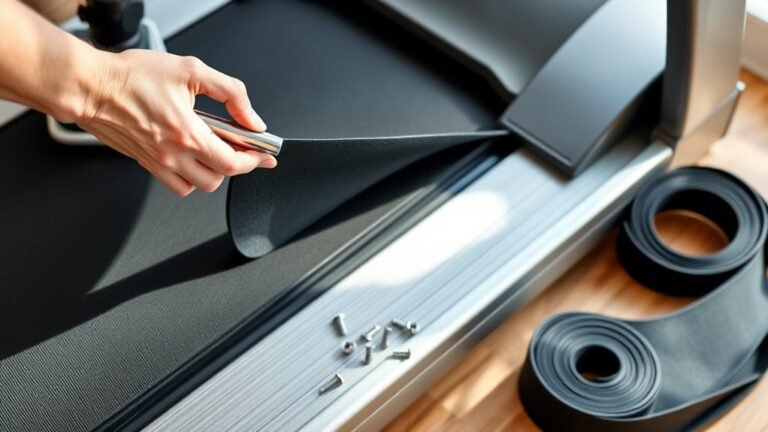
With a solid frame in place, you can move on to installing the treadmill belt, motor, and speed controls. Start by carefully fitting the treadmill belt around the rollers, making sure it aligns evenly to avoid slipping.
Next, focus on installing motor components securely to the frame, following the manufacturer’s guidelines to confirm proper function. When installing motor wiring, keep connections tight and insulated for safety.
After the motor is in place, attach the speed controls; these allow you to adjust the belt’s pace easily to match your dog’s comfort and exercise needs.
Test the motor and speed controls at low settings first, confirming smooth operation before increasing speed.
Taking time with these steps guarantees your dog’s treadmill will run reliably and respond accurately to speed adjustments.
Make Your Dog Treadmill Safe and Comfortable
To keep your dog safe and comfortable, start by securing a non-slip surface on the treadmill belt to prevent any accidental slips.
Make sure you have adjustable speed settings so you can tailor the pace to your dog’s fitness level and comfort.
These features will help create a secure and enjoyable exercise environment for your furry friend.
Secure Non-Slip Surface
Guaranteeing your dog treadmill has a secure non-slip surface is essential for both safety and comfort. When selecting non slip materials, opt for textured rubber mats or specialized treadmill belts designed to prevent slipping. These materials provide excellent grip, reducing the risk of your dog losing footing during exercise.
Prioritize surface durability to withstand regular use and your dog’s nails without wearing down quickly. A durable surface also guarantees consistent traction over time, keeping your pet safe and confident while walking or running.
Installing a non-slip layer firmly attached to the treadmill base prevents movement or bunching, which can cause tripping.
Adjustable Speed Settings
A secure non-slip surface helps your dog feel steady, but controlling how fast the treadmill moves is just as important for their safety and comfort. Incorporating adjustable speed settings lets you tailor the pace to your dog’s size, fitness level, and mood.
Use speed adjustment techniques that allow gradual increases or decreases to avoid sudden jolts. Programmable controls are ideal; they enable you to set specific speed intervals, making workouts predictable and safe.
Here are key aspects to take into account:
- Start slow to help your dog acclimate without stress
- Use a remote or easy-access buttons to adjust speed during use
- Monitor your dog’s response and adjust speeds accordingly
How to Test Your Dog Treadmill
How do you know if your dog treadmill is ready for use? Start by conducting a thorough performance evaluation. Turn it on at the lowest speed and observe the belt’s smoothness and consistency. Check for any unusual noises or vibrations, as these could indicate mechanical issues.
Next, verify all safety precautions: confirm the emergency stop mechanism works and that edges are secure to prevent your dog from slipping.
Inspect the treadmill’s frame for stability to support your dog’s weight safely.
Run the treadmill through its full range of speeds, confirming the adjustable settings function properly.
Train Your Dog to Use the Treadmill
Introducing your dog to the treadmill requires patience and positive reinforcement. Start by allowing your dog to explore the treadmill while it’s off, creating a calm and familiar environment. Gradual exposure helps your dog feel comfortable before you turn it on. Use treats and praise to reward any interaction with the treadmill.
Here’s a simple approach to training your dog to use the treadmill:
Begin with short sessions at a slow speed to build confidence.
Use positive reinforcement consistently to encourage desired behavior.
Monitor your dog closely for signs of stress or discomfort and adjust accordingly.
Maintain and Troubleshoot Your Dog Treadmill
Regular maintenance and prompt troubleshooting keep your dog treadmill running smoothly and safely.
Start with a maintenance checklist: regularly clean the belt and deck, lubricate moving parts, and inspect for loose bolts or worn components.
Begin with a maintenance checklist: clean the belt and deck, lubricate parts, and check for loose bolts or wear.
Check the motor and electrical connections to prevent unexpected breakdowns. If the treadmill stops suddenly or makes unusual noises, use troubleshooting tips like verifying the power source, resetting the motor, or tightening any loose screws.
Monitor belt tension and alignment. Adjust as needed to avoid slippage or uneven wear.
Pay attention to any irregular behavior; addressing small issues early prevents costly repairs.
Tips for Customizing Workouts and Adjusting Speed
You’ll want to start by selecting speed levels that match your dog’s fitness and breed characteristics.
Adjusting workout intensity gradually helps prevent injury and keeps your dog motivated.
Tailoring each session based on your dog’s unique needs guarantees a safe and effective exercise routine.
Choosing Appropriate Speed Levels
Although every dog has unique fitness needs, selecting the right speed levels on the treadmill is essential to guarantee safe and effective workouts.
Start by determining a comfortable speed range that matches your dog’s breed, age, and fitness level. Gradually increase the speed to avoid strain and build endurance steadily.
To help you choose appropriate speeds:
Begin with a slow pace and observe your dog’s comfort and gait. Adjust speeds incrementally, allowing your dog to adapt without stress.
Monitor for signs of fatigue or discomfort, then reduce speed if needed.
Varying Workout Intensity
Once you’ve established a comfortable speed range for your dog, varying the workout intensity can help keep their exercise routine engaging and effective. Incorporate interval training by alternating between moderate and brisk speeds, allowing your dog to recover during slower phases. This approach not only boosts cardiovascular fitness but also prevents boredom.
Use speed variations strategically. Start with a gentle warm-up, then increase the pace for short bursts before returning to a steady rate. Pay close attention to your dog’s response; if they seem fatigued or reluctant, dial back the intensity.
By customizing workouts with thoughtful speed changes, you create a balanced routine that supports your dog’s health and motivation.
Tailoring Sessions To Breed
Because different breeds have unique physical traits and energy levels, tailoring treadmill sessions to fit your dog’s specific needs is essential.
You’ll want to take into account your dog’s breed needs and exercise preferences carefully to create effective, safe workouts. Start by adjusting speed and duration according to your dog’s stamina and size.
For high-energy breeds like Border Collies, increase speed gradually and include interval training to match their endurance.
Smaller or brachycephalic breeds may require slower speeds and shorter sessions to avoid overexertion.
Observe your dog’s response during workouts, adjusting intensity based on signs of fatigue or enthusiasm.
Frequently Asked Questions
Can All Dog Breeds Use a Treadmill Safely?
Not all breeds have equal breed suitability for treadmills, so you should assess your dog’s size and health first. Always follow safety precautions like supervision and gradual introduction to guarantee your furry friend exercises safely and happily.
How Often Should My Dog Use the Treadmill?
You should start with short treadmill duration sessions, about 5-10 minutes, gradually increasing as your dog adapts. Aim for exercise frequency of 3-5 times weekly, always watching for signs of fatigue or discomfort.
What Are Signs My Dog Dislikes the Treadmill?
You’ll notice signs like hesitation, whining, or trying to jump off during treadmill training. Watch your dog’s behavior closely. If they seem stressed or avoid the treadmill, it’s time to pause and adjust your approach.
Can I Use a Human Treadmill for My Dog?
You can use a human treadmill for your dog, but prioritize human treadmill safety by adjusting speed and adding dog treadmill modifications like side rails and non-slip surfaces. This will guarantee comfort and prevent injuries during workouts.
Is a Dog Treadmill Better Than Outdoor Walks?
You won’t find a better replacement for outdoor walks, as studies show dogs gain 30% more mental stimulation outside. Still, treadmill benefits include consistent dog exercise when weather or safety limits outdoor time.
Conclusion
Building your dog treadmill is like crafting a custom path to health and happiness for your furry friend. With the right size, sturdy frame, and smooth controls, you’re setting the stage for safe, joyful exercise.
Remember, patience and gentle training turn hesitation into wagging tails. Keep your treadmill well-tuned, and watch your dog’s energy flow like a steady river.
You’re not just building a machine—you’re creating a bridge to wellness. By making your own dog treadmill, you ensure it perfectly fits your pet’s needs and lifestyle.