Is Running on a Treadmill Bad for Your Knees
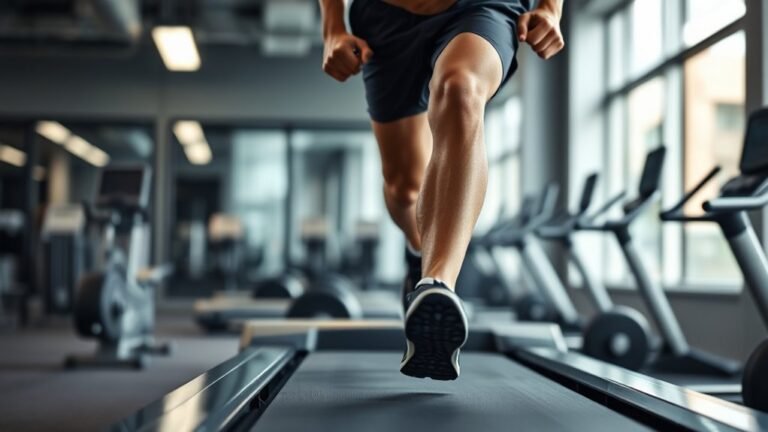
Running on a treadmill isn’t inherently bad for your knees; in fact, its cushioned surface often reduces impact compared to outdoor running on hard, uneven terrain. This makes treadmill running a potentially safer option for knee health. However, improper form or excessive speed and incline can increase knee stress.
If you have existing knee issues like arthritis or cartilage damage, you’ll need to be cautious. Adjusting your treadmill routine and monitoring knee pain closely can help protect your joints. Understanding these factors can guide you in maintaining healthy knees while running.
Key Takeaways
- Treadmills offer cushioned surfaces that reduce impact forces, generally causing less knee stress than running on uneven outdoor terrain.
- Proper running form on treadmills, including upright posture and midfoot striking, minimizes knee strain and risk of injury.
- Existing knee conditions like arthritis or meniscal tears may worsen with treadmill running due to repetitive joint stress.
- Adjusting treadmill speed, incline, and incorporating walking intervals can help protect knees and manage impact loads effectively.
- Persistent knee pain, swelling, or instability after treadmill use warrants medical evaluation to prevent further joint damage.
Does Running on a Treadmill Hurt Your Knees More Than Running Outside?
Although many runners wonder if treadmills increase knee strain compared to outdoor running, current research shows that treadmill running doesn’t inherently cause more knee damage.
When you run on a treadmill, you benefit from treadmill advantages such as a consistently cushioned surface that reduces impact forces on your knees.
This contrasts with outdoor disadvantages like uneven terrain, which can increase joint stress and risk of injury.
Additionally, treadmills allow you to control speed and incline precisely, helping you manage training loads effectively.
Consequently, if you’re concerned about knee health, running on a treadmill can be a viable alternative without added knee strain.
Your choice should consider individual biomechanical factors rather than assumptions about the equipment alone.
How Treadmill Running Impacts Knee Joints: Understanding the Forces
When you run on a treadmill, the forces exerted on your knee joints differ subtly from those experienced during outdoor running. Treadmill biomechanics influence joint loading patterns due to the moving belt and controlled pace. Understanding these forces helps you manage knee stress effectively.
- Reduced Impact Peaks: The treadmill’s consistent surface lessens peak impact forces on your knees compared to variable outdoor terrain.
- Altered Joint Alignment: Slight changes in your gait on the treadmill can modify knee joint alignment, affecting load distribution across the joint.
- Repetitive Loading: The uniform motion may increase repetitive stress on specific knee structures without natural variation found outdoors.
Recognizing these biomechanical nuances allows you to optimize your treadmill workouts while protecting your knee health.
How Treadmill Surface Cushioning Helps Protect Your Knees
You’ll benefit from treadmill surface cushioning because it absorbs impact forces that would otherwise strain your knee joints.
This reduction in joint stress helps minimize wear and tear during your runs.
Understanding how cushioning works can clarify why treadmills often pose less risk to your knees compared to harder surfaces.
Impact Absorption Benefits
Because treadmill surfaces incorporate specialized cushioning materials, they greatly reduce the impact forces transmitted to your knees during running. This cushioning technology is a key treadmill advantage, designed to absorb shock and lower peak loading on joint structures.
Studies show that this impact absorption benefits your knees by:
- Diminishing repetitive stress, which helps prevent cartilage wear.
- Reducing peak ground reaction forces, lowering the risk of acute knee injuries.
- Enhancing comfort, encouraging consistent exercise adherence without pain.
Joint Stress Reduction
The cushioning in treadmill surfaces not only absorbs impact but also considerably reduces joint stress during running. This feature plays a critical role in preserving your joint health by decreasing the repetitive forces transmitted through the knees.
Clinical studies indicate that treadmill surfaces with adequate shock absorption lower peak knee joint loads compared to running on hard outdoor pavements. By mitigating these forces, treadmill benefits include reducing the risk of overuse injuries and degenerative joint conditions.
When you run on a treadmill, the surface’s compliance allows a more controlled, less jarring foot strike, which protects cartilage and connective tissues.
Incorporating treadmill running into your exercise routine can consequently support joint health by providing a safer biomechanical environment, especially if you’re prone to knee discomfort or recovering from joint-related issues.
Why Proper Running Form Matters More When You Run on a Treadmill
When you run on a treadmill, maintaining proper posture becomes essential to reduce undue stress on your knees.
Unlike outdoor running, treadmill footstrike mechanics can vary, potentially increasing joint impact if your form slips.
Focusing on alignment and controlled foot placement helps minimize injury risks specific to treadmill conditions.
Treadmill Running Posture
Although treadmill running mimics outdoor running, it demands greater attention to your posture to prevent knee strain. Proper treadmill alignment is essential, as misalignment can increase joint stress.
You should focus on precise posture corrections to maintain biomechanical efficiency. Consider these three key aspects:
- Keep your torso upright, avoiding forward lean, which shifts load to your knees.
- Align your hips over your feet to prevent lateral stresses on knee ligaments.
- Maintain a neutral head position to support spinal alignment and reduce compensatory knee strain.
Clinical studies highlight that neglecting these posture elements during treadmill running elevates the risk of overuse injuries.
By actively monitoring and adjusting your form, you reduce undue knee impact and promote joint health.
Prioritize posture corrections for safer, effective treadmill workouts.
Footstrike Impact Differences
Many runners underestimate how footstrike mechanics differ between treadmill and outdoor surfaces, yet these differences greatly influence knee impact forces. On a treadmill, the belt’s consistent speed alters your natural footstrike patterns compared to variable outdoor terrains.
Research shows treadmill running often encourages a more rearfoot strike, which can increase knee joint loading if your running mechanics aren’t optimized. You need to focus on maintaining proper running mechanics, such as a slight forward lean and midfoot strike, to reduce undue stress on your knees.
Additionally, the treadmill’s shock absorption varies by model, so adjusting your footstrike to a softer, more controlled landing helps mitigate impact.
Understanding these nuances guarantees you protect your knees and improve running efficiency when you run on a treadmill.
How Speed and Incline Affect Knee Stress During Treadmill Running
Because treadmill speed and incline directly influence the biomechanics of your gait, they play an essential role in determining the stress placed on your knees.
Adjusting these factors alters joint loading patterns, affecting knee health.
Here’s how treadmill speed and incline effects impact knee stress:
- Increased treadmill speed raises knee joint reaction forces due to higher impact velocity, potentially escalating cartilage strain.
- Incline running shifts muscle activation, increasing load on the knee extensors but reducing impact forces compared to flat running.
- Steeper inclines result in greater eccentric quadriceps activity, which can enhance knee stability yet may elevate joint stress if overdone.
Understanding and moderating these variables helps optimize treadmill workouts, balancing performance gains with knee safety.
Knee Conditions That Make Treadmill Running Risky
If you have common knee injuries like meniscal tears or ligament strains, treadmill running can increase joint stress and delay healing.
Arthritis, particularly osteoarthritis, alters cartilage integrity, making repetitive treadmill impact potentially harmful.
Understanding these conditions helps you decide if treadmill running fits your knee health status.
Common Knee Injuries
Three common knee injuries, patellofemoral pain syndrome, meniscal tears, and osteoarthritis, can greatly increase the risk of damage when running on a treadmill. If you have any of these, treadmill running requires caution.
- Patellofemoral Pain Syndrome and Patellar Tendinitis: Both involve pain around the kneecap and tendon inflammation, exacerbated by repetitive impact on treadmills, potentially worsening symptoms.
- Meniscal Tears: These cartilage injuries impair knee stability. The repetitive, uniform motion on a treadmill can aggravate existing tears or delay healing.
- Osteoarthritis: Degeneration of cartilage reduces shock absorption. Treadmill impact may accelerate joint deterioration, especially without proper cushioning.
Additionally, tightness in the iliotibial band can increase lateral knee strain during treadmill use, further risking injury.
Understanding these conditions helps you make informed decisions about treadmill running.
Arthritis and Treadmills
Anyone with arthritis should approach treadmill running with caution, as the condition compromises joint integrity and increases susceptibility to damage.
Different arthritis types, such as osteoarthritis and rheumatoid arthritis, affect knee joints differently, influencing your risk during treadmill use.
While treadmill benefits include controlled pace and shock absorption compared to outdoor running, the repetitive impact still stresses inflamed or degenerated cartilage.
If you have moderate to severe arthritis, this repetitive loading can exacerbate pain and joint deterioration.
Prior to starting treadmill exercise, consult a healthcare provider to assess your specific arthritis type and severity.
They may recommend modified treadmill protocols or alternative low-impact activities to preserve joint health while maintaining cardiovascular fitness safely.
How to Spot Early Signs of Knee Pain From Treadmill Workouts
How can you recognize the early signs of knee pain caused by treadmill workouts? Identifying early warning signs is essential to prevent further injury. Pay close attention to these indicators:
Recognizing early signs of knee pain from treadmill workouts is key to preventing injury.
- Persistent Discomfort: Notice if you experience ongoing aching or stiffness in the knee joint during or after running sessions.
- Swelling or Inflammation: Early swelling around the knee suggests tissue irritation, requiring prompt attention.
- Reduced Range of Motion: Difficulty bending or straightening your knee fully can signal underlying joint stress.
These clinical signs often precede more severe knee conditions.
If you detect any of these symptoms, reduce treadmill intensity and consult a healthcare professional. Early intervention can help preserve knee function and avoid chronic pain, ensuring your treadmill workouts remain safe and effective.
Best Stretches and Exercises to Support Knee Health for Treadmill Runners
Although treadmill running offers cardiovascular benefits, supporting your knee health through targeted stretches and exercises is essential to prevent injury. Incorporate dynamic stretches pre-run to increase blood flow and joint mobility.
Post-run, use foam rolling to reduce muscle tightness around the knees, enhancing recovery. Strengthening exercises focusing on the quadriceps, hamstrings, and hip abductors stabilize knee joints and distribute load evenly.
| Exercise Type | Purpose | Example |
|---|---|---|
| Dynamic Stretches | Warm-up & mobility | Leg swings, walking lunges |
| Foam Rolling | Muscle recovery | IT band, quadriceps, calves |
| Strength Exercises | Joint stabilization | Squats, glute bridges, hamstring curls |
Consistently applying these practices reduces knee strain, improving treadmill running safety.
How to Adjust Your Treadmill Routine to Reduce Knee Strain
Since repetitive impact can exacerbate knee strain, adjusting your treadmill routine is essential for joint preservation. Implementing specific treadmill adjustments helps enhance knee protection effectively.
- Modify Speed and Incline: Lower your running speed or reduce the incline to decrease impact forces on the knees. Studies show moderate intensity reduces joint stress.
- Incorporate Intervals: Alternate walking and jogging to allow recovery periods, limiting continuous strain on knee structures.
- Optimize Footwear and Form: Use cushioned, supportive shoes and maintain a midfoot strike to distribute forces evenly, minimizing knee load.
These evidence-based modifications reduce cumulative knee stress during treadmill sessions.
When Should You See a Doctor About Knee Pain From Treadmill Running?
When should you consider consulting a healthcare professional about knee pain from treadmill running? If your knee pain persists beyond a few days, worsens, or limits your daily activities, it’s time for a doctor consultation. Immediate evaluation is essential if you experience swelling, instability, or inability to bear weight. Early diagnosis can prevent further joint damage and guide appropriate treatment.
| Symptom | When to Seek Doctor Consultation |
|---|---|
| Persistent pain | Pain lasting more than 3-5 days |
| Swelling | Noticeable swelling or warmth |
| Instability | Feeling your knee may “give out” |
| Severe pain | Intense pain that limits walking |
| Functional limitation | Difficulty performing daily activities |
Prompt doctor consultation guarantees proper management of treadmill-related knee pain, optimizing recovery and preventing chronic issues.
Frequently Asked Questions
Can Treadmill Running Help With Knee Rehabilitation After Injury?
Yes, treadmill advantages like controlled speed and cushioned surfaces support injury recovery by reducing impact on your knees. Using it under professional guidance can aid rehabilitation, improve joint function, and strengthen muscles safely after injury.
Does Treadmill Running Burn More Calories Than Outdoor Running?
You won’t burn considerably more calories on a treadmill than outdoor running; calorie comparison shows similar expenditure. Terrain differences affect intensity, but adjusting speed or incline on a treadmill can mimic outdoor conditions for comparable calorie burn.
Are Certain Shoes Better for Treadmill Running to Protect Knees?
Think of your knees as delicate gears in a clock; the right shoe cushioning and arch support act as lubricants, reducing impact and misalignment.
Clinical studies confirm these features protect your knees during treadmill running, enhancing comfort and joint health.
How Do Age and Weight Affect Knee Impact on a Treadmill?
Age factors and weight considerations greatly influence knee impact on a treadmill; as you age or carry extra weight, your joints absorb more stress, increasing injury risk.
Adjust intensity and footwear to mitigate these effects clinically.
Can Treadmill Running Improve Overall Knee Joint Flexibility?
Like oiling a rusty hinge, treadmill running can enhance your knee mobility by gently promoting synovial fluid circulation, which supports joint health. Clinical studies show consistent, moderate treadmill use improves flexibility and reduces stiffness in knee joints.
Conclusion
So, you’re worried the treadmill is out to sabotage your knees? Fear not—your joints aren’t fragile antiques. Evidence shows treadmill cushioning often eases impact more than pavement.
Just don’t treat your form like a casual stroll, crank that incline mindlessly, or ignore early pain signals. Your knees aren’t drama queens, but they do appreciate sensible care.
Run smart, listen closely, and your knees will thank you—no miracle cures required. Remember, running on a treadmill is not bad for your knees when done properly.