What Burns More Calories Stairmaster or Treadmill
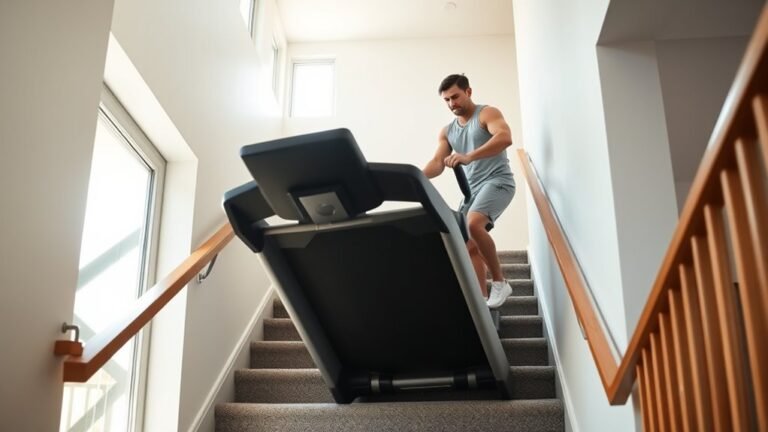
What burns more calories Stairmaster or treadmill? You’ll generally burn more calories per minute on a Stairmaster than a treadmill at moderate intensity because it engages more large muscle groups and requires vertical movement against gravity.
However, treadmill workouts can match or exceed calorie burn if you increase speed, incline, or workout duration. Your fitness level and workout style also influence total calories burned.
Understanding these nuances helps you optimize your exercise choice and results. Explore how intensity, muscle engagement, and duration impact calorie expenditure.
Key Takeaways
- Stairmaster typically burns more calories per minute due to its vertical climbing motion engaging large lower-body muscles.
- Treadmills allow varied speeds and inclines for prolonged workouts that can match or exceed Stairmaster calorie burn.
- Higher workout intensity increases calorie burn on both machines, with interval training maximizing energy expenditure.
- Beginners may burn more calories on either machine due to lower fitness efficiency compared to advanced users.
- Consistent use and workout duration adjustments on both machines are crucial for maximizing total calorie burn.
Stairmaster vs. Treadmill: Which Burns More Calories?
How do the Stairmaster and treadmill compare when it comes to calorie burn? The Stairmaster benefits your workout by engaging large muscle groups like glutes, quads, and calves, which increases energy expenditure.
Studies show it typically burns more calories per minute than a treadmill at moderate intensities due to the vertical climbing motion.
However, treadmill advantages include versatility in speed and incline settings, allowing you to tailor workouts for sustained calorie burn over longer durations.
While the Stairmaster focuses on lower-body muscular endurance and strength alongside calorie burn, the treadmill provides a balanced cardiovascular workout with adjustable impact.
Ultimately, if you prioritize higher immediate calorie burn and muscle engagement, the Stairmaster has an edge, but the treadmill’s adaptability supports prolonged calorie expenditure effectively.
Your choice depends on your fitness goals and preferences.
How Workout Intensity and Duration Affect Calorie Burn
You’ll find that increasing workout intensity greatly raises your calorie burn per minute by elevating heart rate and energy expenditure.
At the same time, extending your exercise duration accumulates total calories burned, though the rate may decline as fatigue sets in.
Balancing these factors allows you to optimize your workout for maximum energy output within your available time.
Intensity Levels Impact
Although both the Stairmaster and treadmill offer effective cardiovascular workouts, the intensity and duration you choose directly influence the number of calories burned.
Intensity variations on each machine considerably affect energy expenditure; for example, increasing resistance on the Stairmaster or speed and incline on the treadmill elevates your heart rate and metabolic demand.
Your workout preferences play an essential role here. If you favor high-intensity interval training, you’ll likely burn more calories in shorter periods. Conversely, steady-state workouts at moderate intensity result in a different caloric output.
By adjusting intensity, you control the balance between aerobic and anaerobic energy systems, thereby impacting total calorie burn.
Understanding how these intensity variations interact with your fitness level allows you to optimize your sessions for maximum energy expenditure on either machine.
Duration Influences Calorie Burn
While workout intensity greatly influences calorie burn, the duration of your exercise session plays an equally important role in determining total energy expenditure. When you extend your workout duration, your body sustains energy output longer, increasing overall calorie burn.
Effective calorie tracking requires considering both intensity and duration to accurately assess energy expenditure. For example, a moderate-intensity treadmill session lasting 60 minutes may burn more calories than a high-intensity Stairmaster workout lasting only 20 minutes.
However, prolonged low-intensity exercise could result in similar calorie burn to shorter, high-intensity efforts, depending on individual metabolic factors.
As a result, balancing workout duration with intensity is essential for precise calorie tracking and optimizing your energy output.
Understanding this relationship helps tailor your exercise routine for maximum efficiency and desired results.
Balancing Time And Effort
Balancing workout intensity and duration directly impacts the total calories you burn. Efficient time management and effort optimization are essential for maximizing calorie expenditure on both the Stairmaster and treadmill.
Increasing either intensity or duration raises energy demand, but combining moderate levels of both often yields the best results without excessive fatigue.
Consider these factors:
- Higher intensity elevates metabolic rate but may reduce sustainable workout time.
- Longer duration increases total calorie burn but requires maintaining consistent effort.
- Efficient time management helps balance short, intense sessions and longer, moderate workouts.
- Effort optimization guarantees you avoid burnout while maximizing energy output.
Why Stairmaster Workouts Burn More Calories
You engage more muscle groups on a Stairmaster because its vertical climbing motion requires greater lower-body activation.
This increased muscle engagement demands higher energy expenditure compared to treadmill walking or running.
As a result, your body burns more calories during stair climbing due to the intensified muscular effort and gravitational resistance.
Muscle Engagement Intensity
Because stairmaster workouts engage multiple major muscle groups simultaneously, they demand greater muscular effort than treadmill sessions. This increased muscle activation translates to higher calorie expenditure.
When you use the stairmaster, your body implements specific engagement strategies that recruit:
- Quadriceps, hamstrings, and gluteal muscles dynamically
- Core stabilizers to maintain balance and posture
- Calf muscles for continuous push-off force
- Upper body muscles when using handrails for support
This multi-faceted engagement intensifies muscular workload, requiring more energy and consequently burning more calories.
Compared to treadmill walking or running, which primarily activates the lower limb muscles in a linear pattern, the stairmaster’s vertical stepping motion demands complex coordination.
As a result, your muscle activation isn’t only stronger but also more thorough, making stairmaster workouts more metabolically demanding per unit of time.
Vertical Climbing Benefits
The vertical climbing motion inherent to stairmaster workouts considerably contributes to their higher calorie burn compared to treadmill exercise.
When you engage in vertical climbing techniques, you actively lift your entire body weight against gravity, which demands greater muscular effort and energy expenditure.
This biomechanical action recruits a larger muscle mass, particularly in your glutes, quadriceps, hamstrings, and calves, increasing overall metabolic demand.
The stairmaster advantages lie in its ability to simulate this continuous vertical ascent, unlike the treadmill’s mostly horizontal movement.
This vertical displacement requires your cardiovascular and muscular systems to work harder, elevating your heart rate and oxygen consumption.
Consequently, your body burns more calories per minute during stairmaster sessions, making vertical climbing techniques a more efficient choice for calorie expenditure and cardiovascular conditioning.
Treadmill Calorie Burn: How Running Affects It
Although treadmill workouts can vary widely, running generally increases calorie burn more substantially than walking or jogging.
You maximize treadmill benefits by adjusting speed, incline, and employing efficient running techniques. Running demands higher oxygen consumption and energy expenditure, boosting your calorie burn rate significantly.
To optimize calorie burn on a treadmill, consider:
- Increasing speed progressively to elevate heart rate and metabolism
- Utilizing incline settings to simulate hill running, intensifying effort
- Maintaining proper running form to improve efficiency and reduce injury risk
- Incorporating interval training with alternating high and low intensities for metabolic boost
Comparing Muscle Engagement on Stairmasters and Treadmills
When you step onto a Stairmaster or a treadmill, your muscles respond differently based on the movement patterns each machine demands.
On a Stairmaster, you engage your glutes, quadriceps, hamstrings, and calves more intensely due to the vertical stepping motion, which requires lifting your body weight against gravity. This heightened muscle activation increases workout efficiency by promoting strength and endurance in lower-body muscles.
The Stairmaster intensifies lower-body workouts by engaging key muscles through vertical stepping against gravity.
In contrast, a treadmill primarily activates the quadriceps, hamstrings, and calves through a horizontal running or walking motion, involving less vertical displacement and less continuous muscle load.
While both machines improve cardiovascular fitness, the Stairmaster’s emphasis on sustained muscle contraction enhances workout efficiency for muscle strengthening, whereas the treadmill offers a more balanced muscle activation suited for endurance and speed training.
How Fitness Level Affects Calorie Burn on Both Machines
When you’re a beginner, your body burns more calories on both the Stairmaster and treadmill due to lower efficiency and higher exertion.
As your fitness level advances, your metabolism adapts, reducing calorie burn for the same workout intensity.
Understanding these adaptations helps you adjust your routine to maintain effective calorie expenditure on either machine.
Beginner Calorie Burn Differences
Because beginners typically have lower cardiovascular endurance and muscular strength, their calorie burn rates on both the Stairmaster and treadmill differ considerably from those of experienced users.
When you’re new to exercise, your body responds differently, affecting how many calories you burn.
With regard to beginner fitness and calorie awareness, consider these factors:
- Your muscles fatigue faster, limiting intensity and duration on both machines
- The Stairmaster may engage more muscle groups, increasing calorie burn despite slower pace
- The treadmill allows variable speed and incline, which can be adjusted to match your current fitness level
- Beginners often experience rapid improvements, temporarily boosting calorie expenditure as efficiency improves
Understanding these nuances helps you tailor workouts effectively and track calorie burn accurately as you build fitness.
Impact of Advanced Fitness
As your fitness level advances, your body’s efficiency in performing exercises on both the Stairmaster and treadmill changes, directly influencing calorie burn. When you adopt advanced techniques, such as interval training or resistance adjustments, you challenge your musculature and cardiovascular system differently, often increasing energy expenditure.
Current fitness trends emphasize integrating high-intensity intervals on both machines, which can elevate your metabolic rate and enhance calorie consumption. However, as your body adapts, the relative intensity of the workout may decrease, requiring continual adjustments to maintain calorie burn.
Your improved neuromuscular coordination and aerobic capacity allow you to sustain higher workloads for longer periods, but this also means your body becomes more efficient, potentially reducing calories burned at the same effort level.
Thus, incorporating progressive overload and varied advanced techniques is essential to optimize calorie burn on both machines.
Adaptation and Efficiency Changes
Although your body initially expends substantial energy adapting to Stairmaster and treadmill workouts, your fitness level gradually enhances muscular efficiency and cardiovascular function, which lowers calorie burn at consistent intensities.
This adaptation results from specific adaptation strategies that optimize energy use.
As you progress, efficiency improvements reduce the metabolic cost of movement on both machines.
Key factors influencing calorie burn changes include:
- Neuromuscular coordination enhancing movement economy
- Increased mitochondrial density improving energy production
- Cardiovascular adaptations enabling sustained oxygen delivery
- Metabolic shifts favoring fat oxidation over carbohydrate usage
Understanding these physiological changes helps you adjust workout intensity or duration to continue challenging your body and maximize calorie expenditure despite efficiency gains.
Tailoring adaptation strategies guarantees your calorie burn remains effective across both Stairmaster and treadmill sessions.
Which Machine Is Better for Weight Loss Goals?
How do you determine which machine, Stairmaster or treadmill, better supports your weight loss goals? The answer hinges on your workout preferences and physiological responses.
Stairmaster efficiency lies in its ability to engage large lower-body muscles continuously, increasing calorie expenditure per minute. This efficiency can accelerate fat loss when maintained consistently.
The Stairmaster boosts fat loss by continuously engaging large lower-body muscles, increasing calorie burn per minute.
Conversely, treadmill versatility offers varied workout options, from walking to sprinting, enabling tailored intensity and duration. This adaptability supports sustained calorie burn and prevents plateaus.
For pure caloric burn, the Stairmaster may edge ahead due to its demanding muscle engagement. However, if you seek diverse training modalities to maintain motivation and progressively challenge your cardiovascular system, the treadmill excels.
Ultimately, choosing the machine aligning with your adherence and intensity preferences optimizes weight loss outcomes.
Tips to Maximize Calorie Burn on the Stairmaster and Treadmill
To maximize calorie burn on the Stairmaster and treadmill, you need to strategically adjust your workout intensity, duration, and form.
Precise control over these variables enhances energy expenditure and optimizes fat oxidation. Incorporate the following tips for effective calorie tracking and performance:
- Use interval training by alternating high and moderate intensities to boost metabolic rate post-exercise.
- Maintain proper posture and engage core muscles to improve efficiency and prevent injury.
- Extend workout duration gradually to increase total calorie burn without causing excessive fatigue.
- Create workout playlists with motivating tempos to sustain consistent effort and reduce perceived exertion.
Choosing the Best Machine for Your Fitness Goals
When selecting between a Stairmaster and a treadmill, you’ll need to contemplate your specific fitness objectives, as each machine targets different muscle groups and cardiovascular demands.
Conducting thorough fitness assessments can help you identify whether you prioritize lower-body strength, endurance, or overall cardiovascular conditioning.
If your machine preferences lean toward high-intensity, low-impact workouts that engage glutes, quads, and hamstrings, the Stairmaster may suit you better.
Conversely, if you seek versatile cardiovascular training with options for varied speed and incline, the treadmill could be preferable.
Analyzing your metabolic rate during each machine’s use further clarifies calorie expenditure efficiency relative to your goals.
Ultimately, integrating data from fitness assessments with your personal preferences guarantees an informed choice that optimizes performance and calorie burn.
Final Thoughts: Matching Your Workout to Your Goals
Although both the Stairmaster and treadmill effectively enhance cardiovascular fitness and calorie burn, your choice should align with specific workout goals and physiological responses.
To optimize your personal fitness, consider how each machine complements your workout preferences and objectives.
Analyze factors such as muscle engagement, impact level, and intensity variability to make an informed decision.
- Use the Stairmaster if you prioritize lower-body strength and higher muscle activation.
- Choose the treadmill for varied intensity, including sprint intervals and incline adjustments.
- Assess joint impact tolerance to prevent injury and maintain workout consistency.
- Align machine selection with your calorie-burning goals and cardiovascular capacity.
Frequently Asked Questions
Can I Use a Stairmaster or Treadmill With Joint Pain?
You can use both with joint pain management in mind, but the treadmill offers low impact options like walking, which reduces stress on joints. The Stairmaster’s higher impact may aggravate pain, so choose based on comfort and pain tolerance.
How Do Stairmaster and Treadmill Workouts Impact Heart Health?
You can boost your heart rate by up to 85% during Stairmaster and treadmill workouts, enhancing cardiovascular benefits. Both improve heart health by strengthening your heart muscle and increasing blood circulation efficiently and measurably.
Are Stairmasters or Treadmills Better for Improving Endurance?
You’ll find treadmills better for endurance training due to adjustable workout intensity and sustained aerobic effort.
Stairmasters boost muscular endurance but offer less continuous cardiovascular challenge compared to the treadmill’s versatile intensity control.
What Safety Precautions Should I Take on a Stairmaster?
Like a climber scaling Everest, prioritize stairmaster safety by maintaining proper posture, gripping handrails lightly, and pacing yourself.
Follow workout tips: warm up, wear supportive shoes, and avoid distractions to prevent falls and injuries.
Can I Combine Stairmaster and Treadmill Workouts in One Session?
You can combine Stairmaster and treadmill workouts in one session to enhance workout efficiency and maximize calorie burn.
Alternating intensities optimizes cardiovascular benefits and targets different muscle groups, improving overall metabolic rate and endurance.
Conclusion
When comparing calorie burn, the Stairmaster generally outperforms the treadmill due to higher muscle engagement and intensity, especially during sustained workouts. However, treadmill running can match or exceed this if you increase speed or incline. Visualize calorie burn as a function rising with workout intensity and duration—both machines offer scalable options.
Ultimately, choosing the best tool depends on your fitness goals and how you manipulate workout variables to maximize energy expenditure efficiently. For those wondering what burns more calories, Stairmaster or treadmill, the answer varies based on effort and settings, but both can be highly effective.