Where to Donate Treadmill
You can donate your treadmill to local gyms, schools, or community centers that support fitness programs, ensuring it meets their condition criteria. Donating a treadmill helps promote health and wellness in your community by providing access to fitness equipment for those who might not afford it otherwise.
Charitable organizations like Goodwill or Salvation Army also accept treadmills, often offering pickup and tax deduction options. Online platforms like Freecycle connect you directly with recipients looking for free fitness equipment.
Before donating, inspect, clean, and prepare the machine for safe use. Proper scheduling and documentation help streamline the process. Explore these steps to maximize your donation’s impact and benefits.
Key Takeaways
- Donate treadmills to local gyms or fitness centers after confirming their equipment acceptance policies and condition requirements.
- Offer treadmills to schools or community centers to support physical education and wellness programs.
- Consider charities like Goodwill or Salvation Army that accept used treadmills and may provide pickup services and tax deductions.
- Use online platforms such as Freecycle, Craigslist, or Facebook groups to connect with local recipients seeking treadmills.
- Ensure the treadmill is mechanically sound and clean before donation to meet safety and usability standards.
Local Gyms and Fitness Centers Accepting Treadmill Donations
When you donate a treadmill to local gyms and fitness centers, you provide them with valuable equipment that can enhance their members’ workout options.
Before donating, it’s important to review each facility’s gym donation policies to guarantee your treadmill meets their acceptance criteria.
Review gym donation policies first to ensure your treadmill meets their acceptance criteria.
Many centers prioritize equipment that aligns with their specific fitness equipment needs, including treadmills that are in good working condition and have modern features.
You should contact the facility to discuss the treadmill’s specifications and confirm it fits their current inventory requirements.
Understanding these policies helps you avoid donating unsuitable equipment.
Schools and Community Centers That Use Donated Treadmills
Schools and community centers often rely on donated treadmills to upgrade their fitness facilities and promote health education. When you donate a treadmill to these institutions, you directly support community fitness initiatives and enhance school wellness programs.
These treadmills serve as essential equipment for physical education classes, after-school activities, and wellness workshops. By providing reliable cardio machines, you help facilities maintain a diverse range of fitness options without straining their budgets.
Additionally, donated treadmills enable centers to implement structured exercise routines that improve cardiovascular health and encourage active lifestyles among participants.
When considering donation, verify the treadmill is in good condition, as schools and community centers prioritize equipment safety and functionality to maximize user benefit and sustain long-term program success.
Charities That Welcome Treadmill Donations for Health Programs
Although many charities focus on broad health initiatives, several specifically welcome treadmill donations to enhance their fitness and rehabilitation programs. When you donate a treadmill, you contribute directly to charity partnerships that prioritize physical wellness and recovery.
Organizations running specialized health initiatives use treadmills to support cardiovascular health, mobility improvement, and injury rehabilitation. You’ll find that these charities often integrate donated equipment into structured exercise regimens, maximizing the impact on beneficiaries’ health outcomes.
By targeting charities with clearly defined fitness and rehab objectives, your donation yields measurable benefits. To guarantee your treadmill serves its purpose, verify that the charity partners maintain appropriate facilities and expertise for equipment use.
This precision in charity selection strengthens health initiatives and optimizes your contribution’s value.
National Organizations Accepting Used Treadmills
Several national organizations actively accept used treadmills, providing convenient avenues for you to donate fitness equipment that can benefit communities across the country.
Entities such as Goodwill Industries and the Salvation Army facilitate treadmill donation incentives, including potential tax deductions, to encourage your contribution.
Goodwill and Salvation Army offer incentives like tax deductions to encourage your treadmill donations.
These organizations often inspect and refurbish donated treadmills, guaranteeing they meet safety standards before redistribution. Additionally, they participate in fitness equipment recycling programs, responsibly disposing of non-functional units to minimize environmental impact.
When you donate, it’s vital to verify the organization’s pickup options and donation guidelines to streamline the process.
Online Platforms to Give Away Your Treadmill for Free
You can use popular donation websites like Freecycle and Craigslist to give away your treadmill at no cost.
Social media donation groups on platforms such as Facebook provide targeted local audiences interested in free fitness equipment.
Additionally, local online marketplaces offer efficient ways to connect with nearby recipients quickly and securely.
Popular Donation Websites
When looking to donate your treadmill quickly and efficiently, online platforms offer a streamlined solution that connects you directly with recipients in need. Websites like Freecycle, Craigslist, and OfferUp provide structured environments where you can list various treadmill models, adhering to specific donation guidelines to guarantee smooth transactions.
These platforms require clear descriptions, accurate photos, and condition details to match donors with suitable recipients.
Additionally, platforms such as Goodwill’s online donation portal and Donation Town facilitate coordination with local charities, simplifying pickup logistics.
By following each site’s donation guidelines carefully, you minimize misunderstandings and enhance the likelihood of a successful handoff.
Choosing the right platform depends on your treadmill’s condition, model, and your preferred level of interaction, making the donation process both efficient and impactful.
Social Media Donation Groups
Although social media donation groups operate informally compared to dedicated donation websites, they provide a dynamic and immediate way to give away your treadmill for free.
These groups leverage social media platforms to connect donors and recipients efficiently through community outreach. You can post your treadmill availability, specify condition details, and arrange pick-up logistics directly with interested parties.
Key advantages include:
- Rapid visibility within local or niche fitness communities
- Direct communication enabling quick negotiations
- No listing fees or complex registration processes
- Access to diverse audiences beyond traditional donation channels
Local Online Marketplaces
Social media donation groups offer immediate, community-driven options to give away your treadmill, but local online marketplaces provide a more structured environment tailored for free exchanges.
These platforms facilitate organized listings, allowing you to specify condition, location, and pickup details clearly. Unlike casual social posts, local online marketplaces use algorithms and filters to connect you with potential recipients efficiently.
They often include review systems that enhance trust and accountability during the transaction. While many selling platforms focus on monetary exchange, several support free giveaways, making them ideal for donation purposes.
Treadmill Condition Guidelines for Donation
You’ll want to assess your treadmill’s usability and safety before donating it to guarantee it poses no risk to the next user.
Check all mechanical functions, including the motor, belt, and controls, to confirm they operate smoothly and reliably.
Finally, evaluate the cosmetic condition, as significant damage or wear might affect its acceptability to donation centers.
Assessing Usability And Safety
Before donating a treadmill, you need to thoroughly evaluate its usability and safety to confirm it meets acceptable standards.
Conducting a thorough usability assessment verifies the equipment is fit for purpose and aligns with treadmill safety protocols.
Focus on verifying structural integrity and user interface clarity.
Key points to examine include:
- Presence of secure handrails and non-slip surfaces
- Clear, functional emergency stop mechanisms
- Absence of sharp edges or exposed wiring
- Display panel readability and responsiveness
Checking Mechanical Functionality
After confirming the treadmill’s safety features and usability, the next step involves verifying its mechanical functionality. You’ll want to follow a mechanical inspection checklist to guarantee all components operate smoothly. Focus on motor performance, belt alignment, and roller condition.
These treadmill maintenance tips help avoid future breakdowns and ensure the equipment is donation-worthy.
| Component | Inspection Point | Action Required |
|---|---|---|
| Motor | Runs without unusual noise | Service or replace if noisy |
| Belt | Proper tension and tracking | Adjust or replace if slipping |
| Rollers | Free rotation, no wear | Lubricate or replace as needed |
Use this checklist to confirm mechanical integrity before donation.
Evaluating Cosmetic Appearance
A treadmill’s cosmetic condition plays an essential role in determining its suitability for donation. When evaluating, focus on the overall aesthetic appeal, as this influences recipient interest and usability.
You should inspect the frame for scratches, dents, or rust, which might require cosmetic upgrades to restore. Additionally, consider the condition of the belt and console display, confirming they’re clean and intact.
Key points to assess include:
- Surface integrity: Check for peeling paint or corrosion.
- Console clarity: Confirm the display is readable and free of cracks.
- Belt appearance: Look for fraying or discoloration.
- Structural elements: Verify that handles and supports are stable and undamaged.
Addressing these factors guarantees your treadmill’s appearance meets donation standards effectively.
How to Clean and Prepare Your Treadmill for Donation
Properly cleaning and preparing your treadmill guarantees it remains in good condition and increases its value for donation. Start with thorough cleaning tips: wipe the belt, deck, and console with a damp cloth and mild detergent, avoiding excess moisture.
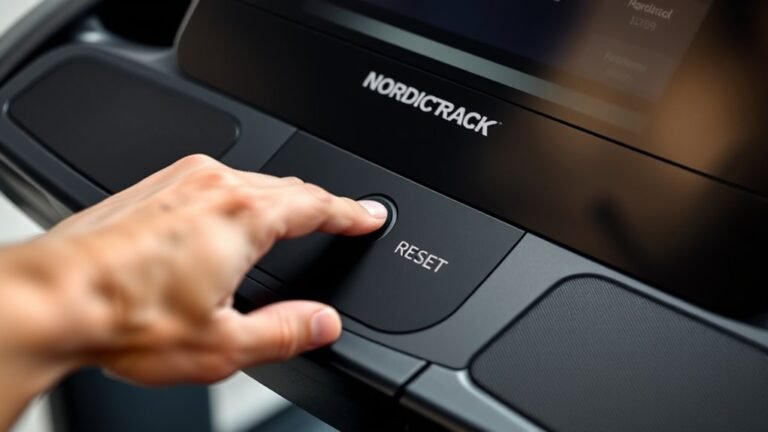
Next, follow essential preparation steps: unplug the machine, tighten loose screws, and lubricate the belt per manufacturer instructions. Don’t forget to remove personal items and reset the machine settings.
| Task | Emotional Impact |
|---|---|
| Cleaning belt | Pride in presentation |
| Tightening screws | Confidence in safety |
| Lubricating belt | Assurance of smooth use |
| Resetting settings | Thoughtfulness shown |
These actions make certain your treadmill is donation-ready, reflecting your care and respect for the recipient.
Scheduling Treadmill Pickup or Drop-Off
You’ll need to coordinate whether you want the organization to pick up your treadmill or if you’ll drop it off yourself.
Many charities offer scheduled pickup services, but they often have specific size and weight restrictions.
If you opt for drop-off, choose a location with easy loading access and confirm their operating hours to guarantee a smooth handover.
Pickup Service Options
How can you arrange the pickup or drop-off of your treadmill to guarantee a smooth donation process? Efficient pickup scheduling and donation logistics are essential.
Start by contacting the organization to confirm they offer pickup services and understand their requirements.
Next, coordinate a pickup time that fits both your schedule and theirs to avoid delays. Some services provide professional movers experienced in handling bulky fitness equipment, ensuring safety and efficiency.
Alternatively, you can opt for self-drop-off if pickup isn’t available, but that requires planning transport logistics.
Consider these pickup service options:
- Professional pickup arranged by the charity or third-party
- Scheduled time slots to streamline donation logistics
- Volunteer-based pickup services requiring flexible timing
- Self-arranged transport for drop-off at designated locations
This approach will simplify the transfer and protect your treadmill’s condition.
Drop-Off Location Tips
When scheduling a treadmill drop-off, selecting a convenient and accessible location guarantees a seamless handover and reduces handling risks. Start by confirming the exact address and available hours with your chosen local charity partnerships to prevent scheduling conflicts.
Practice proper treadmill donation etiquette by arriving punctually and ensuring the equipment is clean and disassembled if required. Communicate any special handling instructions to the receiving party beforehand to facilitate efficient unloading.
If the location lacks a loading dock or elevator, bring appropriate moving tools or assistance. Additionally, verify parking availability to avoid delays.
Tax Benefits When Donating a Treadmill
Why consider the tax benefits of donating your treadmill? When you donate to a qualified organization, you may be eligible for tax deductions, reducing your taxable income through charitable contributions.
To maximize these benefits, guarantee you:
- Obtain a written acknowledgment from the charity specifying your treadmill donation.
- Accurately determine the fair market value of your treadmill at the time of donation.
- Itemize deductions on your tax return instead of taking the standard deduction.
- Retain all receipts and documentation for IRS verification in case of audit.
Alternatives to Donation: Selling or Recycling Your Treadmill
Although donating your treadmill offers clear benefits, you might consider selling or recycling it as practical alternatives.
When exploring selling options, evaluate platforms like online marketplaces, fitness equipment resellers, or local classifieds to determine the best fit based on your treadmill’s condition and market demand.
Pricing it competitively guarantees a quicker sale.
If selling isn’t viable, recycling methods provide an environmentally responsible solution. Many treadmills contain recyclable metals, plastics, and electronic components.
Contact local recycling centers or specialized e-waste facilities to confirm they accept fitness equipment. Proper disassembly and disposal prevent hazardous materials from entering landfills.
Frequently Asked Questions
Can I Donate a Treadmill With a Broken Motor?
You can donate a treadmill with a broken motor if the donation center policies accept non-functional equipment. Consider exploring treadmill repair options first to enhance its value; otherwise, clarify the center’s guidelines before donating.
Are There Specific Brands Preferred by Donation Centers?
Donation centers rarely have strict brand preferences, but you should check their specific donation guidelines. Certain brands known for durability and ease of repair might be favored, so confirming acceptable models before donating saves you time and effort.
How Long Does the Donation Process Typically Take?
You’ll typically experience a donation timeline of 1-2 weeks, depending on the organization. Processing steps include scheduling pickup, inspection, paperwork, and final approval.
Efficient coordination speeds up completion, ensuring your treadmill’s quick shift to new users.
Can I Donate Treadmill Accessories Separately?
Wondering if you can donate treadmill accessories separately? Yes, you can, but always check specific donation guidelines first.
Some organizations accept accessories alone, while others require them with the treadmill to guarantee compatibility and usability.
Is There a Maximum Age Limit for Treadmills to Be Donated?
You typically won’t find a strict maximum age limit for treadmill donations, but you should check donation guidelines. Treadmills with a lifespan beyond 7-10 years may be less accepted due to wear and outdated technology concerns.
Conclusion
Donating your treadmill is like passing the torch in the race toward better health—each step you take fuels someone else’s fitness journey. By choosing local gyms, schools, or charities, you guarantee your equipment keeps moving, not gathering dust.
Clean it thoroughly, schedule pickup or drop-off, and consider the tax benefits to maximize impact. Whether you give, sell, or recycle, your treadmill’s next chapter can power a healthier community and a greener planet.
For those wondering where to donate treadmill equipment, local fitness centers and charitable organizations are great places to start your donation journey.