How Fast Is 7 on a Treadmill
If you’re running at 7 on a treadmill, you’re moving faster than a jog—it’s classified as a steady running pace. This speed equals about 11.27 feet per second, offering a moderate-to-vigorous cardiovascular workout that enhances aerobic capacity and burns substantial calories.
The treadmill provides a consistent, controlled pace, unlike outdoor running with varying terrain and wind resistance. Keeping good form is key at this intensity. Explore further to understand how to maximize benefits and safely improve your speed.
Key Takeaways
- A treadmill speed of 7 mph equates to running at approximately 11.27 feet per second.
- Running at 7 mph is considered a moderate-to-vigorous intensity pace beyond jogging speed.
- Maintaining 7 mph requires efficient foot strike, upright posture, and controlled breathing.
- Treadmill speed ensures consistent pace, aiding in monitoring workout effort and progress.
- Proper warm-up and gradual increase to 7 mph help prevent injury and improve endurance.
Is Running at 7 MPH Jogging or Running?
How do you categorize running at 7 miles per hour, jogging or running?
Scientifically, jogging often refers to a pace between 4 to 6 mph, characterized by a relaxed, sustainable effort.
Jogging is typically defined as a relaxed, sustainable pace between 4 and 6 miles per hour.
Running typically exceeds 6 mph, demanding greater cardiovascular and muscular engagement. At 7 mph, you cross into running territory.
Your running techniques at this pace should emphasize efficient foot strike, increased stride length, and ideal cadence to minimize injury risk and maximize performance.
Maintaining an upright posture with a slight forward lean, engaging core muscles, and controlled breathing supports sustained running at this speed.
What Does 7 MPH Mean on a Treadmill?
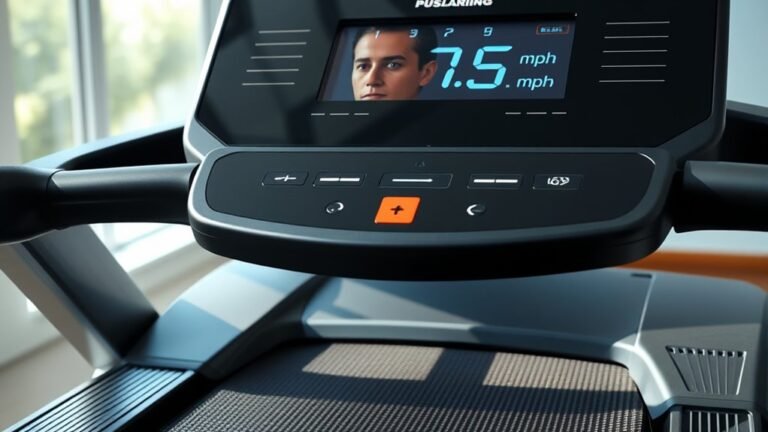
Running at 7 miles per hour on a treadmill means you’re moving at a speed of 7 miles in one hour, which translates to approximately 11.27 feet per second or 3.13 meters per second.
When you adjust the treadmill settings to 7 MPH, the machine maintains this consistent speed, allowing you to control your workout intensity precisely. The speed measurement displayed reflects your pace, ensuring you can monitor and regulate your running effort accurately.
Understanding this speed helps you set realistic training goals and assess performance improvements. The treadmill’s calibrated speed measurement is based on the belt’s rotation rate, which determines how fast you run without the variability of outdoor conditions.
Consequently, 7 MPH on a treadmill is a fixed, measurable velocity for your indoor running session.
How Does 7 MPH on a Treadmill Compare to Outdoor Running?
Although treadmill speed settings provide a consistent pace, maintaining 7 MPH indoors can feel different compared to running outdoors due to factors like air resistance, terrain variability, and natural environmental conditions.
Running at 7 MPH indoors feels different than outdoors due to air resistance and terrain changes.
When you run outside, wind resistance increases energy expenditure, whereas treadmills lack this element, making 7 MPH feel slightly easier.
Additionally, outdoor terrain often includes inclines, declines, or uneven surfaces, which challenge your muscles differently than the flat, controlled surface of a treadmill.
It’s important to reflect on treadmill calibration accuracy, as some machines may not display exact speeds, affecting your perceived effort.
To mimic outdoor running more closely, some treadmills allow incline adjustments to simulate hills.
Understanding these differences helps you gauge your performance accurately when shifting between treadmill workouts and outdoor runs at 7 MPH.
Fitness Benefits of Running at 7 MPH
Understanding the differences between treadmill and outdoor running at 7 MPH sets the stage for appreciating the specific fitness benefits this pace offers.
Running at 7 MPH provides a moderate-to-vigorous intensity workout that considerably enhances your cardiovascular health by increasing heart rate and improving cardiac output.
This pace efficiently stimulates aerobic capacity, which strengthens heart and lung function over time. Additionally, running at 7 MPH maximizes calorie burning, making it effective for weight management and metabolic health.
You can expect to burn approximately 600-900 calories per hour, depending on your body weight and running form. Consistently maintaining this speed challenges your muscular endurance and promotes aerobic conditioning, contributing to overall fitness improvements.
Therefore, 7 MPH is an ideal pace for those aiming to boost cardiovascular fitness and optimize energy expenditure efficiently.
How to Start Running Safely at 7 MPH
Starting safely at 7 MPH requires a structured approach that prepares your body for the increased intensity.
Begin with dynamic warm-up routines such as leg swings, lunges, and light jogging for 5-10 minutes to elevate your heart rate and increase muscle elasticity. This reduces injury risk and enhances performance.
Start with dynamic warm-ups like leg swings and light jogging to boost heart rate and flexibility.
Next, make sure you wear proper footwear designed for running, offering adequate cushioning and arch support to absorb impact forces at higher speeds.
Start running at a slower pace, gradually increasing to 7 MPH over several minutes to allow your cardiovascular and musculoskeletal systems to adapt.
Maintain proper running form by keeping your posture upright and your foot strikes controlled.
Monitor your breathing and perceived exertion to avoid overexertion during initial attempts at this speed.
Tips to Improve Endurance and Speed Beyond 7 MPH
Once you’ve comfortably reached 7 MPH, enhancing your endurance and speed requires targeted training strategies that challenge your cardiovascular system and muscular strength.
Incorporate interval training by alternating short bursts of speeds above 7 MPH with recovery periods at a slower pace. This method improves your aerobic capacity and running economy efficiently.
Additionally, integrate speed workouts such as tempo runs and hill sprints to stimulate fast-twitch muscle fibers and increase lactate threshold. Consistently varying intensity and duration prevents plateauing and promotes progressive overload.
Guarantee adequate rest and proper nutrition to support recovery and adaptation.
Tracking your progress with metrics like heart rate and perceived exertion helps you fine-tune workouts for maximum gains.
Frequently Asked Questions
What Is the Average Calorie Burn Running at 7 MPH for 30 Minutes?
You burn approximately 300-450 calories running at 7 mph for 30 minutes, depending on your weight and running intensity.
Calorie estimates vary, but higher intensity increases energy expenditure during your workout session.
How Does Treadmill Incline Affect Running Speed and Effort at 7 MPH?
Think of treadmill mechanics as gears shifting uphill. Adding incline at 7 mph boosts effort, demanding more from your muscles and cardiovascular system.
Incline benefits include increased calorie burn and strength, even as your speed stays constant.
Can Running at 7 MPH Help Improve Cardiovascular Health?
Yes, running at 7 mph boosts your heart health by increasing cardiovascular fitness. This pace elevates your heart rate, improves blood circulation, and strengthens your heart muscle.
These benefits enhance overall endurance and reduce the risk of cardiovascular disease.
What Shoes Are Best for Running Comfortably at 7 MPH?
You’ll want running shoes with ample shoe cushioning to absorb impact comfortably at 7 mph.
Look for models designed for moderate speed and stability, like those with responsive midsoles and breathable uppers to enhance your run scientifically.
How Does Age Impact the Ability to Sustain 7 MPH on a Treadmill?
You’ll find age-related fitness and endurance changes reduce your ability to sustain 7 mph on a treadmill as you get older. Muscle mass, cardiovascular capacity, and recovery rates decline, requiring tailored training to maintain performance.
Conclusion
Running at 7 MPH puts you right at a brisk pace—faster than jogging but accessible for many runners. Curiously, research shows that maintaining 7 MPH can burn approximately 600 calories per hour, boosting cardiovascular health and endurance efficiently.
To maximize benefits, start gradually and focus on proper form. With consistent training, you can improve speed and stamina beyond 7 MPH.
This makes your treadmill workouts both effective and scientifically grounded. Understanding how fast is 7 on a treadmill helps you set realistic goals and track your progress effectively.