How Much Lubricant for Treadmill
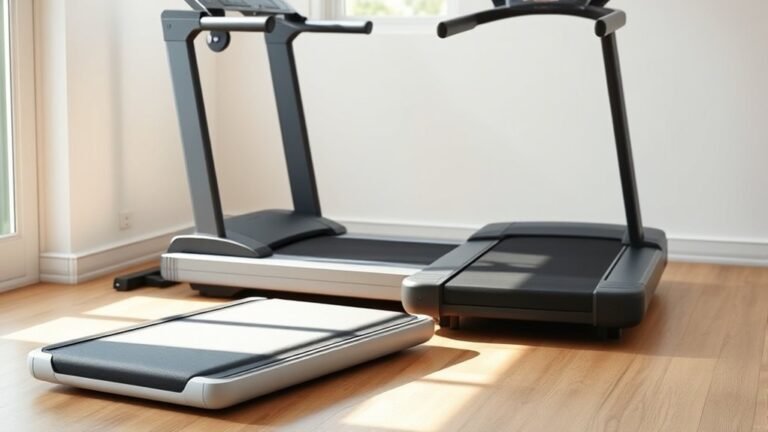
How Much Lubricant for Treadmill you need depends on your model, belt type, and usage frequency. You should apply between 1 to 5 ounces of lubricant to your treadmill belt to keep it running smoothly.
Residential treadmills typically need 1-3 ounces, while commercial ones require 3-5 ounces due to heavier use. Using the right amount prevents belt friction and motor strain.
Over- or under-lubricating can cause noise or sluggishness. Want to know how to match lubricant type and timing to your treadmill’s needs?
Key Takeaways
- Use 2 to 4 ounces (60 to 120 ml) of lubricant per application, adjusting for treadmill type and belt size.
- Residential treadmills typically require 1-3 ounces per lubrication session.
- Commercial treadmills need 3-5 ounces due to heavier usage demands.
- Wider belts require more lubricant, while thinner belts need less to prevent buildup.
- Always consult the treadmill manual for exact lubrication amounts based on belt material and usage frequency.
Why Does Your Treadmill Need the Right Amount of Lubricant?
Although you mightn’t notice it immediately, applying the right amount of lubricant to your treadmill is crucial for its performance and longevity. Proper lubrication reduces friction between the belt and deck, directly enhancing treadmill performance by allowing smoother belt movement and minimizing motor strain.
When you apply the correct lubrication, you benefit from decreased wear on mechanical components, which extends their lifespan and prevents overheating.
Over-lubricating can cause slippage, while insufficient lubrication increases resistance, forcing the motor to work harder and potentially leading to premature failure.
The lubrication benefits include reduced noise, energy efficiency, and maintaining ideal belt speed.
How Can You Tell When Your Treadmill Needs Lubrication?
You’ll notice increased belt friction when your treadmill needs lubrication, causing the belt to drag or stick.
If the motor starts overheating, it’s a clear sign that lubrication is insufficient.
Additionally, unusual noises like squeaking or grinding indicate that the moving parts require proper lubrication.
Belt Friction Signs
Friction between the treadmill belt and deck causes noticeable signs indicating the need for lubrication. When you observe increased belt wear, such as fraying edges or visible surface damage, it’s a clear indicator that friction reduction has become insufficient.
You might also notice the belt feels stiffer or less smooth during operation, which results from elevated friction forces. Additionally, you may hear a louder, scraping noise originating from the belt-deck interface, signaling that lubrication has diminished.
Ignoring these signs accelerates wear on both the belt and motor components. To maintain peak performance and prolong the treadmill’s lifespan, you should apply lubricant promptly once these friction signs appear.
Proper lubrication restores smooth belt movement, effectively minimizing friction and preventing further belt wear.
Motor Overheating Symptoms
Beyond visible belt wear, motor performance offers critical clues about lubrication status. When your treadmill lacks sufficient lubricant, increased friction forces the motor to work harder, causing motor strain.
This strain raises the motor’s temperature, potentially triggering a thermal shutdown to prevent damage. If you notice your treadmill’s motor frequently overheating or the machine abruptly stopping during use, these are strong indicators that lubrication is inadequate.
Additionally, prolonged motor strain without proper lubrication can degrade motor components, reducing efficiency and lifespan. Regularly check for these overheating symptoms and guarantee timely lubrication to maintain peak motor function and avoid costly repairs.
Proper lubrication minimizes friction, lowers motor temperature, and prevents thermal shutdown events, keeping your treadmill running smoothly.
Unusual Noise Detection
Although treadmills often operate quietly, unusual noises can signal lubrication issues that demand your attention. When you hear squeaking, grinding, or thumping sounds, perform sound analysis to pinpoint their origin.
These noises often indicate increased friction between the belt and deck due to insufficient lubrication. During noise troubleshooting, isolate the treadmill’s moving parts by running it at low speed and listening carefully.
If the noise corresponds with belt movement, lubrication is likely needed. Additionally, irregular or rhythmic noises can suggest uneven wear exacerbated by dry surfaces.
Addressing these issues promptly by applying the correct lubricant amount reduces mechanical stress, preventing further damage.
Monitoring sound patterns regularly helps you maintain peak treadmill performance and extends the lifespan of key components, ensuring your workouts remain smooth and quiet.
Choosing the Best Lubricant for Your Treadmill
You’ll need to choose between silicone-based and paraffin-based lubricants, as each type interacts differently with treadmill belts and decks.
Consider factors like your treadmill’s make, usage frequency, and manufacturer recommendations to select the right lubricant.
Using the appropriate lubricant guarantees peak performance and extends your treadmill’s lifespan.
Types Of Treadmill Lubricants
Selecting the right lubricant for your treadmill is essential to maintaining its performance and extending its lifespan. You’ll primarily encounter two types: silicone spray and wax-based lubricants.
Silicone spray is a liquid lubricant that penetrates beneath the belt, reducing friction without attracting dust or debris. It’s easy to apply and commonly recommended for most modern treadmills.
Wax-based lubricants, on the other hand, provide a thicker protective layer. They’re solid or semi-solid at room temperature and require melting onto the belt, offering longer-lasting lubrication but more involved application.
Both types reduce motor strain and belt wear, but silicone spray is generally preferred for its clean application and efficiency.
Knowing these types helps you make an informed choice that suits your treadmill’s design and usage.
Factors Affecting Lubricant Choice
Because treadmills vary in design and usage, the choice of lubricant depends on several key factors. You need to take into account lubricant viscosity tailored to your treadmill usage to guarantee peak performance and longevity.
Higher viscosity lubricants suit heavy, frequent usage, providing durable protection. Lower viscosity lubricants are better for light, infrequent use, reducing drag and maintaining smooth operation.
| Factor | Description | Impact on Lubricant Choice |
|---|---|---|
| Treadmill Model | Design and materials used | Determines compatible lubricant type |
| Usage Frequency | Hours per week | Influences lubricant viscosity |
| Environmental Conditions | Temperature, humidity | Affects lubricant stability |
| Manufacturer Guidelines | Recommended lubricant specifications | Guarantees warranty compliance |
| Lubricant Viscosity | Thickness and flow characteristics | Matches treadmill operational needs |
How Much Treadmill Lubricant Do You Need?
How much treadmill lubricant do you actually need to keep your machine running smoothly? Proper treadmill maintenance hinges on applying the right amount of lubricant to reduce friction and extend belt life.
The lubrication frequency and quantity depend on your treadmill’s usage and the manufacturer’s guidelines. Typically, you’ll want to apply:
- A thin, even layer across the entire deck surface
- Approximately 2 to 4 ounces (60 to 120 ml) per lubrication session
- Avoid over-lubricating, which can cause belt slippage or buildup
- Follow lubrication frequency recommendations, usually every 3 to 6 months
Lubricant Amount by Treadmill Model and Belt Type
You’ll need to adjust the lubricant amount based on your treadmill model’s specifications and the type of belt material it uses.
Different belt compositions, like PVC or polyurethane, have distinct lubrication requirements to maintain peak performance.
Following the manufacturer’s guidelines guarantees you apply the correct quantity without over- or under-lubricating.
Lubricant Quantity Guidelines
Different treadmill models and belt types require specific lubricant amounts to secure peak performance and longevity. Proper lubricant application guarantees smooth operation, reduces friction, and prevents premature wear.
You should carefully follow manufacturer guidelines to avoid over- or under-lubrication. Keep lubricant storage airtight and away from extreme temperatures to maintain its effectiveness.
Here are general lubricant quantity guidelines:
- Residential treadmills typically need 1-3 ounces per application.
- Commercial models may require 3-5 ounces due to heavier use.
- Wider belts call for increased lubricant volume to cover the surface adequately.
- Thinner belts need less lubricant to avoid excess buildup.
Always check your treadmill’s manual for exact amounts and apply lubricant evenly beneath the belt to optimize performance and extend the machine’s lifespan.
Belt Material Lubrication Needs
Because belt materials vary in composition and texture, their lubrication needs differ considerably to guarantee ideal treadmill function.
When evaluating lubrication frequency, you must consider the belt composition. Rubber, PVC, or composite materials each demand specific care.
Rubber belts typically require more frequent lubrication, approximately every three months, due to their higher friction coefficient. PVC belts, being smoother, may only need lubrication every six months. Composite belts often fall in between, depending on the manufacturer’s guidelines.
Additionally, the lubricant amount should be carefully adjusted to avoid excess, which can lead to belt slippage or motor strain.
For precise maintenance, always consult your treadmill’s manual to match the lubrication frequency and quantity to the specific belt type, ensuring optimal performance and prolonged equipment lifespan.
How to Apply Treadmill Lubricant Step-by-Step
Before applying lubricant, make certain the treadmill is turned off and unplugged to prevent accidents.
Proper treadmill maintenance hinges on correct lubrication techniques to extend belt life and guarantee smooth operation. Follow these steps precisely:
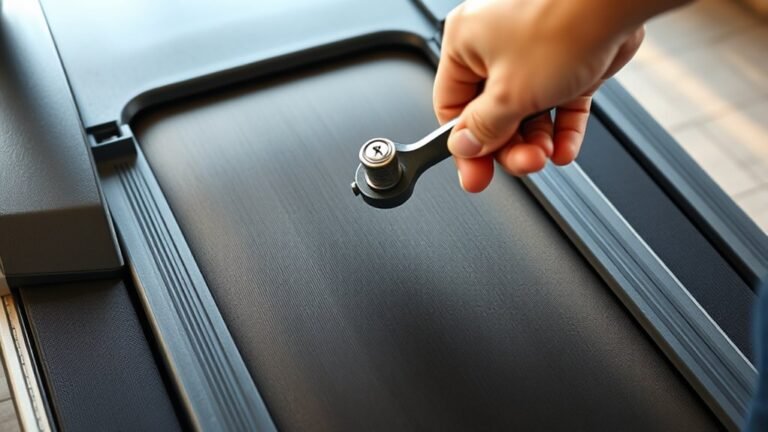
Lift the treadmill belt gently at the sides to expose the deck.
Apply the recommended amount of silicone-based lubricant evenly under the belt.
Spread the lubricant using a clean cloth or your fingers to cover the entire deck area.
Lower the belt carefully and plug in the treadmill.
Once done, run the treadmill at a slow speed for a few minutes to evenly distribute the lubricant.
This targeted approach minimizes friction and wear, maintaining peak treadmill performance.
How Often Should You Lubricate Your Treadmill Belt?
How often you should lubricate your treadmill belt depends on usage frequency and manufacturer recommendations. Following proper frequency recommendations guarantees peak performance and prolongs the lifespan of your treadmill.
Most manufacturers include lubrication intervals in their maintenance schedules, typically based on hours of use or calendar months.
| Usage Frequency | Lubrication Interval |
|---|---|
| Light (under 3 hrs/week) | Every 6 months |
| Moderate (3-5 hrs/week) | Every 3-4 months |
| Heavy (5-7 hrs/week) | Every 2 months |
| Commercial Use (>7 hrs/week) | Monthly |
Check your treadmill’s manual for specific guidance. Adhering to these intervals helps reduce friction, prevents belt wear, and maintains smooth operation. Regular lubrication aligned with your treadmill’s maintenance schedules is key for consistent performance.
Signs You’ve Used Too Much or Too Little Lubricant
Even if you lubricate your treadmill regularly, applying too much or too little lubricant can cause issues.
Incorrect lubrication frequency directly affects treadmill performance, leading to problems you should recognize early.
Using too little lubricant may cause increased belt friction, overheating, and motor strain.
Conversely, too much lubricant can attract dirt, cause belt slippage, and leave residue on components.
Watch for these signs to gauge your lubrication accuracy:
- Belt squeaking or unusual noise indicating insufficient lubrication
- Sluggish treadmill response or jerky belt movement from excess lubricant
- Visible lubricant buildup around the belt or motor area
- Overheating motor or frequent belt misalignment
Mistakes to Avoid When Lubricating Your Treadmill
Recognizing signs of improper lubrication helps you maintain your treadmill’s performance, but avoiding common lubrication mistakes during application is equally important.
First, don’t apply excessive lubricant application; too much lubricant can attract dirt, causing belt slippage and motor strain.
Second, avoid using the wrong type of lubricant. Always use silicone-based lubricants specified for treadmills.
Third, don’t neglect cleaning the belt and deck before applying lubricant, as debris reduces effectiveness.
Fourth, avoid lubricating too frequently; over-lubrication wastes product and can damage components.
Finally, guarantee even distribution by following manufacturer instructions precisely.
By steering clear of these common lubrication mistakes, you’ll extend your treadmill’s lifespan, maintain smooth belt operation, and prevent costly repairs.
Precision and moderation in lubrication guarantee peak treadmill function.
Maintenance Tips to Keep Your Treadmill Running Smoothly
To keep your treadmill operating at peak performance, you need to perform regular maintenance beyond lubrication. While lubrication benefits reduce friction and wear, ensuring treadmill longevity requires a holistic approach.
Regular maintenance beyond lubrication is essential for maximizing treadmill performance and longevity.
Here are essential maintenance tips to keep your treadmill running smoothly:
- Clean the belt and deck regularly to prevent dust buildup that impedes belt movement and increases motor strain.
- Check belt alignment and tension; improper settings cause uneven wear and reduce treadmill lifespan.
- Inspect and tighten bolts and screws to avoid mechanical issues and maintain machine stability.
- Monitor motor and electronics for unusual noises or performance drops; addressing issues early prevents costly repairs.
Frequently Asked Questions
Can Treadmill Lubricant Improve Battery Life in Cordless Models?
You won’t directly improve your cordless treadmill’s battery life with lubricant, but proper treadmill maintenance reduces motor strain, enhancing cordless efficiency.
This indirectly supports longer battery usage by keeping your device running smoothly and efficiently.
Is It Safe to Use Household Oils as Treadmill Lubricant?
You shouldn’t use household oils as treadmill lubricant due to household oil risks like gum buildup and damage. Instead, opt for alternative lubricants designed for treadmills to guarantee smooth operation and protect your machine effectively.
How Does Temperature Affect Treadmill Lubricant Performance?
Temperature variations directly impact lubricant viscosity; as temperature rises, viscosity decreases, causing thinner lubrication. Colder temperatures thicken it, potentially reducing effectiveness.
You should choose lubricants suited to your treadmill’s operating temperature range for ideal performance.
Can Treadmill Lubrication Prevent Motor Overheating?
You can boost motor efficiency by up to 30% with proper treadmill lubrication, which plays an essential role in overheating prevention by reducing friction and heat buildup. This ensures your treadmill runs smoothly and prolongs motor lifespan.
Are There Eco-Friendly Treadmill Lubricants Available?
Yes, you’ll find eco-friendly treadmill lubricants made with sustainable options and natural ingredients. These lubricants reduce environmental impact while maintaining performance.
They ensure your treadmill runs smoothly without harmful chemicals or synthetic materials.
Conclusion
You might think more lubricant means better treadmill performance, but that’s not true. Using too much can cause slipping or damage, while too little leads to friction and wear. The key is applying the right amount based on your treadmill model and belt type.
Regularly check for signs of under- or over-lubrication to keep your machine running smoothly. Precision in maintenance extends your treadmill’s life and guarantees peak performance every time you run.
Knowing how much lubricant for treadmill use is essential for optimal function and durability.