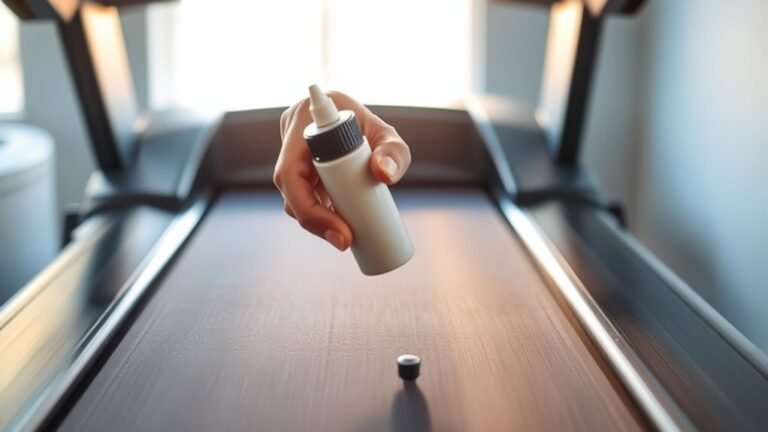
What Is Treadmill Lube
Treadmill lube is a specialized lubricant designed to reduce friction between your treadmill’s belt and deck. This reduction in friction helps prevent wear and reduces strain on the motor, ensuring smoother operation.
It guarantees smooth, efficient belt movement and minimizes heat buildup, which keeps your treadmill running reliably for longer periods. Using the right type of lube—usually silicone-based or wax—at recommended intervals is essential for protecting your equipment.
Proper application also helps avoid common mistakes like over-lubricating. To optimize your treadmill’s lifespan and performance, understanding the different lube types and maintenance techniques is key.
Key Takeaways
- Treadmill lube is a specialized lubricant that reduces friction between the treadmill belt and deck for smooth operation.
- It prevents premature wear and motor strain by minimizing mechanical resistance and heat buildup.
- Types include silicone spray, wax-based, oil-based, grease, and dry lubricants, each suited for different treadmill parts and conditions.
- Regular lubrication, typically every 40-50 hours of use, maintains treadmill performance and prolongs its lifespan.
- Using manufacturer-recommended lube ensures compatibility and avoids damage to treadmill components.
Understanding Treadmill Lube and Why It Matters
Treadmill lube is a specialized lubricant designed to reduce friction between the belt and deck of your treadmill. You need it to guarantee peak treadmill maintenance, preventing premature wear and prolonging the machine’s lifespan.
Applying the right lubricant maintains smooth belt movement, reduces motor strain, and enhances overall performance. The lubrication benefits include minimizing heat buildup and mechanical resistance, which can otherwise damage components.
Without regular lubrication, excessive friction causes the belt and deck to deteriorate, leading to costly repairs. Using treadmill-specific lube, typically silicone-based, guarantees compatibility with treadmill materials and avoids damage.
Incorporating a consistent lubrication schedule into your maintenance routine keeps your treadmill running efficiently, saves energy, and preserves the integrity of its parts.
Proper lubrication is essential for reliable, long-term treadmill operation.
How Treadmill Lube Reduces Friction and Wear
Reducing friction between the belt and deck directly prevents wear that can compromise your treadmill’s functionality. When you apply treadmill lube, it forms a thin, slippery layer that minimizes direct contact, enabling smooth belt movement.
This friction reduction cuts down heat generation and mechanical stress, extending the lifespan of both belt and deck. Wear prevention is essential to maintain peak performance and avoid costly repairs.
| Effect | Explanation |
|---|---|
| Friction reduction | Minimizes resistance between belt and deck |
| Heat dissipation | Limits heat buildup from continuous use |
| Mechanical stress | Reduces strain on treadmill components |
| Surface protection | Shields deck surface from abrasion |
| Longevity | Extends treadmill’s operational life |
Different Types of Treadmill Lube You Can Use
Although maintaining your machine’s performance hinges on proper lubrication, not all lubricants are created equal. You can choose from several types depending on your treadmill’s requirements.
Silicone spray is popular for its clean application and long-lasting protection against friction.
Wax based lube offers a solid, durable coating ideal for high-friction areas but can be messier to apply.
Oil based lubricant penetrates the belt and deck interface, reducing friction effectively but may attract dust and debris.
Treadmill grease, thicker and more viscous, suits specific bearings and motor parts rather than belt lubrication.
Finally, dry lubricant provides friction reduction without attracting dirt, ideal for dusty environments but may require more frequent application.
Selecting the right lubricant guarantees best treadmill function and longevity.
Recommended Frequency for Applying Treadmill Lube
Choosing the right lubricant is only part of maintaining your treadmill’s ideal function; knowing how often to apply it’s equally important. Most manufacturers recommend lubrication every 40 to 50 hours of use, but this can vary based on treadmill type and usage intensity.
Establish clear application intervals within your maintenance routine to prevent belt friction and motor strain. For home users running short sessions daily, applying lube every three months is typically sufficient.
Commercial or high-usage treadmills may require monthly lubrication. Ignoring proper intervals can lead to increased wear and costly repairs.
Monitoring your treadmill’s performance and adhering to specified application intervals guarantees the best belt glide, reduces motor load, and extends equipment lifespan.
Integrate this step consistently to maintain smooth operation and prevent premature deterioration.
How to Apply Treadmill Lube Step-by-Step
Before you start applying treadmill lube, make sure the machine is turned off and unplugged for safety.
Begin by lifting the treadmill belt slightly to access the deck surface beneath. Apply the lubricant evenly along the center of the deck, following the manufacturer’s recommended amount.
Lift the treadmill belt slightly and apply lubricant evenly along the center of the deck as recommended.
Use a clean cloth to spread the lube across the deck if necessary, ensuring full coverage.
Next, lower the belt and plug in the treadmill. Turn it on at a slow speed (around 2 mph) and let it run for 5 minutes to distribute the lubricant evenly under the belt.
These lubrication techniques form a core part of effective treadmill maintenance tips, helping reduce friction, prevent wear, and extend your machine’s lifespan.
Always refer to your treadmill’s manual for specific guidelines.
Common Treadmill Lube Mistakes to Avoid
Why do some treadmill lubrication efforts fail to deliver ideal results? Often, it’s because of treadmill lube myths and common lubrication errors.
You might think applying too much lubricant speeds up maintenance, but excess lube can attract dust and degrade belt performance.
Another frequent mistake is using the wrong type of lubricant; only silicone-based lubes designed for treadmills guarantee proper friction reduction.
Skipping the cleaning step before application also compromises effectiveness, as dirt prevents even distribution.
Finally, applying lube on a running belt rather than a stationary one leads to uneven coating and potential motor strain.
Avoid these pitfalls by following manufacturer guidelines precisely, guaranteeing your treadmill runs smoothly and extends its lifespan without unnecessary repairs or wear.
Signs Your Treadmill Needs Fresh Lubrication
Although treadmills can operate smoothly for extended periods, you’ll notice specific signs indicating it’s time to apply fresh lubrication. One clear indicator is a sudden increase in belt friction, causing the motor to strain and treadmill performance to decline.
You might hear unusual squeaking or grinding noises during operation, signaling that the belt and deck aren’t sufficiently lubricated. Additionally, if the belt feels sticky or sluggish underfoot, it reflects inadequate lubrication.
Monitoring these signs helps you apply proper lubrication techniques promptly, preventing damage. Regularly checking your treadmill for these symptoms guarantees ideal function and reduces wear.
Addressing lubrication needs early maintains smooth belt movement, efficient motor operation, and prolongs the treadmill’s lifespan without causing unnecessary mechanical stress.
How Treadmill Lube Helps Your Treadmill Last Longer
Recognizing signs of worn lubrication allows you to act before damage occurs, directly impacting your treadmill’s durability.
Proper treadmill maintenance with the right lubricant benefits your machine by reducing friction between the belt and deck, preventing premature wear. This extends the life of essential components and maintains smooth operation.
Key advantages include:
- Minimizing motor strain, which decreases the risk of overheating and failure
- Protecting the walking surface from abrasion, preserving belt integrity
- Enhancing overall performance by ensuring consistent belt movement
Where to Buy Treadmill Lube and Key Buying Tips
You can find treadmill lube at specialized fitness stores, online retailers, and some hardware outlets.
When choosing a lubricant, focus on quality factors like silicone purity and compatibility with your treadmill’s belt material.
Selecting the right source and product guarantees peak performance and extends your machine’s lifespan.
Best Retailer Options
When selecting treadmill lube, choosing a reputable retailer guarantees you get a product that meets manufacturer specifications and maintains your equipment’s performance.
You’ll find the best online stores offer a wide selection, detailed product descriptions, and customer reviews to guide your choice.
Local retailers provide the advantage of immediate availability and personalized advice from knowledgeable staff.
To confirm ideal purchase decisions, consider these points:
- Verify the retailer’s authorization to sell treadmill lubricants that comply with specific treadmill models.
- Check return policies and customer support responsiveness for troubleshooting assistance.
- Compare prices between best online sources and local retailers without compromising on quality.
Choosing Quality Lubricants
Although finding treadmill lubricant seems straightforward, selecting a high-quality product requires attention to formulation, compatibility, and source reliability.
When choosing lubricant brands, prioritize those specifically designed for treadmill belts to guarantee ideal friction reduction and material preservation.
Avoid general-purpose lubricants, as they may degrade belt components or attract dust.
Conduct a performance comparison by reviewing technical specifications and user feedback focused on longevity, thermal stability, and ease of application.
Purchase from reputable vendors or directly from manufacturers to confirm authenticity and proper storage conditions.
Additionally, verify that the lubricant meets your treadmill’s OEM recommendations to maintain warranty coverage.
Frequently Asked Questions
Can I Use Household Oils as Treadmill Lube?
You shouldn’t use household alternatives or common oil types as treadmill lube because they can degrade the belt and motor. Instead, use manufacturer-recommended silicone-based lubricants for peak performance and equipment longevity.
Is Treadmill Lube Safe for All Belt Materials?
Think of treadmill belt materials as delicate dancers; not all lubes suit their moves. You shouldn’t assume lubrication safety universally. Always check compatibility to protect your belt’s performance and longevity precisely and effectively.
Does Treadmill Lube Affect Workout Performance?
Yes, treadmill lube improves workout performance by reducing friction during treadmill maintenance. Its lubrication benefits guarantee smoother belt movement, enhancing exercise efficiency and extending equipment lifespan.
This ensures you get a consistent and reliable workout experience every time.
Can Over-Lubricating Damage the Treadmill?
Yes, over-lubricating your treadmill can cause belt slippage and motor strain. Stick to the recommended lubrication frequency in your treadmill maintenance guide to guarantee peak performance and avoid unnecessary wear or damage.
How Do I Dispose of Old Treadmill Lube Properly?
Better safe than sorry: you should never pour treadmill lube down drains. For treadmill maintenance, collect old lube in a sealed container and dispose of it at a hazardous waste facility.
Consider eco-friendly lube alternatives too.
Conclusion
Properly lubricating your treadmill can extend its lifespan by up to 50%, greatly reducing friction and wear on essential components. By applying the right treadmill lube regularly, you guarantee smoother operation and prevent costly repairs.
Don’t overlook this simple maintenance step—it directly impacts performance and durability. Remember, consistent lubrication keeps your treadmill running efficiently, saving you time and money in the long run.
Make treadmill lube a priority in your equipment care routine to ensure optimal performance and longevity.