What Does Treadmill Do to Your Body
When you use a treadmill, it benefits your body in multiple ways. It strengthens your heart, improves blood flow, and boosts endurance by challenging your cardiovascular system. This makes your heart healthier and more efficient over time.
Your muscles, especially those in your legs and core, become stronger and more coordinated as you adjust speed and incline. The treadmill also supports joint and bone health by providing low-impact exercise that safely builds bone density.
Additionally, using a treadmill fires up your metabolism and lifts your mood by releasing feel-good hormones. Keep going, and you’ll discover how to make every session even more effective and enjoyable.
Key Takeaways
- Treadmill exercise improves cardiovascular health by increasing heart rate and enhancing blood circulation efficiency.
- It strengthens and tones leg, core, and arm muscles through controlled, repetitive movements.
- Running or walking on a treadmill boosts bone density while reducing joint stress with shock-absorbing surfaces.
- Regular treadmill workouts release endorphins, reducing stress and improving mood and mental well-being.
- Adjusting speed and incline on the treadmill enhances muscle strength, endurance, and overall metabolic rate.
How Treadmill Workouts Affect Your Cardiovascular System
When you step onto a treadmill and start moving, your cardiovascular system immediately kicks into gear to meet the increased demand for oxygen and nutrients. Your heart rate rises to pump more blood, delivering oxygen-rich blood to working muscles efficiently.
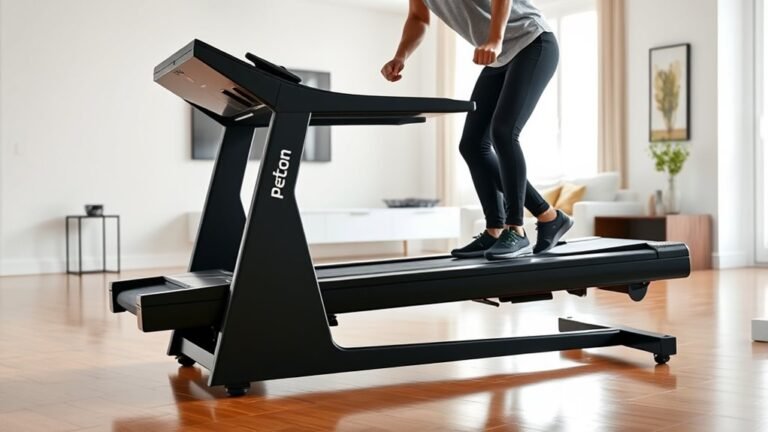
Stepping onto a treadmill instantly activates your cardiovascular system to deliver oxygen and nutrients to muscles.
This boost in oxygen uptake enhances your body’s ability to sustain exercise and improves overall endurance.
As you maintain a steady pace, your heart strengthens, becoming more efficient at circulating blood. Regular treadmill workouts also help lower resting heart rate and reduce blood pressure over time, promoting heart health.
By consistently challenging your cardiovascular system, you improve its capacity, making daily activities easier and reducing the risk of heart-related diseases.
Every treadmill session is a step toward a stronger, healthier heart and improved oxygen delivery throughout your body.
What Treadmill Exercise Does to Your Muscles
When you use a treadmill, your lower body muscles engage in specific activation patterns that target your legs and glutes.
This consistent movement not only strengthens those muscles but also boosts their endurance over time.
Understanding how treadmill exercise shapes your muscles can help you optimize your workouts for better results.
Muscle Activation Patterns
Treadmill exercise activates multiple muscle groups, engaging your legs, core, and even your arms as you maintain balance and rhythm. The treadmill biomechanics guarantee consistent muscle recruitment patterns, primarily targeting your quadriceps, hamstrings, calves, and glutes.
As you walk or run, your core stabilizes your posture, while your arms swing naturally, aiding momentum and balance. This coordinated muscle activation enhances neuromuscular efficiency, helping your body move more effectively over time.
Unlike uneven outdoor surfaces, the treadmill’s consistent pace and surface allow you to focus on controlled, repetitive movements, which can improve your muscle endurance and coordination.
Understanding these muscle activation patterns motivates you to optimize your workouts, guaranteeing each session strengthens your muscle connections and supports your overall fitness goals.
Strengthening Lower Body
Boost your lower body strength by harnessing the consistent resistance and repetitive motion that treadmill exercise provides. This form of strength training targets key muscle groups, helping you build power and stability.
As you walk or run, your quadriceps, hamstrings, glutes, and calves engage continuously, promoting muscle growth and endurance. You can intensify your workout by adjusting speed and incline, which increases resistance and activates muscles more deeply.
| Muscle Group | Role in Treadmill Exercise |
|---|---|
| Quadriceps | Extend the knee during each stride |
| Hamstrings | Flex the knee and stabilize movement |
| Glutes | Propel you forward and maintain balance |
| Calves | Provide push-off force with each step |
| Hip Flexors | Lift the leg during walking/running |
Incorporate treadmill sessions regularly to enhance your lower body strength effectively.
Improving Muscle Endurance
Strengthening your lower body lays the foundation for greater muscle endurance, allowing you to sustain activity longer without fatigue.
When you use a treadmill regularly, you engage in endurance training that challenges your muscles to perform over extended periods. This consistent effort helps delay the onset of muscle fatigue by improving the efficiency of your muscle fibers and increasing blood flow.
As a result, your muscles become better at using oxygen and nutrients, enhancing their stamina. By gradually increasing treadmill speed or incline, you push your endurance limits, making your muscles more resilient.
Keep in mind, endurance training on a treadmill not only boosts your physical performance but also supports overall cardiovascular health, empowering you to stay active and energized throughout the day.
What Treadmill Running Does to Your Joints and Bones
Although running indoors may feel gentler than hitting the pavement, your joints and bones still experience significant impact with every stride on a treadmill. This impact stimulates your bone density, encouraging stronger, healthier bones over time.
However, treadmill surfaces typically offer more shock absorption than concrete, which helps protect your joint health by reducing stress on knees, hips, and ankles.
Treadmill surfaces cushion your joints, reducing stress on knees, hips, and ankles compared to running on concrete.
To maximize benefits and minimize wear and tear, maintain proper running form and choose appropriate footwear.
Remember, consistent treadmill running can enhance the strength and resilience of your skeletal system, supporting long-term joint function.
Listen to your body. If you notice persistent pain, adjust your routine.
Embracing treadmill workouts thoughtfully can boost both your joint health and bone density, helping you stay active and injury-free.
How Treadmill Workouts Boost Your Metabolism
When you use a treadmill, your body ramps up calorie burning, even after your workout ends.
The consistent motion activates multiple muscle groups, boosting your metabolic rate.
Increased Caloric Burn
Because treadmill workouts engage multiple muscle groups and elevate your heart rate, they greatly increase the number of calories you burn. This heightened caloric burn helps you create a caloric deficit, essential for weight loss and improved body composition.
When you consistently push yourself on the treadmill, your body ramps up fat oxidation, the process of breaking down fat to use as energy. This means you’re not just burning calories; you’re specifically targeting stored fat.
Regular treadmill sessions boost your metabolism, making your body more efficient at burning calories even after you finish exercising.
Enhanced Muscle Activation
As you increase the intensity of your treadmill workouts, your muscles work harder, activating more fibers and engaging groups you mightn’t use during everyday activities. This enhanced muscle activation boosts your metabolism by improving muscle coordination, allowing your body to move more efficiently.
The treadmill challenges your neuromuscular engagement, meaning your brain and muscles communicate better, refining your movement patterns. This process not only strengthens muscles but also increases endurance and balance.
By pushing yourself on the treadmill, you stimulate these neuromuscular pathways, leading to greater calorie burn even after your workout ends.
So, every step you take strengthens your muscles and sharpens coordination, making your body a more effective fat-burning machine.
Keep challenging yourself to maximize these benefits and transform your fitness journey.
How Treadmill Exercise Improves Mental Health
Although you might focus on physical benefits, treadmill exercise also greatly boosts your mental health. When you step onto a treadmill, your body releases endorphins, the natural chemicals that promote mood enhancement and create a sense of well-being. This mood lift helps you tackle daily challenges with greater ease.
Additionally, treadmill workouts provide effective stress relief by lowering cortisol levels, the hormone linked to stress. Regular sessions can reduce anxiety and improve your overall mental resilience.
By committing to treadmill exercise, you’re not just strengthening your muscles; you’re sharpening your mind and stabilizing your emotions.
Walking vs. Running on a Treadmill: Which Is Better?
How do you decide whether walking or running on a treadmill suits your fitness goals best? It depends on what you want to achieve and your current fitness level.
Walking benefits include lower impact on your joints, making it ideal if you’re recovering or prefer a gentler workout. It improves cardiovascular health, enhances endurance, and supports consistent daily activity.
Walking offers gentle, joint-friendly exercise that boosts heart health and endurance for everyday fitness.
On the other hand, running advantages lie in its ability to boost cardiovascular fitness more rapidly and increase muscle strength and bone density. Running also challenges your body more intensely, helping improve speed and stamina.
You can mix both to balance intensity and recovery or choose based on your energy and goals.
Ultimately, both walking and running on a treadmill serve your body well when done with intention and consistency.
How Treadmill Workouts Help You Burn Calories and Lose Weight
Choosing between walking and running on a treadmill sets the stage for how effectively you burn calories and lose weight. By adjusting treadmill intensity, such as speed and incline, you control how many calories you burn during each session.
Higher intensity workouts push your body harder, increasing calorie burn and accelerating fat loss. Consistent calorie tracking helps you stay aware of your energy expenditure and progress, allowing smarter workout adjustments.
Whether you choose steady-state walking, interval running, or a mix, the treadmill offers a customizable platform to challenge your endurance and metabolism.
Stick with a routine that fits your fitness level and goals, and use the treadmill’s calorie tracking features to monitor your efforts.
This disciplined approach turns treadmill workouts into a powerful tool for weight loss and improved health.
How to Use a Treadmill Safely to Avoid Injury
To prevent injury while using a treadmill, you should focus on proper form and gradual progression.
Treadmill safety is key to enjoying your workouts without setbacks.
Start slow, listen to your body, and build intensity over time to support injury prevention.
Remember these essential tips:
- Maintain an upright posture with your head facing forward to reduce strain.
- Use the safety clip to stop the treadmill quickly if you lose balance.
- Warm up before your session and cool down afterward to prepare your muscles.
Tips to Maximize Your Treadmill Workout Benefits
Once you’ve mastered safe treadmill use, you can focus on maximizing your workouts for better results. Incorporate interval training and adjust incline settings to challenge your muscles and boost calorie burn.
Vary your speed and incline to avoid plateaus and keep workouts engaging. Proper form and hydration also enhance your treadmill benefits.
| Tip | Benefit |
|---|---|
| Interval Training | Increases cardiovascular fitness |
| Use Incline Settings | Strengthens lower body muscles |
| Vary Speed | Prevents workout monotony |
| Maintain Proper Form | Reduces injury risk |
| Stay Hydrated | Supports endurance and recovery |
Frequently Asked Questions
Can Treadmill Workouts Improve My Sleep Quality?
Yes, treadmill workouts can improve your sleep patterns by reducing stress and boosting energy levels.
Regular treadmill benefits include better cardiovascular health, which helps you fall asleep faster and enjoy deeper, more restorative rest every night.
How Does Treadmill Exercise Affect Skin Health?
Treadmill exercise boosts blood circulation, promoting skin rejuvenation by delivering oxygen and nutrients more efficiently. You’ll notice healthier, glowing skin as regular workouts help flush out toxins and reduce stress, enhancing your overall complexion.
Are Treadmill Workouts Suitable During Pregnancy?
About 60% of pregnant women can safely use treadmills with proper treadmill safety measures. You can enjoy effective prenatal workouts by adjusting speed, avoiding inclines, and consulting your doctor to keep both you and baby healthy.
Can Using a Treadmill Impact Digestion?
Yes, using a treadmill boosts digestion efficiency by stimulating blood flow and metabolism. These treadmill benefits help your body process food faster and reduce bloating.
Keep moving to support a healthier digestive system every day!
Does Treadmill Exercise Influence Immune System Strength?
Yes, treadmill exercise can boost your immune system, especially with moderate exercise intensity. It helps improve immune response and reduce inflammation.
Conclusion
When you step onto a treadmill, you’re not just moving your feet—you’re igniting a powerful engine within your body. Each stride fuels your heart, sculpts your muscles, and sharpens your mind like a well-oiled machine.
By using your treadmill safely and smartly, you access a treasure chest of health benefits that keep you energized and strong. So lace up, embrace the rhythm, and let every step carry you closer to your best self.
Understanding what a treadmill does to your body can motivate you to make the most of every workout. Keep moving and enjoy the journey toward better health!