What Is Treadmill Incline
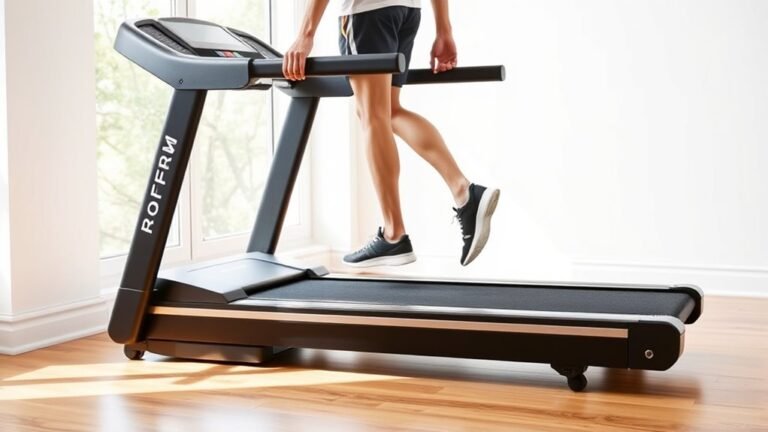
Treadmill incline lifts the front of the treadmill to mimic walking or running uphill. This feature allows you to adjust the slope, making your workout more challenging and dynamic.
When you increase the incline, you work your glutes, hamstrings, and calves harder, boosting workout intensity and calorie burn. It challenges your cardiovascular system and helps prevent workout boredom by varying your routine.
Using incline training can take your fitness to the next level safely and effectively. Keep exploring to uncover how incline impacts your muscles, calories, and overall workout benefits.
Key Takeaways
- Treadmill incline raises the front of the treadmill to simulate uphill walking or running.
- It increases workout intensity by engaging different muscle groups and boosting calorie burn.
- Incline workouts target glutes, hamstrings, calves, and core muscles for improved strength.
- Adjusting incline helps prevent workout monotony and supports specific fitness goals.
- Starting with a low incline and progressing gradually ensures safe and effective exercise.
What Is Treadmill Incline? How Does It Work?
Although you might’ve used a treadmill without adjusting its settings, understanding how the incline works can transform your workout. The treadmill incline simulates walking or running uphill by raising the front of the treadmill belt, increasing the slope.
This simple adjustment enhances treadmill benefits by engaging different muscle groups, boosting calorie burn, and improving cardiovascular fitness. When you change the incline, you introduce exercise variations that prevent workout monotony and target muscles like your glutes, calves, and hamstrings more effectively.
By incorporating incline settings, you can tailor your session to your fitness goals, whether it’s endurance, strength, or weight loss.
How Does Incline Change Workout Intensity?
Adjusting the treadmill incline doesn’t just change the slope. It directly ramps up your workout’s intensity. By increasing incline, you challenge your cardiovascular system and muscles more, making each step harder and boosting calorie burn.
This simple tweak adds valuable workout variation, preventing plateaus and supporting consistent fitness progression.
| Incline Level | Intensity Effect |
|---|---|
| 0% | Low intensity, steady pace |
| 5-7% | Moderate intensity, increased effort |
| 10%+ | High intensity, significant challenge |
As you ramp up the incline, your body works harder, improving endurance and strength. Incorporating incline variations keeps workouts engaging and effective, ensuring you steadily advance toward your fitness goals.
Which Muscles Do You Work Using Treadmill Incline?
When you increase the treadmill incline, you actively engage your glutes, hamstrings, and calves more than on flat ground.
This added effort also recruits your core muscles to help stabilize your body as you climb.
Understanding which muscles you’re working can help you maximize your workout efficiency and strength gains.
Targeted Lower Body Muscles
Incline treadmill workouts activate key lower body muscles that boost your strength and endurance. By increasing the incline, you enhance leg strengthening through greater muscle activation, making your workout more effective.
You primarily target muscles that power your movement uphill, improving overall stability and performance.
| Muscle Group | Role in Treadmill Incline Workout |
|---|---|
| Quadriceps | Extends the knee, propels you forward |
| Hamstrings | Flexes the knee, controls descent |
| Glutes | Drives hip extension, powers uphill |
| Calves | Pushes off the toes, maintains balance |
| Hip Flexors | Lifts the leg, aids in stride control |
Focusing on these muscles maximizes your leg strengthening efforts, ensuring consistent muscle activation and improved endurance.
Core Engagement Benefits
Because walking or running on a treadmill with an incline demands greater balance and stability, your core muscles work harder to keep you upright and steady.
This increased muscle activation targets your abdominals, obliques, and lower back, enhancing your overall core stability.
Engaging these muscles not only improves your posture but also reduces the risk of injury during workouts.
When you use treadmill incline, you activate deep core muscles that are often underutilized in flat-surface exercise.
This means you’re building a stronger midsection that supports better movement mechanics in daily activities and sports.
Incorporating incline training regularly can dramatically boost your core strength, making your workouts more effective and your body more resilient.
Don’t underestimate the power of incline for core engagement; it’s a game changer.
How Incline Boosts Calorie Burn and Fitness Gains
How Incline Boosts Calorie Burn and Fitness Gains
Adding just one or two levels of incline to your treadmill workout can considerably increase the number of calories you burn. This simple adjustment boosts your calorie expenditure by engaging more muscle groups, which accelerates your fitness progression.
Incline challenges your cardiovascular system and strengthens your lower body, making each session more effective.
| Incline Level | Approximate Calorie Burn Increase (%) |
|---|---|
| 0% | Baseline |
| 1-2% | 5-10% |
| 3-5% | 15-20% |
| 6-8% | 25-30% |
| 9%+ | 40%+ |
When and Why to Add Incline Training to Your Workouts
You’ll see the most benefit from incline training when you time it right within your workout routine.
Adding incline during interval training can push your cardiovascular system and muscles harder, boosting endurance and calorie burn.
Incline intervals intensify workouts, enhancing cardiovascular strength, muscle endurance, and calorie burn.
Incorporate short bursts of incline between flat sprints to challenge yourself without overexerting.
During workout recovery days, a light incline walk helps promote blood flow and muscle repair without stressing your body.
This balance enhances overall performance and reduces injury risk.
Use incline strategically; don’t add it every session but target it when you want to increase intensity or focus on strength and stamina.
Safety Tips for Using Treadmill Incline Effectively
Although incline training offers great benefits, using the treadmill at an incline requires careful attention to safety.
To guarantee treadmill safety, always start with a low incline and gradually increase it as you build strength and confidence.
Avoid sudden incline adjustments to prevent losing balance. Keep your posture upright and hold the handrails lightly for support, not for leaning.
Wear proper running shoes with good grip to reduce slip risk. Stay focused; don’t get distracted by your phone or TV while on an incline.
If you feel dizzy or tired, lower the incline or stop altogether. Regularly check your treadmill’s condition, especially the incline mechanism, to guarantee smooth operation.
Frequently Asked Questions
Can Treadmill Incline Help With Weight Loss?
Yes, using treadmill incline boosts your caloric burn, helping you manage weight more effectively. It challenges your muscles, increases intensity, and accelerates fat loss, making your workouts smarter and more efficient for weight management success.
Does Incline Running Improve Cardiovascular Health?
Think of incline running as a heart’s personal trainer; it boosts your cardio benefits by challenging your system more than flat runs.
Incline training strengthens your heart, improves endurance, and enhances overall cardiovascular health efficiently.
How Do I Choose the Best Incline Level for Beginners?
Start with a low incline, around 1-2%, to enjoy incline benefits without overexerting. Use beginner tips: increase gradually, listen to your body, and focus on form to build strength and confidence safely.
Is Walking or Running Better on an Incline?
Think of incline workouts as climbing a hill. Walking on an incline boosts endurance and joint safety, while running ramps up calorie burn and cardio.
You’ll enjoy incline benefits either way; choose based on your fitness goals!
Can Treadmill Incline Reduce Joint Impact Compared to Flat Running?
Yes, using treadmill incline can reduce joint stress by promoting a softer foot strike and engaging muscles differently. You’ll enjoy incline benefits like less impact, improved strength, and a more efficient workout, protecting your joints effectively.
Conclusion
Using treadmill incline can boost your workout intensity by up to 30%, helping you burn more calories and build strength faster. By challenging your muscles differently, incline training enhances endurance and tones your lower body effectively.
So, don’t just stick to flat runs—mix in incline sessions to maximize your fitness gains. Remember to start gradually and stay safe.
Embrace the incline, and watch your workouts transform into powerful, efficient training sessions with the benefits of treadmill incline!