What Muscles Does the Treadmill Work
What Muscles Does the Treadmill Work? When you use a treadmill, you engage key leg muscles like your quadriceps, hamstrings, calves, and glutes for powerful, efficient movement. Your core muscles stay tight to stabilize your body and protect your spine.
Swinging your arms actively works your biceps, triceps, and shoulders, boosting calorie burn. Adjusting speed and incline targets specific muscles more intensely, increasing strength and endurance. Keep moving, and you’ll uncover tips to focus on particular muscles for an even better workout.
Key Takeaways
- Treadmill walking and running primarily engage the quadriceps and hamstrings for leg movement and knee control.
- Core muscles, including abdominals and lower back, stabilize the body and maintain balance during treadmill exercise.
- Arm muscles like biceps, triceps, and shoulders are activated through controlled arm swings or using light hand weights.
- Increasing speed targets different leg muscles, from calves and hamstrings at low speeds to fast-twitch fibers at high speeds.
- Using incline settings intensifies activation of glutes, hamstrings, and calves, enhancing lower body strength and endurance.
Which Leg Muscles Get Worked on a Treadmill?
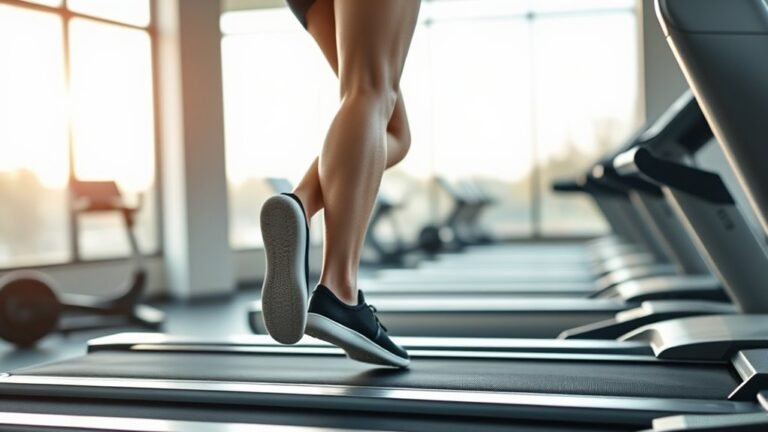
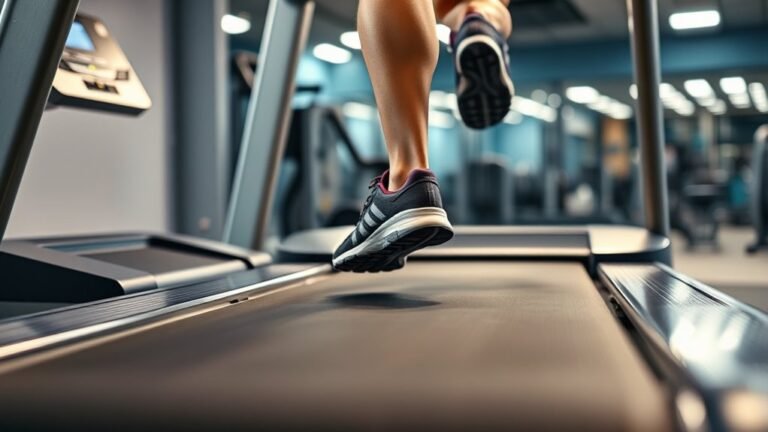
When you step onto a treadmill, your leg muscles immediately engage to power each stride and maintain balance. You’ll notice strong quadriceps activation as these muscles at the front of your thighs extend your knees, pushing you forward with every step.
Meanwhile, your hamstring engagement works in tandem, bending your knees and controlling leg movement as you prepare for the next stride. This coordinated effort not only propels you but also stabilizes your lower body, reducing injury risk.
By maintaining consistent treadmill workouts, you strengthen these essential muscle groups, improving endurance and overall leg power.
Consistent treadmill sessions build strong, enduring leg muscles, boosting power and performance.
Embrace this dynamic muscle activation; it’s the key to enhancing your running efficiency and building lasting strength in your legs.
How the Treadmill Engages Your Core Muscles
As your legs power each step on the treadmill, your core muscles also spring into action to keep your body stable and balanced. Your core stabilization is essential for maintaining treadmill posture, preventing unnecessary sway or leaning.
When you engage your abdominal and lower back muscles, you create a strong foundation that supports efficient movement. This engagement helps protect your spine, reduces fatigue, and improves your overall endurance.
By focusing on keeping your torso upright and your core tight, you maximize the treadmill’s benefits. Remember, activating your core isn’t just about strength; it’s about control.
Using Your Arm Muscles to Boost Treadmill Workouts
Although treadmills primarily target your lower body, actively using your arm muscles can greatly enhance your workout intensity and calorie burn.
Engaging your arm muscles on the treadmill boosts workout intensity and increases calorie burn significantly.
Incorporating purposeful arm movement benefits your overall exercise by increasing upper body engagement, which helps you build strength and improve endurance.
Here’s how to maximize arm muscle involvement on the treadmill:
- Pump your arms vigorously, bending them at 90 degrees to activate biceps and triceps.
- Swing your arms naturally but with control to engage shoulder muscles effectively.
- Incorporate light hand weights to intensify arm muscle activation safely.
- Maintain consistent arm movement to boost heart rate and calorie expenditure.
How Treadmill Speed and Incline Affect Muscle Activation
Because adjusting treadmill speed and incline changes how your muscles work, you can tailor your workout to target specific muscle groups more effectively. Increasing treadmill speed primarily engages your fast-twitch muscle fibers, boosting your calves and quadriceps.
Meanwhile, incline impact forces your glutes and hamstrings to work harder, simulating uphill walking or running.
| Treadmill Speed | Muscle Activation Focus |
|---|---|
| Low (2-3 mph) | Calves, hamstrings |
| Moderate (4-6 mph) | Quadriceps, calves |
| High (7+ mph) | Fast-twitch fibers, calves |
| Incline (5-15%) | Glutes, hamstrings, calves |
Understanding treadmill speed and incline impact helps you optimize your training for strength, endurance, or fat burn.
Tips to Target Specific Muscles on the Treadmill
Adjusting your treadmill speed and incline sets the foundation, but targeting specific muscles requires intentional techniques. To maximize results, focus on your treadmill posture and incline settings. Here’s how you can do it:
- Maintain upright treadmill posture to engage your core and glutes effectively.
- Increase incline settings gradually to activate your hamstrings and calves more intensely.
- Use short, quick strides to emphasize your quadriceps and improve overall leg strength.
- Incorporate intervals of walking backward or sideways to challenge different muscle groups.
Frequently Asked Questions
Can Treadmill Workouts Help Improve Muscle Endurance?
Yes, treadmill workouts boost muscle endurance by reducing muscle fatigue and increasing stamina. You’ll enjoy treadmill benefits like improved cardiovascular health and stronger muscles.
These improvements help you push through longer, more intense exercise sessions with ease.
How Often Should I Use a Treadmill for Muscle Toning?
You should aim for treadmill frequency of 3-5 times weekly for muscle toning. Consistency builds strength and endurance, so keep challenging yourself with varied speeds and inclines to maximize toning benefits and stay motivated.
Does Treadmill Running Build Muscle Differently Than Outdoor Running?
You’ll build muscle differently on a treadmill due to treadmill advantages like controlled pace and incline, while outdoor differences like varied terrain challenge stability more, enhancing muscle engagement and overall strength in diverse ways.
Keep pushing!
What Is the Best Treadmill Workout for Muscle Recovery?
Forget floppy disks; your best treadmill workout for muscle recovery uses low speed and incline settings with active recovery techniques like light walking and stretching.
You’ll boost circulation and reduce soreness efficiently, helping you bounce back faster.
Can Treadmill Exercises Prevent Muscle Imbalances?
Yes, you can prevent muscle imbalances by using treadmill variations that promote proper muscle alignment.
Mixing incline, speed, and walking patterns challenges different muscles, helping you maintain balanced strength and avoid overuse injuries.
Conclusion
When you step onto the treadmill, you engage your legs, activate your core, and involve your arms—all working together to build strength, endurance, and balance. You can challenge yourself by adjusting speed, incline, or posture to target specific muscles.
So, keep moving with purpose, push your limits with intention, and embrace every stride as a chance to grow stronger, leaner, and more resilient.
Your body responds to effort—you just have to lead the way. Understanding what muscles the treadmill works can help you maximize your workouts and achieve better results.