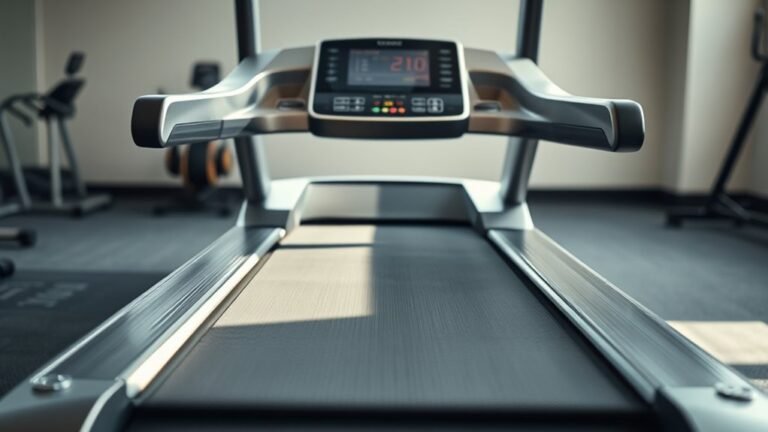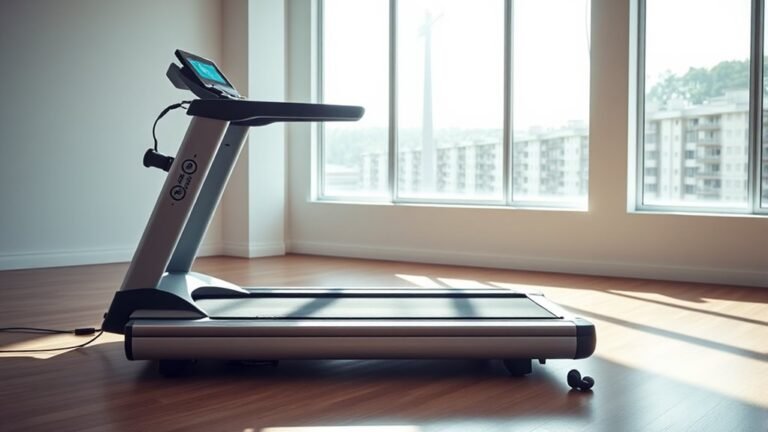
How to Clean a Treadmill
To clean a treadmill effectively, start by unplugging the machine and removing any accessories. Cleaning your treadmill regularly helps maintain its performance and extends its lifespan.
Use a soft microfiber cloth with mild detergent to wipe down the belt and deck. Rotate the belt as you clean to ensure you cover the entire surface.
Apply a silicone-based lubricant under the belt as recommended by the manufacturer to reduce friction and wear. Dust the motor area with a soft brush or use compressed air to keep it free from debris.
Clean the console surfaces carefully using a damp cloth, avoiding excess moisture to prevent damage. Regular inspection and maintenance will keep your treadmill running smoothly and safely.
Let’s explore detailed steps to maintain peak performance.
Key Takeaways
- Unplug the treadmill and remove accessories before cleaning to ensure safety and prevent electrical hazards.
- Wipe the treadmill belt and console with a damp microfiber cloth using mild, non-abrasive cleaners.
- Apply silicone-based lubricant evenly under the belt regularly to reduce friction and maintain smooth operation.
- Use a soft brush or compressed air to clean dust from the motor area after removing the motor cover.
- Inspect belt alignment, tension, and components monthly, documenting maintenance for future reference and optimal function.
Essential Tools and Materials for Cleaning Your Treadmill
Before you begin cleaning your treadmill, gather all the necessary tools and materials to guarantee an efficient process.
You’ll need a soft microfiber cloth, a vacuum with a narrow attachment, and a small brush to reach tight areas.
Select appropriate cleaning solutions, preferably mild, non-abrasive detergents or specialized treadmill cleaners, to avoid damaging surfaces.
Choose gentle, non-abrasive cleaners or treadmill-specific solutions to protect your equipment’s surfaces.
Keep a lubricant designed for treadmill belts on hand, as regular application is crucial per your maintenance schedule.
Additionally, have a screwdriver set ready for inspecting and tightening bolts if necessary.
Adhering to your treadmill’s maintenance schedule guarantees timely cleaning, prolonging the equipment’s lifespan.
How to Prepare Your Treadmill for Cleaning
Gathering the right tools and materials sets the stage for an effective cleaning session, but preparing your treadmill properly guarantees safety and access to all components. First, power off and unplug the treadmill to eliminate electrical hazards, prioritizing treadmill safety.
Next, move the treadmill to a well-ventilated area with ample lighting for clear visibility. Remove any accessories like safety keys or water bottles.
Consult your cleaning schedule to determine the best time for maintenance, confirming you don’t disrupt your workout routine. Clear the surrounding area to prevent tripping or interference during cleaning.
Finally, inspect the treadmill for any visible damage or loose parts that may require repair before cleaning. Taking these steps confirms a safe, efficient cleaning process.
How to Clean the Treadmill Belt and Deck
Start by wiping the treadmill belt with a damp cloth to remove dust and sweat buildup, ensuring it’s dry before use.
Next, apply a recommended lubricant to the deck to reduce friction and prolong its lifespan.
Regularly inspect the deck for wear and clean any debris to maintain smooth operation.
Belt Cleaning Techniques
A clean treadmill belt and deck guarantee smooth operation and extend the machine’s lifespan. To clean the belt, first unplug the treadmill to prevent accidental starts.
Use a damp cloth with a mild, non-abrasive cleaning product specifically designed for treadmill belts; avoid harsh chemicals that accelerate belt wear. Wipe the entire belt surface, focusing on removing sweat, dirt, and debris.
Rotate the belt manually to clean its full length. After cleaning, allow the belt to dry completely before use.
Regularly inspect the belt for signs of wear such as fraying or uneven surfaces. Proper cleaning prevents premature belt degradation and maintains ideal traction.
Avoid saturating the belt or deck with liquid, as excess moisture can damage internal components.
Consistent care guarantees reliable treadmill performance.
Deck Maintenance Tips
Proper deck maintenance plays an essential role in ensuring your treadmill operates efficiently and safely.
Begin by performing a thorough deck inspection every month to identify any signs of wear, damage, or debris accumulation.
During deck cleaning, use a damp cloth with mild detergent to remove dust and sweat buildup from the deck surface. Avoid excessive moisture, as it can damage the deck material.
Additionally, check the belt alignment and tension to prevent uneven wear on the deck.
If you notice any rough spots or unusual noise during operation, address them immediately by cleaning or lubricating the deck according to the manufacturer’s instructions.
Regular deck cleaning and inspection help extend the lifespan of both the belt and deck, ensuring smooth, safe treadmill performance.
How to Clean the Motor and Console Areas
Anyone maintaining a treadmill should regularly clean the motor and console areas to secure peak performance and prevent damage.
Begin motor cleaning by unplugging the treadmill and removing the motor cover carefully. Use a soft brush or compressed air to remove dust and debris from the motor and surrounding components. Avoid using liquids near electrical parts.
For console maintenance, gently wipe the display and buttons with a microfiber cloth slightly dampened with a mild, non-abrasive cleaner. Never spray liquids directly on the console.
Inspect the console for loose connections or worn cables and tighten or replace them as needed.
Regular motor cleaning and console maintenance reduce overheating risks and secure accurate operation, extending your treadmill’s lifespan and reliability.
How to Lubricate Your Treadmill After Cleaning
You’ll want to select the correct lubricant, typically a silicone-based one, to guarantee peak performance.
Apply it evenly under the belt to reduce friction and prevent damage.
Remember to lubricate your treadmill according to the manufacturer’s recommended schedule to maintain smooth operation.
Choosing The Right Lubricant
Although cleaning removes dirt and debris, lubricating the treadmill belt guarantees smooth operation and reduces wear on the motor and belt components.
For effective treadmill care, selecting the correct lubricant type is essential. Most manufacturers recommend a silicone-based lubricant because it provides ideal friction reduction without attracting dust or degrading the belt material.
Avoid petroleum-based lubricants, as they can damage the belt and void warranties. Some treadmills require a specific lubricant viscosity; always consult your user manual to confirm compatibility.
Using the right lubricant type guarantees efficient motor function and extends the treadmill’s lifespan. By choosing an approved lubricant, you maintain consistent performance and prevent premature wear.
Proper lubricant selection is a foundational step before applying it evenly to your treadmill belt.
Applying Lubricant Evenly
A consistent application of lubricant guarantees your treadmill belt operates smoothly and minimizes wear on internal components.
To guarantee proper application, first lift the belt slightly at the sides without damaging the deck.
Apply the lubricant in thin, even lines along the deck’s length, focusing on the area directly under the belt. Avoid excess lubricant, which can attract dust and impair performance.
After applying, manually rotate the belt to promote even lubricant distribution across the entire surface.
Next, run the treadmill at a low speed for a few minutes to further spread the lubricant uniformly.
This methodical approach to lubricant distribution prevents uneven wear and extends your treadmill’s lifespan, ensuring peak performance after cleaning.
Frequency Of Lubrication
Regularly lubricating your treadmill after cleaning guarantees maximum belt performance and prevents premature wear.
You should follow the manufacturer’s recommended lubrication frequency, typically every 150 to 300 miles or every three to six months, depending on usage.
Incorporate lubrication into your maintenance schedule to avoid belt friction and motor strain. If you use the treadmill daily or for intense workouts, increase lubrication frequency accordingly.
Always check the belt and deck condition before applying lubricant; signs of dryness or squeaking indicate immediate lubrication is necessary.
Record each lubrication date to maintain a consistent schedule.
Adhering to this precise lubrication frequency guarantees peak treadmill function, extends equipment lifespan, and reduces the risk of costly repairs.
How Often to Clean and Maintain Your Treadmill
Consistently cleaning and maintaining your treadmill guarantees peak performance and extends its lifespan.
Establish a maintenance schedule based on treadmill usage: daily use requires weekly surface cleaning and monthly lubrication, while occasional use permits biweekly cleaning and quarterly lubrication.
After each session, remove dust and sweat from the console and belt.
Every 30 hours of use, inspect and lubricate the deck according to manufacturer guidelines.
Check belt alignment and tension monthly to prevent wear.
Deep clean motor housing and vacuum debris every three months to avoid overheating.
Document all maintenance activities to track performance and anticipate parts replacement.
Adhering to this maintenance schedule guarantees your treadmill runs efficiently, reduces breakdown risk, and maximizes its operational life.
Frequently Asked Questions
Can I Use Household Cleaners on My Treadmill Belt?
You shouldn’t use harsh household cleaning products on your treadmill belt. Opt for mild, non-abrasive cleaners to guarantee effective belt maintenance without damage.
Always follow manufacturer guidelines for safe, precise cleaning product use and belt care.
How Do I Fix a Squeaking Treadmill Belt?
Since 70% of treadmill issues stem from belt lubrication neglect, fix a squeaking treadmill belt by identifying squeaking causes. Then apply recommended lubricant beneath the belt, ensuring even distribution and proper tension to eliminate noise effectively.
What Should I Do if My Treadmill Stops Working Suddenly?
If your treadmill stops suddenly, start treadmill troubleshooting by checking for electrical issues. Confirm it’s plugged in, reset the circuit breaker, inspect the power cord, and verify the safety key is properly engaged before seeking professional help.
Is It Safe to Clean My Treadmill With Water?
You shouldn’t clean your treadmill with water directly to avoid water damage. Instead, use a damp cloth for routine cleaning. Maintain proper cleaning frequency. Weekly wiping prevents dirt buildup without risking electrical components.
Can Treadmill Cleaning Affect the Warranty?
Yes, your treadmill cleaning can affect the warranty if you don’t follow the warranty guidelines. Always use recommended maintenance tips and avoid harsh chemicals to guarantee proper care and keep your warranty valid.
Conclusion
By regularly cleaning and lubricating your treadmill, you not only extend its lifespan but also guarantee smoother, safer workouts every time you step on it. It’s no coincidence that a well-maintained machine performs better and feels more responsive—your effort in upkeep directly translates to better results.
Keep your treadmill in top shape by following these precise steps regularly. You’ll enjoy consistent performance and avoid costly repairs down the road. Proper maintenance is key to ensuring your equipment stays reliable and effective.
In conclusion, making cleaning a routine part of your treadmill care will significantly enhance its durability and performance. Prioritize how to clean a treadmill to keep it running smoothly and efficiently for years to come.